
Federal courts keep digesting the Trump-era backlog, one ugly procedural bite at a time
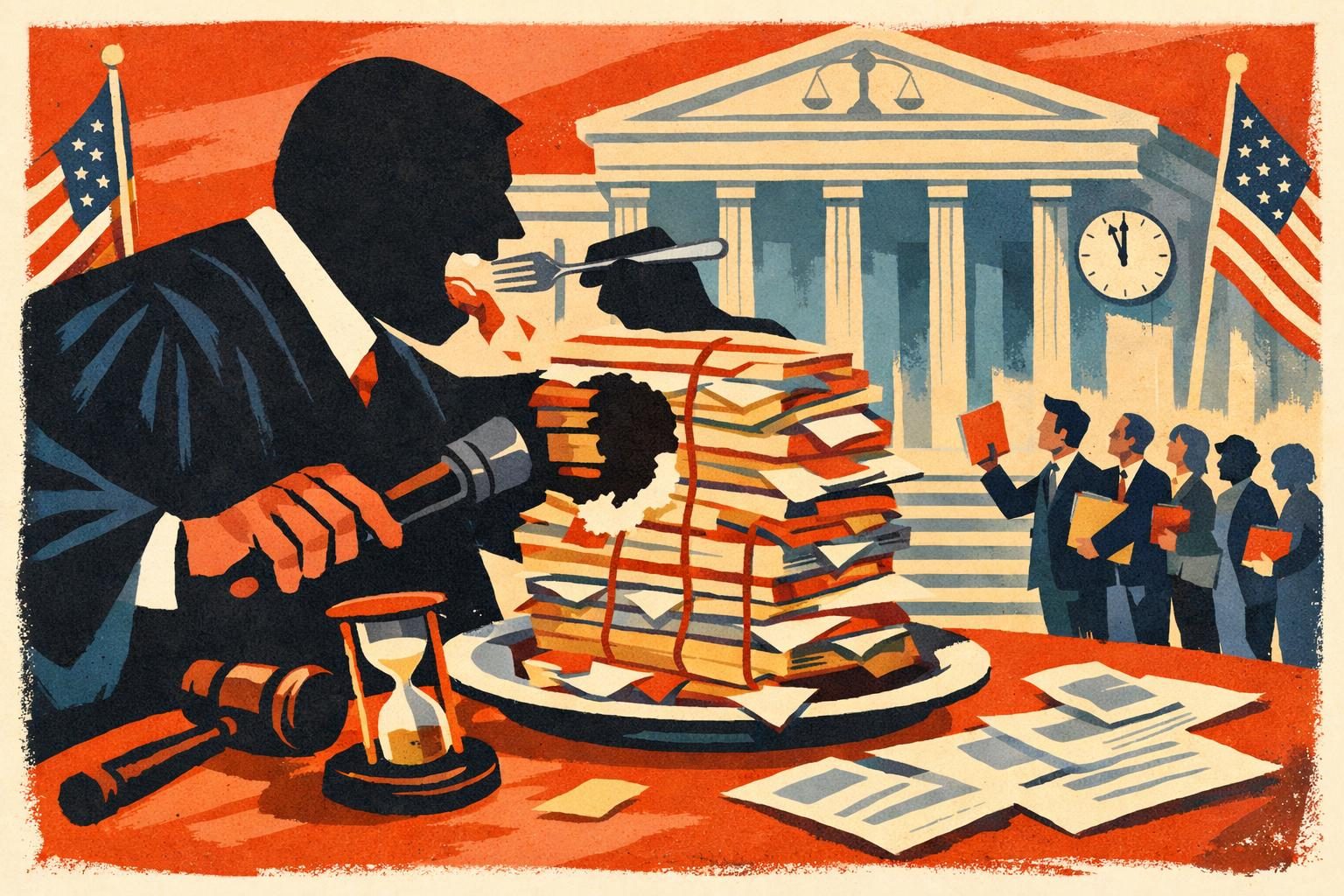
A federal appeals court calendar posted on August 14 offers a useful, if deeply unglamorous, snapshot of where the legal system still is in 2026: busy, delayed, and still carrying a heavy load of disputes rooted in the Trump era. The document itself is not a ruling, and it does not announce any new legal breakthrough. But calendars matter in the federal courts because they show what is actually taking up judicial time, what has been set down for argument, and what is still waiting in line. In this case, the schedule underscores that the courts remain one of the main pressure valves for a political system still absorbing the legal and institutional aftereffects of the Trump presidency, even as new disputes continue to arrive. That is a fairly dull fact on its face, but in practice the dullness is the point: the machinery of the courts is where a huge share of the real fight is now happening.
The August calendar suggests a judiciary that is still working through a thick backlog of politically loaded cases involving executive power, agency action, and other disputes that can shape how the federal government actually operates. Some of these fights are directly tied to Trump-era policies and the legal challenges that followed them; others involve newer questions that have landed on top of an already crowded docket. The practical result is a court system that is not moving through a clean sequence of cases so much as digesting overlapping waves of litigation, with hearing dates and session slots already spoken for. That may sound procedural, but procedure is where power often gets sorted out in federal court. When the courts are jammed, the delays themselves become part of the story because they determine how long contested policies can remain in place, how quickly they can be blocked, and whether agencies and affected parties can plan around anything at all.
This is especially significant because so much of modern governance now runs through legal challenge. The administration has repeatedly tried to act through executive orders, memoranda, agency directives, and enforcement threats, then defend those moves in court when opponents push back. That means the judiciary is not just reviewing isolated disputes; it is often deciding whether a policy can survive long enough to function as policy at all. A court calendar does not resolve any of that, but it does show the pace at which the system is processing the fights. In that sense, the schedule published on August 14 is a concrete reminder that the courts are still doing a large amount of constitutional and administrative heavy lifting. It also reflects how much institutional bandwidth is being consumed by cases that can affect immigration enforcement, civil rights, regulatory policy, and the scope of presidential power. Every open slot on the calendar is a reminder that the legal aftermath of one administration can continue to shape the agenda of the next.
Critics of this governing style argue that the backlog is itself part of the cost of an aggressive executive branch that keeps pushing legally contested actions and then forcing the judiciary to sort out the fallout. In that view, the courts are not merely a neutral venue for dispute resolution but the place where the consequences of overreach are slowed, tested, and sometimes erased. Supporters of the administration are more likely to frame the same process as ordinary legal review, the inevitable friction of a functioning system, and evidence that government is still being made accountable through established channels. Both readings have some truth in them, but neither changes the basic reality that the White House has to keep persuading judges that its claims of authority are lawful. The calendar does not tell us who will win any given case, and it certainly does not settle broader arguments over the legitimacy of the Trump-era policy legacy. What it does show is a court system still under sustained strain from years of high-stakes litigation, with new disputes continuing to crowd into the same narrow pipeline.
That has real consequences outside the courthouse. Agencies cannot confidently finalize rules or enforcement strategies while major challenges remain unresolved, and businesses, states, advocacy groups, and ordinary people cannot know whether a contested policy is temporary, reversible, or likely to be struck down after months of delay. The result is a kind of institutional fatigue that is easy to overlook when the news cycle is focused on dramatic rulings or big political statements. In reality, many of the most important fights are being decided through scheduling, postponement, and the grinding accumulation of procedural steps. The federal appeals calendar published on August 14 is not flashy, but it is revealing. It shows a judiciary still trying to digest a presidency that treated litigation as a governing tool, while the system continues to absorb the next set of disputes on top of the old ones. If that is less cinematic than a headline ruling, it is also more honest about how political damage and legal uncertainty actually accumulate over time.
Comments
Threaded replies, voting, and reports are live. New users still go through screening on their first approved comments.
Log in to comment
No comments yet. Be the first reasonably on-topic person here.