
White House adds fresh presidential actions as the public docket keeps growing
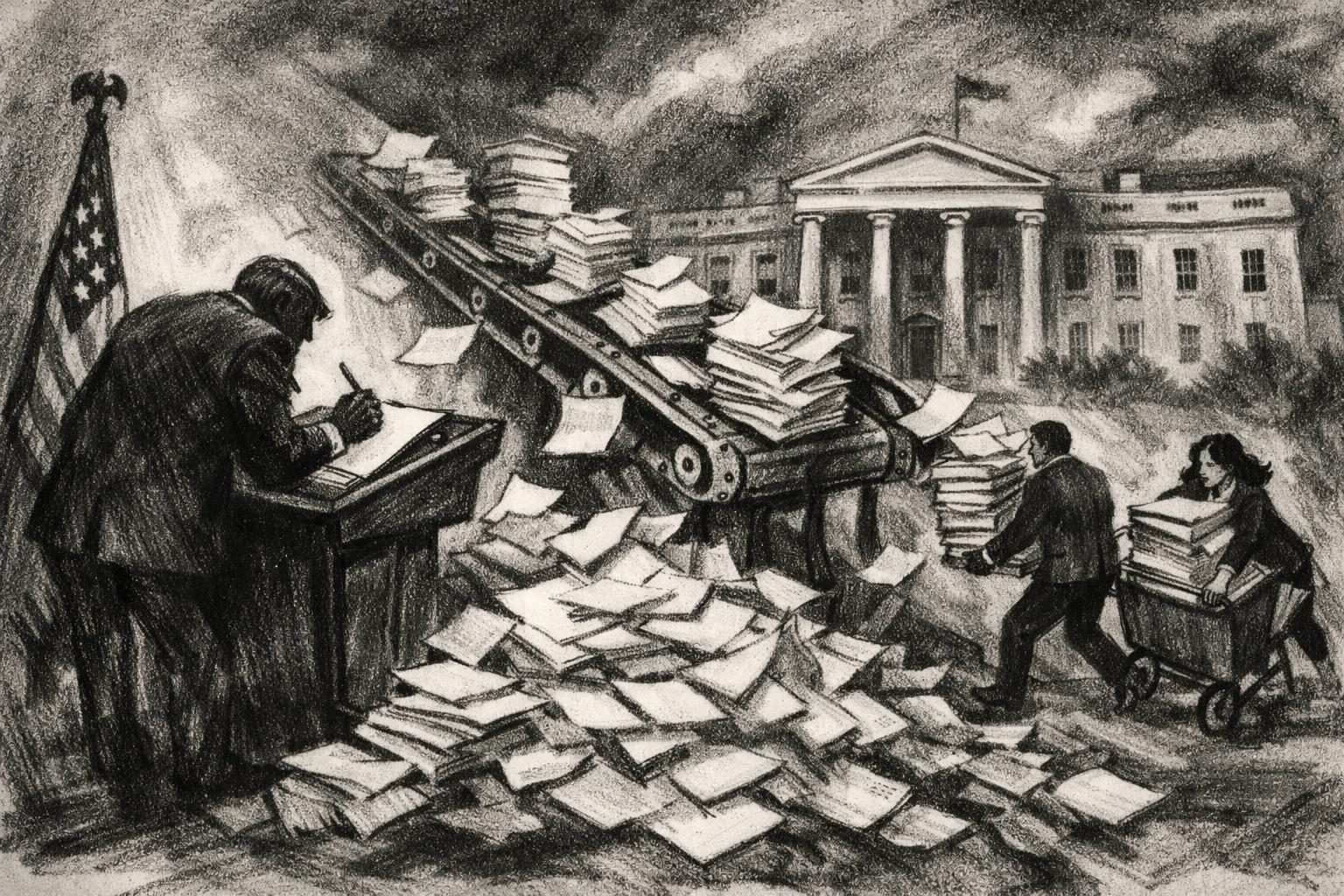
The White House’s presidential-actions log kept growing on August 14, and the newest additions reinforced the same basic picture: this administration is still governing through a brisk stream of unilateral directives that are published, processed, and then pushed into the machinery of government. The public record now includes a dense sequence of executive orders, memoranda, proclamations, nominations, and related actions, with major July entries that touched Smithsonian oversight and trade measures tied to forced labor and Canadian imports. The point is not simply that the president is active. It is that the White House is making a habit of converting policy into docket entries, each one carrying the force of a command and the expectation that agencies will scramble to implement it. That produces a very visible trail of governance, which can look decisive from one angle and relentlessly volatile from another.
The latest update matters because the administration is not relying on a single signature issue or a one-time burst of action. Instead, the log suggests a continuing pattern of executive management in which new directives arrive as part of the daily rhythm of the presidency. That kind of governing can be politically useful, especially when the White House wants to show motion, control, and speed. But it also means every new item creates immediate downstream work for lawyers, policy staff, civil servants, and regulators who have to translate broad presidential language into actual rules, decisions, and enforcement steps. If the directive concerns a cultural institution, trade policy, or supply-chain pressure point, the consequences are not abstract. They can affect hiring, oversight, procurement, customs enforcement, and agency priorities almost at once. The practical result is a government that keeps adding tasks faster than the administrative system can comfortably absorb them.
There is also a deeper institutional question lurking beneath the paperwork. A presidency that leans heavily on memoranda, proclamations, and executive orders inevitably shifts the center of gravity away from ordinary legislative bargaining and toward after-the-fact legal review. That does not mean every action is unusual or suspect on its own. Presidents are expected to use the tools the Constitution and federal law give them. But when those tools become the preferred mode of governance, the burden falls on courts, watchdogs, Congress, and sometimes even the agencies themselves to sort out the boundaries once the order is already in motion. That arrangement can be efficient in the narrowest sense, because it allows the White House to move quickly and set the agenda. It is also inherently messy, because every fresh directive invites questions about authority, durability, and whether the next lawsuit will freeze the policy before it settles in. The administration may see that as a cost of doing business. Its critics are more likely to see it as a symptom of a White House that prefers command to consensus.
The political problem is not just the volume of action but the style of governance that volume suggests. The docket gives the impression of a presidency operating in permanent override mode, with policy pushed out in bursts that can touch culture-war institutions, commerce, and regulatory enforcement all at once. That makes the stakes bigger than any single announcement. A trade measure aimed at forced labor is not merely symbolic if it changes import behavior or customs scrutiny. A move involving Smithsonian oversight is not just a talking point if it alters how a major public institution is directed or supervised. Once those actions are on the record, they become part of a broader administrative chain that can produce litigation, bureaucratic friction, and political blowback for months. Supporters will call that the necessary cost of a vigorous executive. Opponents will call it one-man rule dressed up as process. The truth may sit somewhere between those descriptions, but the effect is hard to miss: the White House keeps issuing formal commands, and the rest of the system keeps being forced to catch up.
Comments
Threaded replies, voting, and reports are live. New users still go through screening on their first approved comments.
Log in to comment
No comments yet. Be the first reasonably on-topic person here.