
Trump’s D.C. Guard mission just got stretched to the end of his term
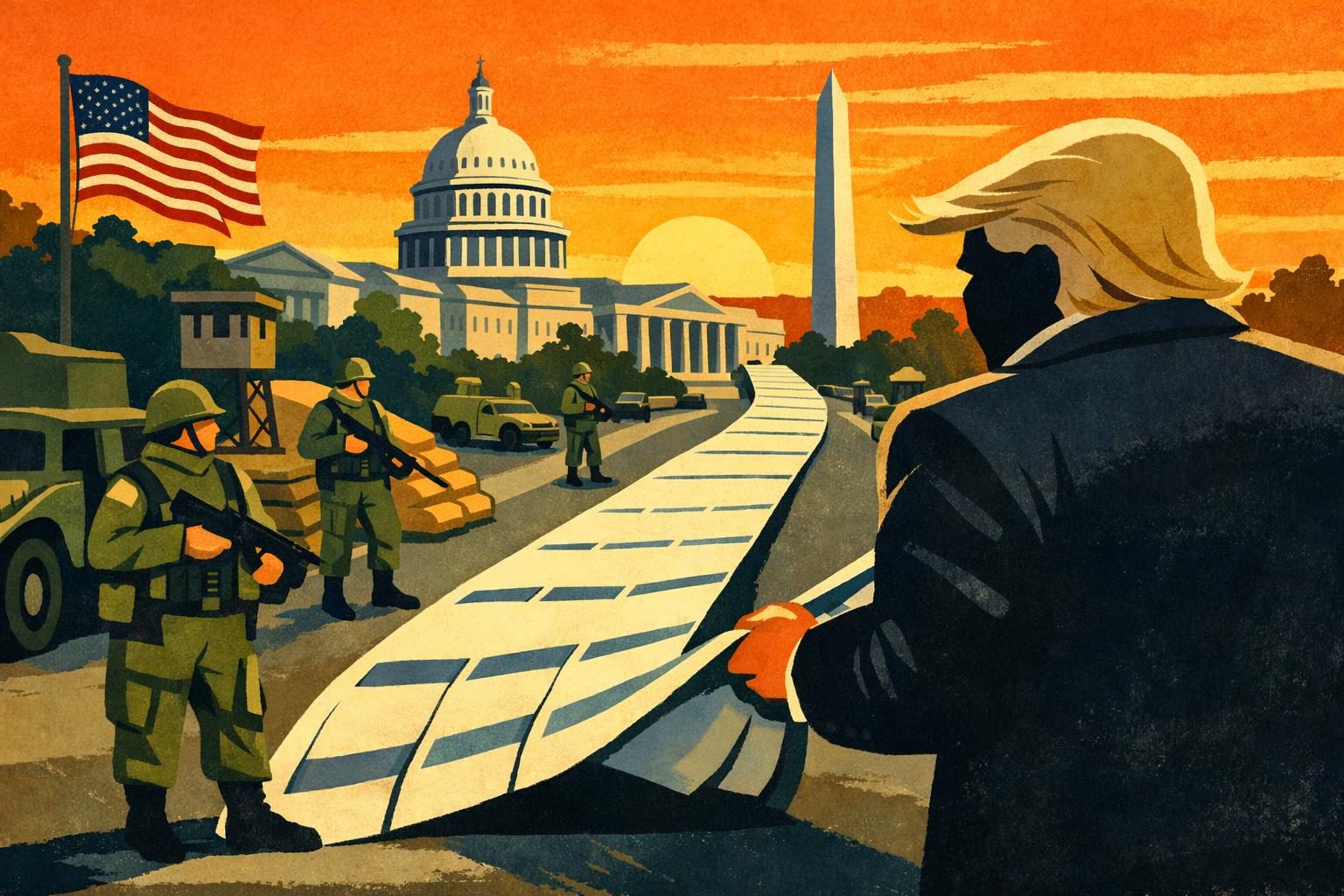
The Pentagon says the National Guard deployment in Washington, D.C., will now run until Jan. 20, 2029, or until President Donald Trump decides it should end, turning what was originally presented as a temporary emergency measure into something far more durable. The extension means troops that were sent into the capital under the banner of restoring order to a supposed crime emergency could remain on the streets for the rest of Trump’s term. That is a long time for any city to live with military personnel stationed in public view, especially when the original justification was framed as a short-term answer to a fast-moving problem. In practice, the mission has already moved well beyond the kind of narrow surge most people would associate with a crisis response. It now looks more like a standing political feature of life in the city, one that may be difficult to unwind even if the emergency language around it eventually fades.
The Guard members are still being assigned visible and varied duties across the District, from walking city streets and patrolling tourist areas to covering metro stations and lending a hand with tasks such as medical emergencies and snow removal. Those assignments may sound ordinary enough in isolation, but together they create the picture of a force that is no longer confined to a single public-safety purpose. The administration has presented the deployment as evidence that its hardline approach to crime is working, while critics see a broad show of force that blurs the line between public service and political theater. D.C. officials have argued for months that crime was already falling before the troops arrived, and they have questioned why the city continues to bear the burden of a federal operation that local leaders never asked for. The city also says the deployment costs taxpayers more than a million dollars a day, a figure that gives the mission an expensive footprint even before you get to the larger question of whether it is doing much good. That spending may be the most concrete reminder that this is not just a symbolic show of strength. It is a very real public expense attached to a policy choice that remains, at best, controversial.
What makes the new end date especially significant is that it shifts the deployment from a supposed emergency into a long-term governing arrangement. A mission that could once have been described as an exceptional response now stretches across the rest of the president’s time in office, which gives it a very different political meaning. If the troops remain until January 2029 unless Trump says otherwise, then the central question becomes not whether the deployment is still needed, but who gets to decide when an “extraordinary” measure stops being extraordinary. That is an important distinction in a city like Washington, where federal power is always close at hand and where local authority is already limited compared with that of a state. D.C. leaders have been openly skeptical of the deployment’s necessity, and the extended timeline only deepens their complaint that the city is being treated less like a normal jurisdiction and more like a stage for federal control. The longer the mission lasts, the harder it becomes to argue that it is still just a temporary intervention. At some point, the exception begins to look like the rule.
The implications stretch beyond Washington itself. The deployment comes at a time when federal troop missions in other places have faced legal and political challenges, including court fights and pauses, making the D.C. case a kind of test of how far the administration can normalize the use of uniformed forces in domestic settings. If the capital can host a years-long Guard presence justified by a crime narrative that local officials dispute, that could make similar arguments easier to repeat elsewhere. The administration’s logic is straightforward enough: identify a public problem, flood the zone with visible authority, and then point to the presence of that authority as proof the problem is being addressed. But that logic also carries its own risk, because it treats military-style visibility as a substitute for a durable public-safety strategy. The result is a capital city where federal force remains embedded in everyday life long after the original alarm was sounded. Whether that amounts to safety, symbolism, or something in between depends on who is being asked, but the broader pattern is hard to miss. Once a temporary occupation starts to look routine, the political incentive to keep it going gets stronger, not weaker.
Comments
Threaded replies, voting, and reports are live. New users still go through screening on their first approved comments.
Log in to comment
No comments yet. Be the first reasonably on-topic person here.