
Bondi’s D.C. police move detonates another legal and political backlash
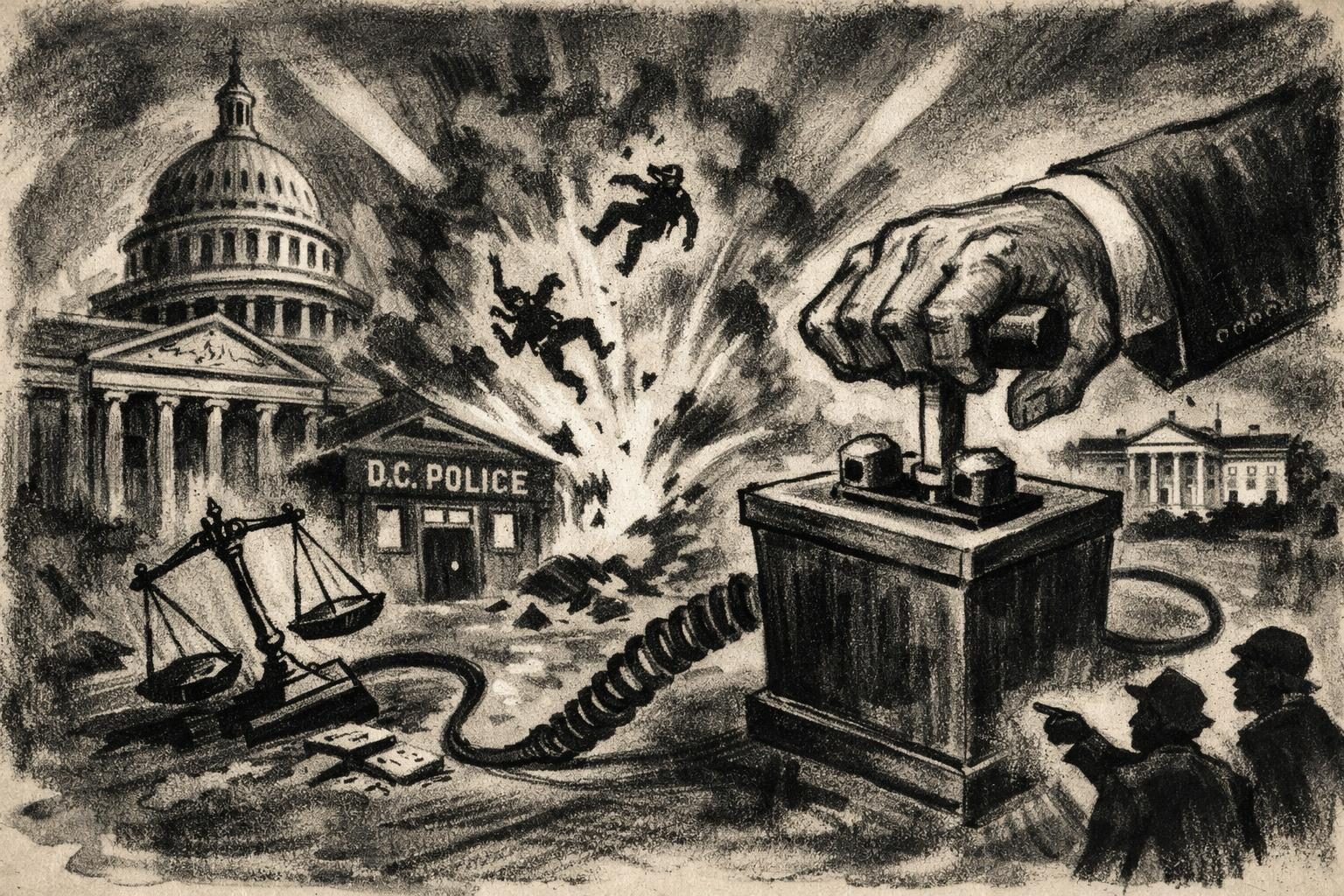
The Justice Department’s decision to install federal control over Washington’s police force set off an immediate political and legal scramble, turning what officials pitched as a public-safety intervention into a fresh test of the limits of federal power in the capital. On August 15, the administration moved to place Terry Cole, the acting DEA administrator, in the role of emergency police commissioner for the Metropolitan Police Department, a move that instantly raised alarms about who would actually be calling the shots over local law enforcement in the nation’s only fully federal city. The White House framed the step as an emergency response to crime, but the optics were closer to a blunt-force takeover than a careful stabilization effort. In a city where residents already live with the daily friction of federal authority, the announcement landed like an insult as much as a policy decision. It also reopened a question that never really goes away in Washington: whether the federal government is acting within its authority, or simply pushing until someone in court tells it to stop.
That uncertainty is exactly why the move is already being treated as a likely legal fight. The District has a complicated constitutional status, one that gives Congress unusual control over local government while still leaving room for residents to object when federal officials steamroll home-rule institutions. By elevating a federal drug-enforcement official into a role that appears to supersede the city’s police leadership, the administration created a setup that practically invites scrutiny. Even supporters of tougher policing can see the risk: when a federal agency takes over a local force, the lines of accountability get fuzzy fast, and the legal basis has to be more than a slogan about order. If the administration believes the city is facing a genuine emergency, it will have to defend why this arrangement is necessary, limited, and lawful rather than merely dramatic. If it cannot, the action could become another example of the White House treating a constitutional gray area as if it were an open lane.
The politics around the move are nearly as combustible as the legal questions. Democratic lawmakers and District officials are already positioned to cast the takeover as authoritarian theater dressed up in crime-control language, and the administration has given them plenty to work with. Nothing about federal officials muscling into city policing is likely to reassure a population that already doubts whether Washington’s local priorities are taken seriously by the people who actually govern it. The decision also feeds a broader pattern in which the administration appears eager to substitute enforcement spectacle for durable solutions, banking on the idea that visible force can stand in for trust. That may play well with a core political audience looking for proof of toughness, but it does little to reduce the institutional resentment that accumulates when residents feel they are being managed rather than represented. In D.C., where the gap between local self-rule and federal oversight is always close to the surface, a move like this can harden opposition almost instantly.
The administration’s defenders will likely argue that public safety is too serious to leave to politics, and that extraordinary circumstances justify an extraordinary response. But that argument only goes so far when the response itself looks improvised and overbearing. Installing a federal official into the top policing role suggests not just oversight but command, and that distinction matters when the city is already sensitive about the scope of federal intrusion. The practical consequences could extend well beyond one personnel decision. If local officers, city leaders, or civil libertarians challenge the arrangement, the administration will have to spend time and political capital explaining why this is not an overreach in a more polished package. A court challenge would force a direct examination of the statutory and constitutional footing behind the move, and even a short-term victory could leave behind a deeper problem: more distrust, less cooperation, and a stronger sense that Washington is being used as a political prop instead of being governed as a real city. That is the real damage here, and it may last long after the emergency language fades from the briefing room.
Comments
Threaded replies, voting, and reports are live. New users still go through screening on their first approved comments.
Log in to comment
No comments yet. Be the first reasonably on-topic person here.