
States sue over DHS tying disaster money to election rules
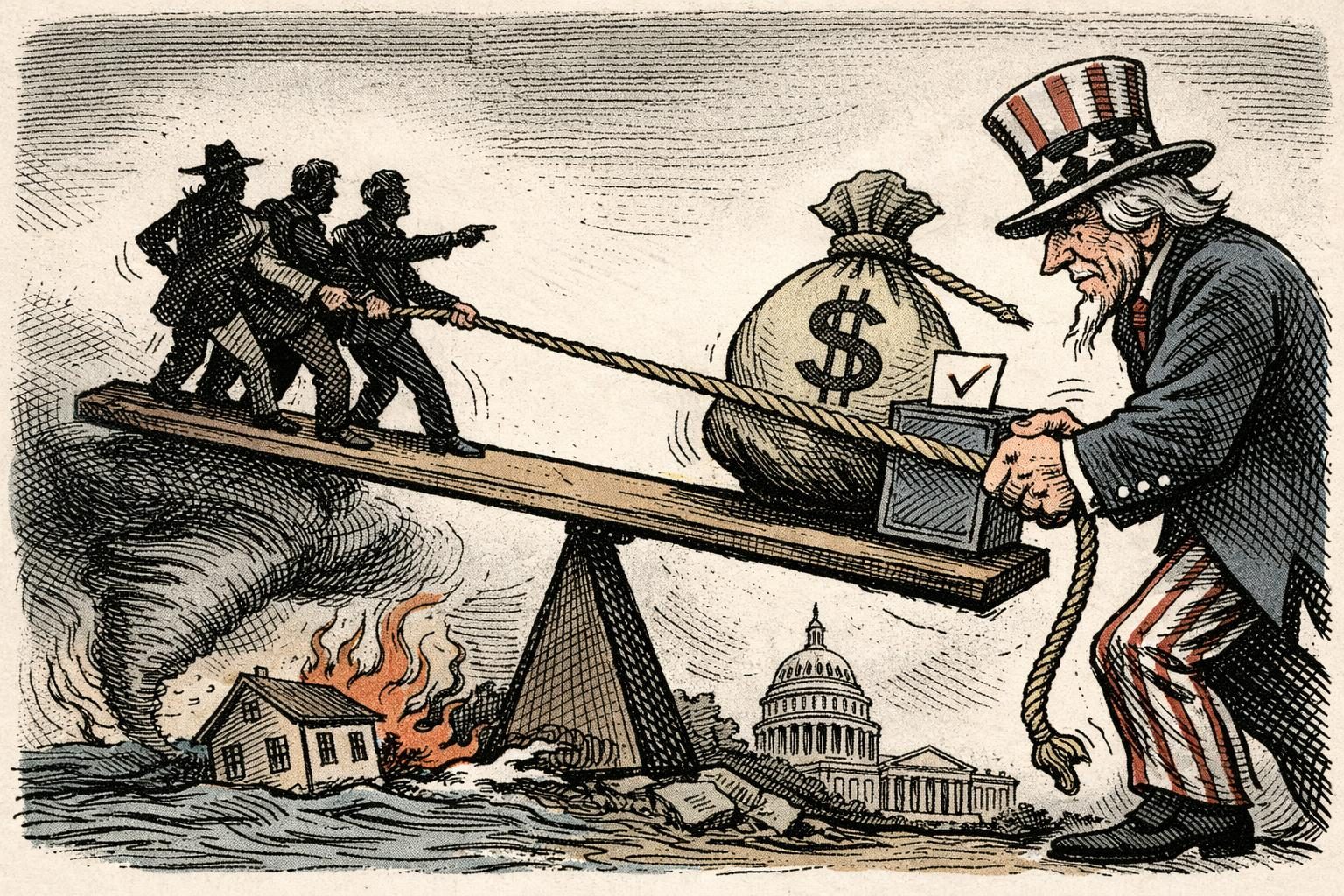
A coalition of mostly Democratic-led states has gone to court to stop the Department of Homeland Security from tying disaster-relief money to changes in how states run elections. The lawsuit, filed August 15, says the agency is threatening to withhold portions of disaster-related grants unless states adopt election administration practices favored by the Trump administration. In the states’ telling, that is not a routine grant condition but an attempt to use a basic federal safety net as leverage over state political systems. The complaint argues that Congress never authorized DHS or FEMA to turn emergency funding into a tool for forcing election-policy changes. The challenge lands at a moment when states are already wary of federal pressure on issues that are supposed to be handled through law, not bargaining.
At the center of the dispute is a blunt question about power: can the federal government attach unrelated policy demands to disaster aid and then threaten to pull that aid when states refuse? The states say the answer is no, and they frame the policy as a form of coercion that crosses the line from oversight into extortion-like pressure. Disaster grants are meant to help governments respond to floods, hurricanes, fires and other emergencies, not to serve as bargaining chips in fights over ballot rules, voter procedures or election administration. According to the complaint, the administration’s position would effectively force governors and legislatures to choose between helping residents recover from disasters and accepting election changes they may not want and did not design. The plaintiffs also argue that Congress did not give DHS free rein to rewrite grant conditions after the fact, especially not for a purpose so far removed from the core mission of disaster response. That makes this case more than a dispute over paperwork; it is a test of how far executive agencies can stretch their authority when Congress has not spoken clearly.
The financial stakes are not symbolic. The states say they were allocated more than $740 million in the fiscal year at issue, which means the threatened funding represents real money that could affect emergency planning, recovery efforts and state and local budgets. For states that rely on federal disaster assistance to cover everything from debris removal to long-term rebuilding, even a partial cutoff could create immediate pressure. That is part of why the complaint treats the policy as a serious threat rather than a narrow administrative disagreement. The states also appear to be warning that if DHS can condition one major stream of aid on election changes, there is little stopping future administrations from attaching ideological demands to other kinds of federal support. Once emergency money becomes a lever for unrelated policy goals, the line between public assistance and political punishment gets very thin. In that sense, the lawsuit is about more than a single grant program; it is about whether the federal government can turn moments of vulnerability into opportunities to extract compliance.
The case also taps into a broader and increasingly familiar pattern in Washington: emergencies create dependence, and dependence creates leverage. Disaster aid is one of the clearest ways the federal government reaches into state affairs, because when a major storm or other catastrophe hits, states often need money quickly and have little room to negotiate. That reality gives any funding condition extra force, which is why the legal and political stakes are so high here. If a court agrees with the states, it could limit how far DHS and FEMA may go in using grant conditions to influence state policy beyond the emergency mission itself. If the administration prevails, it could encourage a wider view of executive power, one that allows federal agencies to press state governments to conform on issues that have only an indirect relationship to disaster response. Either outcome would matter well beyond this one fight. For now, the lawsuit puts a hard spotlight on a familiar question with a grim edge: when the federal government controls the money and the state controls the elections, who gets to decide what counts as a fair condition, and when does a condition become pressure masquerading as policy?
Comments
Threaded replies, voting, and reports are live. New users still go through screening on their first approved comments.
Log in to comment
No comments yet. Be the first reasonably on-topic person here.