
DNC vote exposes Democrats’ ICE split
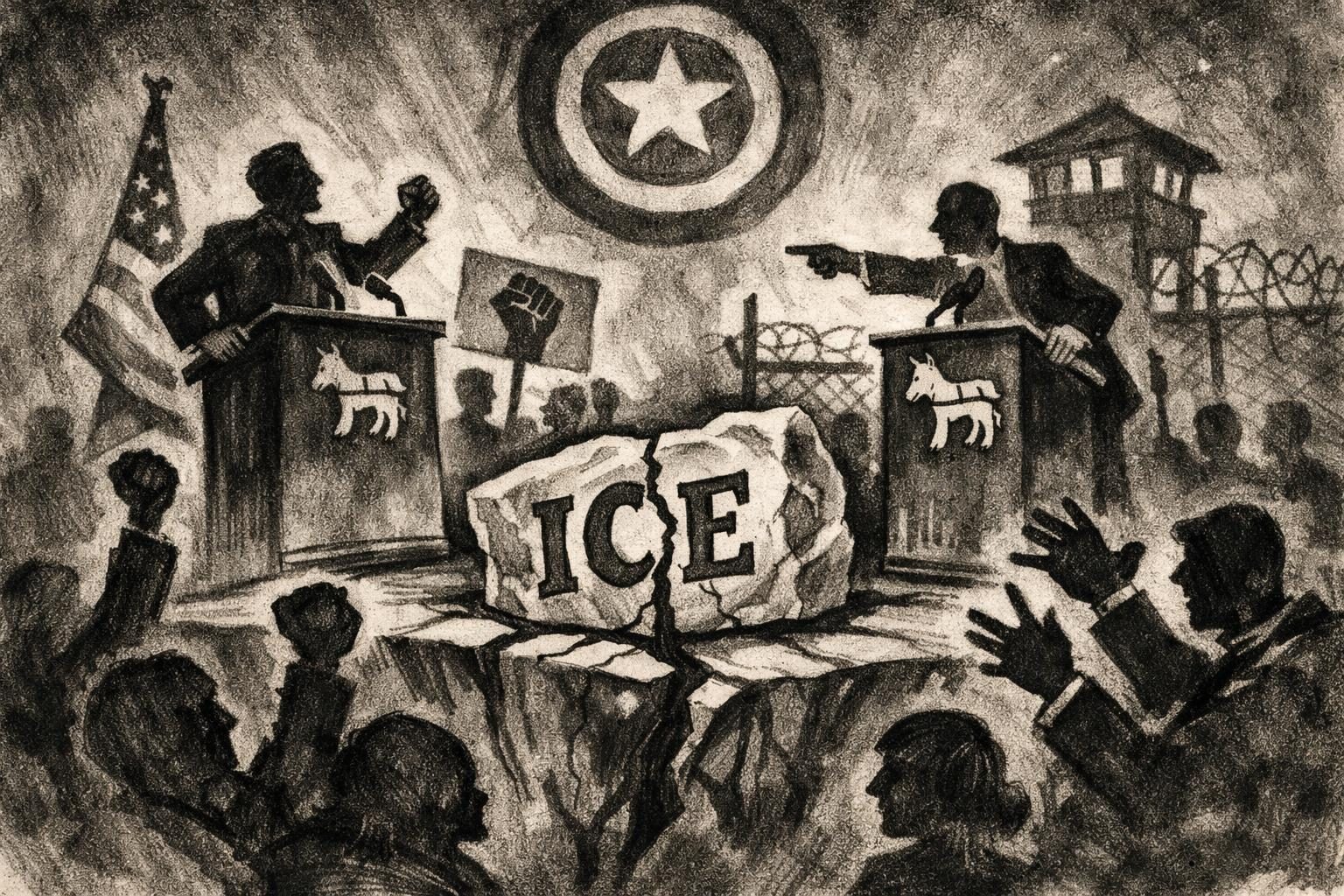
The Democratic National Committee’s summer meeting offered a tidy snapshot of a party that is still trying to decide how far left it wants to lean on immigration enforcement without giving away an easy opening to Republicans. In a nonbinding vote, members approved competing messages about Immigration and Customs Enforcement, with one side calling for the agency to be abolished and another pushing for reform instead of eradication. The result was not a policy change and not even a definitive platform shift, but it was enough to expose a familiar Democratic problem: the party wants to sound forceful about its opposition to hardline immigration crackdowns while also reassuring voters that it takes border enforcement seriously. Those instincts are not impossible to reconcile in theory. In practice, they often collide the moment a microphone is turned on and a vote is taken in public. Saturday’s floor fight made that tension hard to ignore.
The debate was sharpened by recent deadly encounters involving ICE, which have intensified criticism of the agency and given activists fresh reasons to demand a more radical break. For progressive Democrats and allied groups, the case for abolition starts with the idea that ICE is not merely flawed but structurally abusive, a federal force that cannot be trusted to police immigration humanely or fairly. That argument is not new, but it has gained renewed urgency as the Trump administration has expanded immigration enforcement and made the agency central to its political identity. For reform-minded Democrats, by contrast, the answer is to change how ICE operates rather than pretend the United States can or should do without immigration enforcement entirely. They argue that abolition language may thrill the base, but it also risks making the party sound reckless, especially in a national election where public confidence in border security still matters. The DNC vote did not resolve that dispute. If anything, it put the disagreement in a brighter spotlight.
That is part of why the fight has become so politically awkward for Democrats. ICE is not just another bureaucracy with a bad reputation; it has become one of the signature institutions of the Trump era, a symbol around which the administration has built both enforcement policy and cultural conflict. The agency sits at the intersection of law, politics, and public fear, which means every argument about it quickly becomes a larger argument about order, fairness, and the proper role of the federal government. Democrats know they benefit when voters are uneasy about aggressive crackdowns, especially when reports of abuses or deaths make the agency look unaccountable. But they also know that saying too little about enforcement can invite accusations that they have no workable alternative, while saying too much about abolishing ICE can hand opponents a vivid attack line. The result is a party that often sounds torn between activist language and institutional caution. Both approaches have internal logic. Together, they create a message that can seem fuzzy or self-contradictory.
That contradiction is especially visible as the campaign season gets closer and the midterms start to shape the party’s messaging priorities. Trump’s second-term enforcement blitz has already dragged the national conversation further to the right, making it harder for Democrats to argue that immigration should be discussed mainly in terms of rights, process, or humanitarian concerns. Instead, the issue is being framed again and again as a test of whether Democrats are serious about public safety or only interested in protest politics. Progressive activists want the party to condemn the crackdown more aggressively and treat recent deaths as evidence that the existing system is too dangerous to preserve. Moderates worry that an abolitionist position will be replayed endlessly in Republican ads, stripped of nuance and turned into proof that Democrats want to dismantle law enforcement. Neither side is making a frivolous argument. The trouble is that each position highlights a real vulnerability the party would rather not advertise.
For now, the practical consequences of the vote are mostly political, but politics is the point. Republicans will almost certainly seize on the abolition language as proof that Democrats are soft on immigration enforcement, regardless of the fact that the DNC vote was nonbinding and did not change federal policy. Activists on the left, meanwhile, will keep track of which Democrats backed abolition and which ones preferred reform, because those distinctions are becoming part of the party’s internal map heading into the next election cycle. That means the DNC did not unify anyone so much as provide both factions with fresh ammunition for future arguments. It also underscored a broader truth about Democratic politics in the Trump era: the party can criticize the machinery of enforcement, but it still has to decide whether it wants to rebuild that machinery, soften it, or tear it down. That is not a question that disappears with a procedural vote. If anything, the vote suggests the problem is still getting harder, with no easy answer in sight.
Comments
Threaded replies, voting, and reports are live. New users still go through screening on their first approved comments.
Log in to comment
No comments yet. Be the first reasonably on-topic person here.