
Justice Department Keeps Fighting New York’s Mask-and-Name Rules for Federal Agents
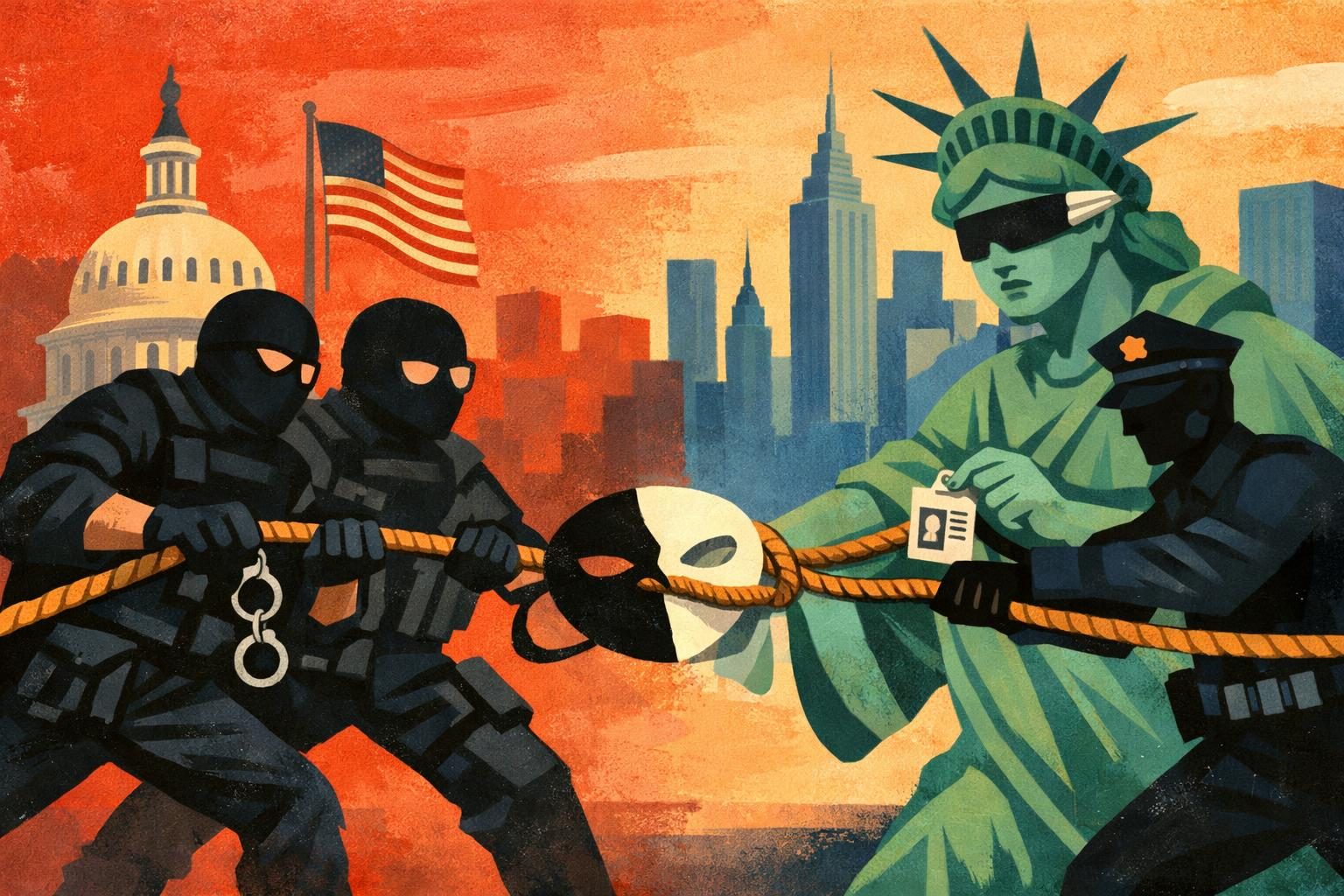
The Justice Department kept its challenge to New York’s restrictions on masked federal officers alive on August 15, pressing ahead with a complaint that directly pits federal immigration enforcement against the state’s rules on face coverings, identification, and related cooperation agreements. The dispute centers on a question that is both practical and political: whether federal officers can operate with less visible accountability when carrying out actions that can disrupt homes, workplaces, and neighborhoods. New York’s position is that the rules are designed to protect public safety and make sure residents can tell who is detaining them and under what authority. The federal government says the state is crossing a line by trying to impose its own limits on how federal law enforcement carries out its duties. That is a familiar constitutional argument in form, but the details here are unusually stark because the tactics at issue involve masked agents, public confrontation, and the possibility of rapid, high-stakes arrests.
The latest filing keeps the case from drifting into the background and signals that the administration intends to treat the state law as more than a local annoyance. The Justice Department’s complaint argues that New York cannot bar federal officers from using the operational tools the government believes are necessary to do their jobs. Behind that claim is a broader preference for flexibility in enforcement, especially in immigration cases where officers may be working quickly, coordinating across agencies, or acting in settings that are tense and crowded. State officials, by contrast, are treating the law as a basic guardrail, one that limits the chance of confusion, impersonation, or abuse and helps residents verify whether a person in a face covering is actually a federal agent. That is why the fight has become more than a technical argument over workplace policy or uniform standards. It has turned into a test of whether states can demand a measure of transparency when federal authority is exercised close to the ground.
Civil-rights advocates are likely to see the dispute as part of a larger pattern in which immigration enforcement becomes less visible precisely when it becomes more aggressive. Masked officers can reduce personal risk for agents, but they also make it harder for people subject to enforcement to identify the agency involved, record what happened, or later challenge conduct they believe was unlawful. Supporters of New York’s approach say those concerns are not abstract, especially in neighborhoods where residents may already be reluctant to call police or cooperate with government officials. The administration, however, appears to view the state’s rules as an obstacle to federal operations rather than as a safeguard for the public. That framing matters because it suggests the government is willing to defend secrecy in the name of efficiency, even though the public cost of anonymous enforcement may fall on the people least able to contest it. In that sense, the lawsuit is not just about masks. It is about how much visibility the government owes when it uses coercive power in public.
The case could also carry consequences beyond New York if either side starts to gain traction. If the state’s restrictions survive, they may encourage other states to adopt similar limits or at least more aggressive oversight of federal operations inside their borders. If the Justice Department succeeds, federal immigration officers could end up with broader discretion nationwide to obscure their identities while making arrests or conducting enforcement actions. Either outcome would shape the practical balance between federal authority and state police power, and the result could influence how local communities experience immigration enforcement for years to come. For now, the immediate reality is a legal standoff with clear stakes and no easy compromise. The federal government wants room to maneuver. New York wants transparency and accountability. The court fight now underway will help decide which of those priorities gets more weight when federal agents show up masked, armed, and demanding obedience in a state that says it has the right to set some limits on how they do it.
Comments
Threaded replies, voting, and reports are live. New users still go through screening on their first approved comments.
Log in to comment
No comments yet. Be the first reasonably on-topic person here.