
Justice Department says USDA preference programs violate the Constitution
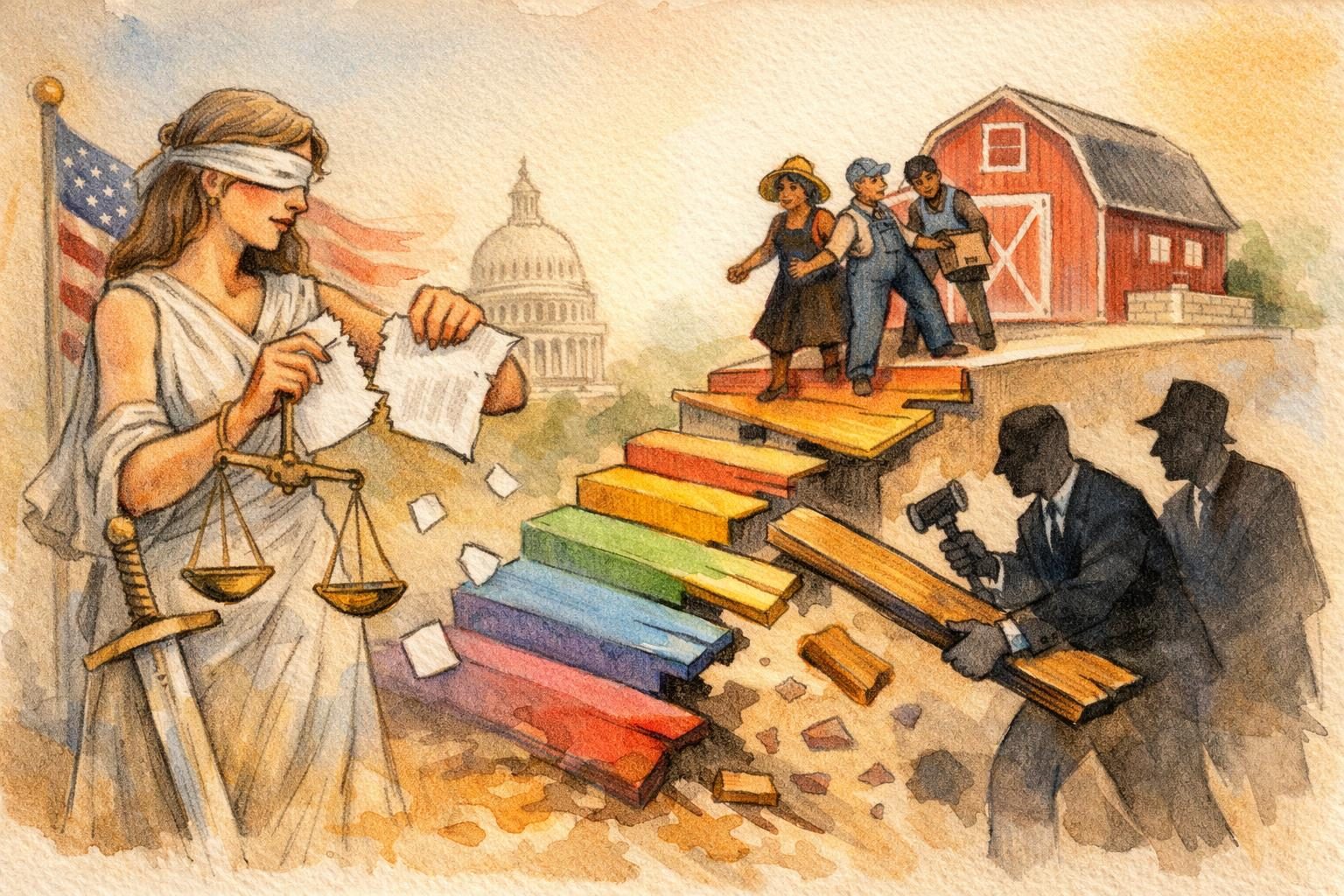
The Justice Department has issued an opinion concluding that U.S. Department of Agriculture preferences for “socially disadvantaged” groups violate the Constitution, a move that could quickly reshape how the federal government writes and defends farm-related benefits, grants, and contracting programs. The opinion is more than a narrow legal memo. It is a signal that the administration intends to treat race-conscious program design not as a complicated policy choice, but as a constitutional problem to be aggressively corrected. In practical terms, that means agencies now have fresh pressure to revisit language, eligibility rules, scoring criteria, and set-asides that have long been justified as remedial measures. It also means employees who administer those programs may be left trying to guess where the new legal line now sits. For a government already bent on a broad anti-DEI campaign, the opinion reads like a formal green light to move from rhetoric to rewrites.
The department’s conclusion appears to rest on the view that preferences based on the “socially disadvantaged” label amount to unlawful race-conscious treatment, even when they are framed as tools to address past discrimination. That distinction matters because USDA programs have historically used such classifications to direct assistance toward farmers and ranchers from groups that faced exclusion from credit, land access, and federal support. By calling the arrangement unconstitutional, the Justice Department is not merely questioning one eligibility tweak; it is attacking the legal theory behind a whole family of programs. The immediate effect may not be that every USDA initiative disappears overnight, but the opinion changes the posture of the government itself. Agencies typically rely on Justice Department guidance when deciding how defensible a policy is in court, and a formal conclusion like this can chill implementation long before any judge weighs in. The opinion also appears to rely on earlier internal legal work, suggesting this was not an isolated flourish but part of a broader effort to build a record against race-conscious federal action.
That broader effort fits squarely within the administration’s ongoing attempt to unwind what it characterizes as illegal DEI. The framing is familiar: race-neutral law is presented as the default, while any preference designed to account for structural disadvantage is described as discriminatory and constitutionally suspect. Supporters of the policy shift are likely to argue that the government is simply restoring equal protection and eliminating favoritism. Critics will say the administration is treating formal neutrality as a virtue while ignoring the historical and institutional barriers that made these programs necessary in the first place. Either way, the practical consequences are hard to miss. USDA officials and program lawyers now have to decide whether to preserve existing structures, narrow them, or replace them entirely. Outside organizations that depend on those programs will be looking closely for any opening to challenge reductions or demand enforcement. The uncertainty itself is meaningful, because federal agencies often change behavior quickly when the legal ground beneath them starts to move.
The opinion may also have effects beyond USDA alone, because once the federal government publicly labels a category of remedial preference unconstitutional, it can embolden challenges to similar programs across the bureaucracy. That does not mean every race-conscious policy is instantly doomed, or that courts will automatically adopt the department’s view. But it does mean the administration is setting up a new legal and political baseline, one that favors rollback over accommodation and litigation over calibration. This is the kind of official paper trail that can become operational fast: staff guidance gets revised, grants get delayed, applicants get reclassified, and lawyers start drafting defensive memos before the first lawsuit is even filed. The government’s own position may also be used against it later, if plaintiffs argue that the department has admitted the constitutional problem and therefore must dismantle comparable programs elsewhere. For now, the core fact is simple enough. The Justice Department has put its weight behind a sweeping rejection of USDA’s “socially disadvantaged” preferences, and that decision could have immediate consequences for how federal farm benefits are awarded, defended, and possibly restructured in the months ahead.
Comments
Threaded replies, voting, and reports are live. New users still go through screening on their first approved comments.
Log in to comment
No comments yet. Be the first reasonably on-topic person here.