
Federal judges move to freeze Mississippi election-law changes
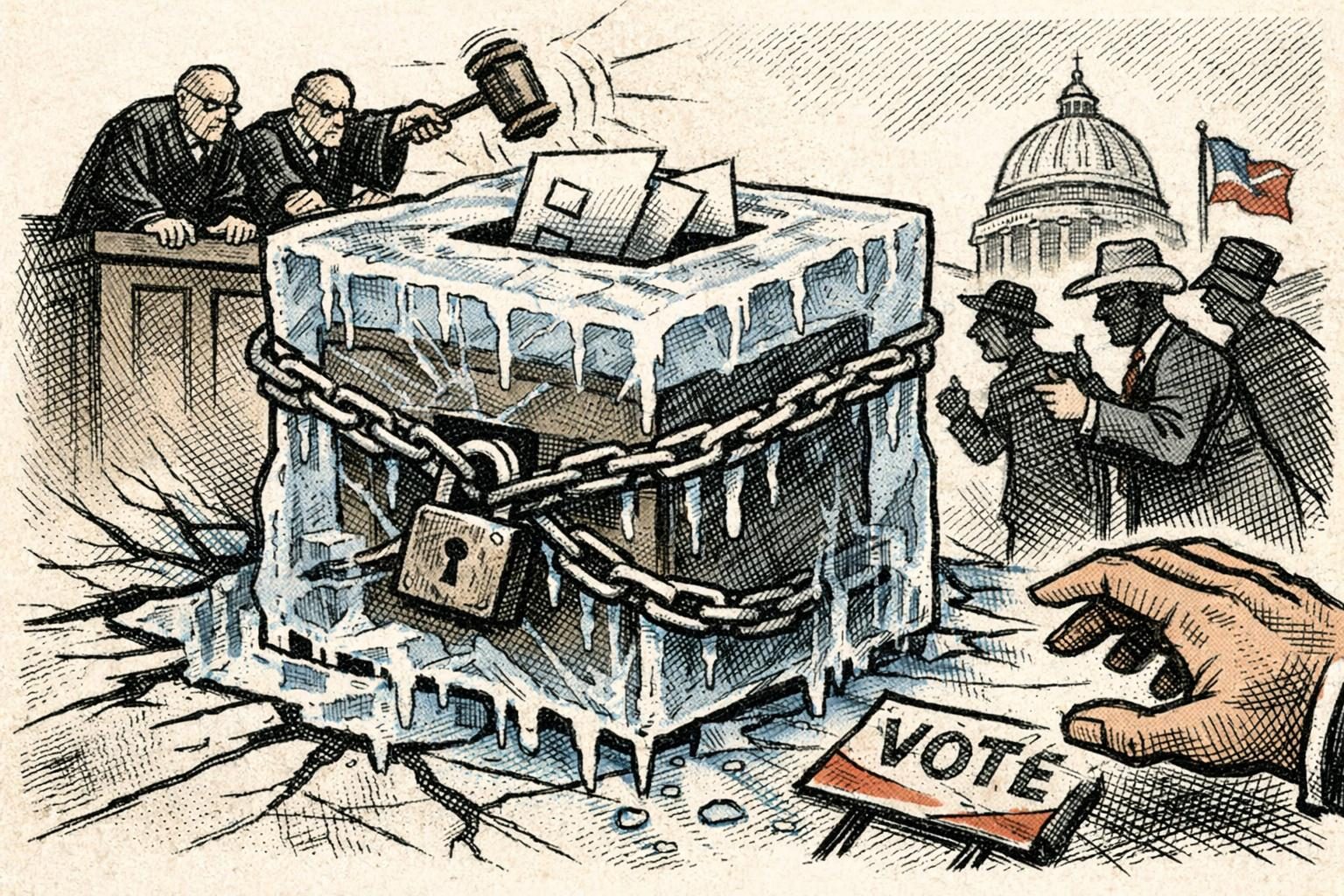
A federal court action on August 15 put a fresh spotlight on Mississippi’s election rules and added another layer of uncertainty to a voting fight that has become familiar across the country. The dispute lands in the middle of a broader struggle over how much authority states have to rewrite the mechanics of voting, and how quickly those changes can be challenged before they take effect. In Mississippi, as in other states, the practical stakes are not abstract. Election-law changes shape who can register, how polling places operate, what deadlines matter, and how much friction voters face when they try to participate. When courts step in at this stage, they are not just settling a legal question; they are deciding whether a new rule gets to influence the next election before its legality is fully tested.
What makes the Mississippi case important is the pattern it fits into rather than any single order by itself. Across the country, state lawmakers and election officials have continued to test the limits of voting restrictions and administrative changes, while civil-rights advocates and other challengers keep pressing those measures into court. The result is a constant tug-of-war over whether election administration is meant to function as neutral public infrastructure or as a tool that can be used to make voting harder for some people than for others. That debate has become especially intense in recent years because each legal ruling can have immediate operational consequences for counties, clerks, and voters who have to navigate the system in real time. The longer the legal fight continues, the more likely it is that local officials are left trying to prepare for an election while not knowing which set of rules will survive.
Supporters of the state’s approach tend to frame election-law changes as ordinary procedural tightening, the sort of housekeeping states are entitled to do to improve order and consistency. Critics say that description misses the point when the effect of the changes is to add complexity, create uncertainty, or make voting less accessible for ordinary people. That is where many modern election disputes land: the law is presented as administrative cleanup, but the consequences are measured by who has the time, transportation, documentation, flexibility, or confidence to get through the process. Even small changes can have outsized effects in counties with limited resources or in communities where voters are already more likely to encounter barriers. And when a court freezes a rule before it becomes routine, it signals that the problem may not be just a technical disagreement over procedure, but a real question about whether the state is crossing a line from administration into obstruction.
The practical fallout from that kind of court action is rarely tidy. County election officials may be forced to prepare under one rule while anticipating that another could soon replace it, and advocates often respond by warning voters to keep checking for changing instructions. That uncertainty can depress participation simply by making the system harder to follow, especially when deadlines, forms, or eligibility rules are in flux. It also increases the odds of last-minute confusion, uneven implementation from county to county, and more lawsuits if affected groups believe the state is trying to move too quickly or too aggressively. For voting-rights supporters, the Mississippi fight is another reminder that the battle over access to the ballot is often won or lost long before Election Day, in the less visible terrain of court filings, emergency orders, and administrative guidance. For state officials, the challenge is to defend their rules as lawful and orderly while convincing judges that the changes do not tilt the field against the people who have to use them. Either way, the August 15 action suggests that Mississippi is unlikely to get a clean, final answer anytime soon, and that the larger national argument over election rules is still very much alive.
Comments
Threaded replies, voting, and reports are live. New users still go through screening on their first approved comments.
Log in to comment
No comments yet. Be the first reasonably on-topic person here.