
Treasury ends beneficial-ownership reporting for millions of small businesses
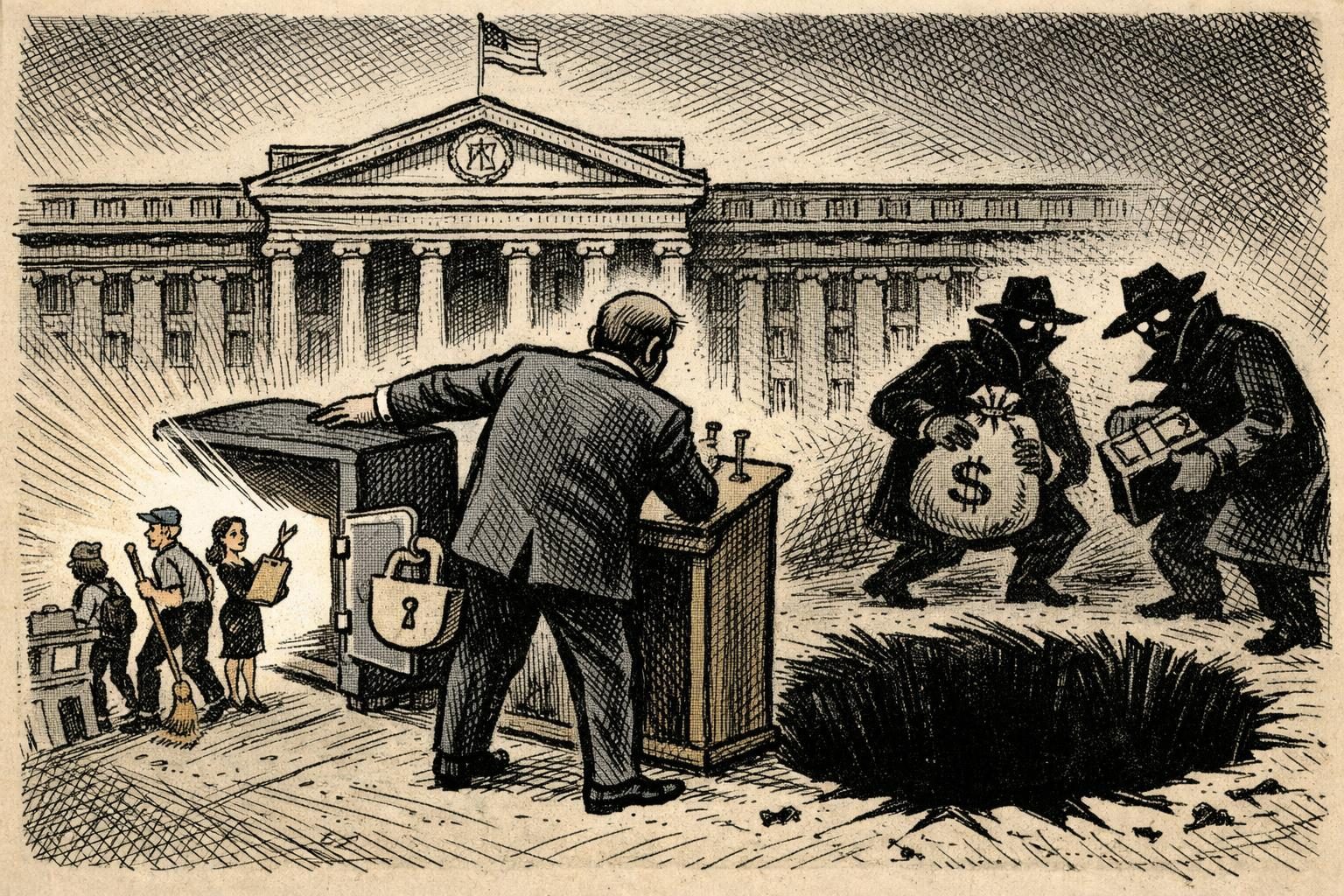
The Treasury Department’s decision to permanently end beneficial-ownership reporting for millions of small businesses marks a major turn away from one of the federal government’s most ambitious transparency efforts in years. The change, announced on August 11 and taking effect in the current update window, means the Financial Crimes Enforcement Network will no longer require many small business owners to disclose who ultimately controls their companies. Supporters of the move are likely to frame it as a practical relief from paperwork, especially for firms that have argued the reporting regime was confusing, time-consuming, or unnecessary for ordinary operators. But the policy shift also removes a tool that investigators, regulators, and anti-corruption advocates have treated as central to identifying who is actually behind corporate entities. For a system built to make ownership harder to conceal, this is not a minor adjustment. It is a broad retreat from transparency.
The original reporting regime was designed with a very specific purpose in mind: making it harder for criminals, fraudsters, sanctioned actors, and other bad-faith operators to hide behind shell companies. Anonymous entities have long been useful for laundering money, obscuring illicit payments, disguising conflicts of interest, and masking the flow of funds through the financial system. Beneficial-ownership disclosures were supposed to close part of that gap by requiring companies to identify the real people behind the legal paperwork. Critics of the rollback say that eliminating the requirement does not eliminate the underlying threat; it simply makes those threats more difficult to spot. In practical terms, fewer disclosures mean less visibility, and less visibility means more room for abuse to go unnoticed. That is why this change is being read not just as a regulatory simplification, but as a structural weakening of anti-money-laundering enforcement.
The administration is presenting the move as a pro-growth decision that will reduce compliance burdens on small businesses and make it easier for honest entrepreneurs to operate. That argument will resonate with owners who have complained that federal reporting rules often land hardest on the smallest firms, especially those without legal teams or compliance staff. There is a real political appeal in promising to cut red tape and spare legitimate businesses from new administrative obligations. But the tradeoff here is not theoretical, and it is not evenly distributed. When disclosure rules are relaxed, the burden does not disappear; it shifts. The costs are absorbed by investigators who have fewer data points, by enforcement agencies that must work harder to trace suspicious activity, and by the public that is left with less confidence about who controls the corporate structures operating in the economy. Treasury may describe the change as relief, but critics see it as a choice to protect convenience over accountability.
That is why the significance of the move reaches beyond the small-business community itself. Beneficial-ownership reporting was a central piece of the broader campaign against opaque financial activity, including corruption, sanctions evasion, and laundering networks that rely on layers of concealment. It also mattered in ordinary financial investigations, where knowing the real owner of a company can determine whether a case moves forward or stalls out. Rolling back the requirement changes the baseline for how much the government gets to know about who owns what, and that baseline matters far beyond any one filing form. Enforcement veterans and transparency groups are likely to argue that the United States is weakening itself at exactly the moment when hidden ownership still plays a major role in the movement of illicit money. In Washington terms, this is the sort of decision that is sold as efficiency but lands as opacity. If the aim was to create a clean political win, the result is more likely to be a lasting fight over whether the government just made it easier for the wrong people to stay hidden.
Comments
Threaded replies, voting, and reports are live. New users still go through screening on their first approved comments.
Log in to comment
No comments yet. Be the first reasonably on-topic person here.