
International justice gets another forced-error moment from Washington
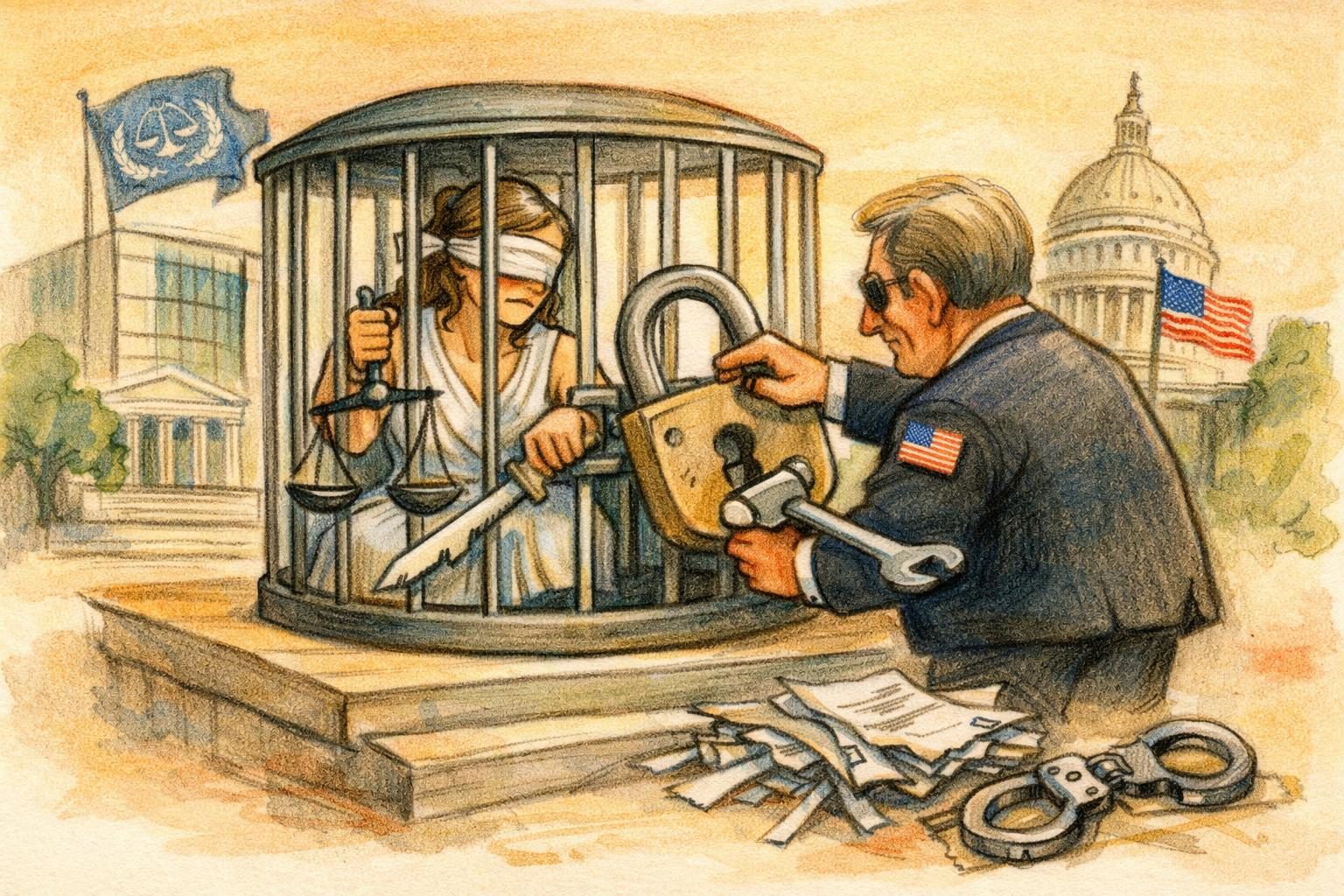
A new legal challenge to the administration’s campaign against the International Criminal Court is adding fresh pressure to a fight that was already messy, diplomatic, and deeply unnecessary. The August 15 filing does more than contest a specific set of sanctions; it underscores how quickly the White House has turned a dispute over war-crimes accountability into a broader test of power, legitimacy, and restraint. What should have been handled through diplomatic channels or established international mechanisms is now being pushed into U.S. courts, where judges are being asked to sort out the fallout from a policy built to intimidate. That alone suggests the administration has gone well beyond ordinary statecraft and into the territory of forced-error governance. When the response to allegations of grave abuses is retaliation against the institution doing the investigating, the result is usually not strength but more litigation, more confusion, and less credibility.
The complaint adds to an already growing concern among human rights advocates and international law supporters that the administration is trying to normalize punishment for legal scrutiny. The ICC exists to investigate and, where appropriate, prosecute the gravest crimes of concern to the international community, including war crimes and crimes against humanity. Critics of the court have long argued over its reach, its politics, and its relationship to national sovereignty, and those debates are not new. But the logic behind the current sanctions campaign goes well beyond disagreement with the court’s work. It sends a signal that if a legal body makes powerful governments uncomfortable, the proper response is to freeze, punish, and isolate it until the pressure changes the outcome. That is not a subtle message, and it is not a healthy one for anyone who believes accountability should apply even when the accused are backed by state power.
The broader danger is not limited to this one institution or this one filing. Retaliating against a court that investigates abuses teaches an especially convenient lesson to authoritarian leaders and would-be authoritarians: call accountability foreign meddling, then point to Washington and say the precedent already exists. That is what makes this fight so corrosive. Sanctions are often defended as a tool of leverage, but in this case they appear designed to discourage legal action rather than to resolve any concrete dispute. Even if supporters of the policy argue that the ICC has overstepped in some situations, the administration’s approach still risks making the United States look less like a defender of rule-based order and more like a government that only likes rules when they are written in its favor. Once that reputation hardens, it becomes harder to persuade allies, adversaries, or neutral states that American objections to abuses are principled rather than purely selective.
There is also a domestic pattern in all of this that is difficult to ignore. An administration willing to pressure an international court is not likely to become more committed to oversight in general, and the same political instincts tend to show up in other fights over checks and balances. The posture here is familiar: institutions are respected when they are compliant and attacked when they are not. That may play well in political messaging designed for partisan audiences, especially when the goal is to frame accountability as elite overreach or foreign interference. But it is a poor foundation for governing, and it tends to produce more conflict than control. The latest lawsuit does not settle the dispute over the sanctions campaign, but it does ensure the issue will stay alive, expensive, and highly visible. If the administration wanted less scrutiny, it chose one of the worst possible ways to get it, because now the policy has to survive the very kind of legal and public examination it seemed designed to avoid.
Comments
Threaded replies, voting, and reports are live. New users still go through screening on their first approved comments.
Log in to comment
No comments yet. Be the first reasonably on-topic person here.