
Justice Department Goes After Montgomery County Over a Supreme Court Problem It Created
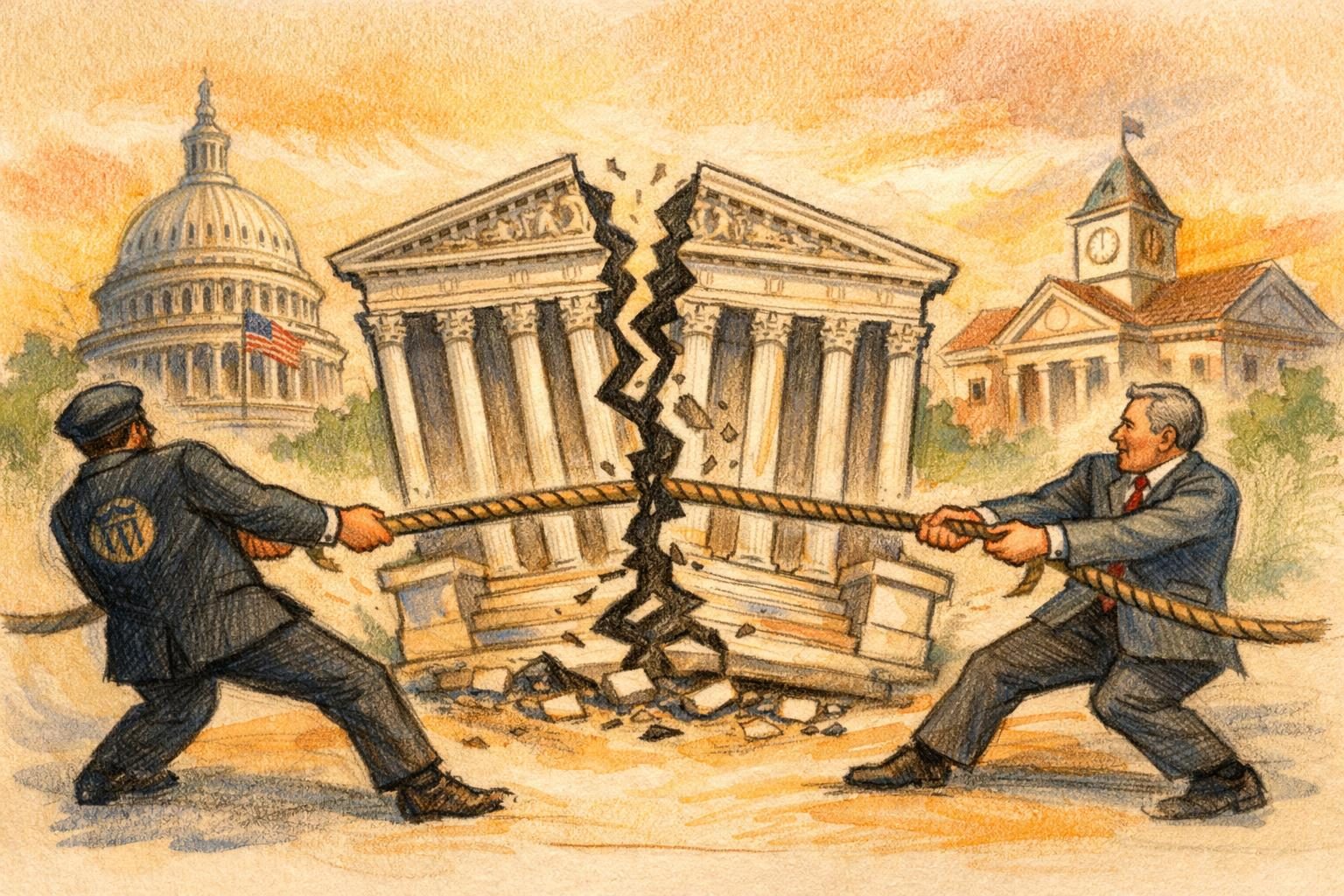
The Justice Department on August 15 filed a civil rights lawsuit against Montgomery County, Maryland, setting up a fresh clash between the Trump administration and a local government over a policy federal lawyers say runs directly into a recent Supreme Court ruling. The government’s complaint says the county’s approach conflicts with the Court’s Wolford decision and improperly interferes with federal authority. That is not just a bureaucratic dispute over fine print. It is the federal government asking a judge to step in and shut down a local policy it believes has crossed a constitutional line. In practical terms, that means Montgomery County is now being forced to defend its rule in court rather than in the abstract, where these kinds of disputes often linger as talking points instead of live legal fights. The filing also underscores how aggressively the administration appears willing to use litigation as a tool for enforcing its view of civil rights law and federal supremacy.
What makes the lawsuit noteworthy is not merely that Washington and a county are disagreeing, but that the disagreement has been converted into an immediate test of legal limits. When the Justice Department sues a local government over a Supreme Court decision, it signals that the federal side believes the issue is settled enough to warrant enforcement, not further debate. That raises the stakes for Montgomery County, which must now justify the policy before a judge under the shadow of a Supreme Court precedent the Justice Department says clearly controls the outcome. The case is likely to attract attention from other states and localities that have been considering similar policies, because a ruling here could either reinforce the federal government’s reading of Wolford or expose a gap between what the administration says the law requires and what courts are willing to accept. Either way, the lawsuit turns a policy dispute into a broader signal about how far local officials can push when they believe they are operating in politically sensitive territory. It also suggests that other jurisdictions may need to calculate not just the policy consequences of their decisions, but the cost of defending them in federal court.
The administration’s approach matters because it has shown a willingness to use the courts as an enforcement arm, not simply as a place to argue after the fact. That makes this filing more than a one-off legal maneuver. It is a warning shot to governments that may be tempted to test the edges of federal law and hope the resulting controversy stays political rather than judicial. If the Justice Department succeeds, the lawsuit could chill copycat policies elsewhere by making the price of resistance obvious: litigation, injunctions, and the possibility of a formal rebuke from a federal court. If it fails, the administration risks handing critics a tidy example of overreach, a case where the federal government tried to stretch a legal theory too far and got pushed back. The uncertainty is part of the point, because the complaint itself does not settle the matter. It only proves that the conflict has become serious enough for a courtroom.
For Montgomery County, the practical burden starts immediately. Defending a federal lawsuit takes time, money, staff attention, and political capital, all of which are now tied up in an issue that may have been designed locally but is being judged under national constitutional standards. That is what makes the situation more than an ordinary policy disagreement. The county must now persuade a judge that its rule can survive scrutiny despite the Justice Department’s claim that it is incompatible with Supreme Court precedent. The case also illustrates a familiar and ugly cycle in modern governance: officials stretch a policy, the federal government objects, and both sides end up spending public resources to settle a fight that might have been less costly if the boundaries had been clearer from the start. Even if the county ultimately prevails, the lawsuit itself has already forced the issue into federal court and ensured that the dispute will reverberate beyond Maryland. In that sense, the real damage is not limited to one county or one policy. It is the continuing confirmation that some local and federal leaders are prepared to push until a judge tells them to stop, and everyone else is left paying the bill while they find out where the line actually is.
Comments
Threaded replies, voting, and reports are live. New users still go through screening on their first approved comments.
Log in to comment
No comments yet. Be the first reasonably on-topic person here.