
Senate momentum on Russian oil sanctions exposes a familiar gap between rhetoric and enforcement
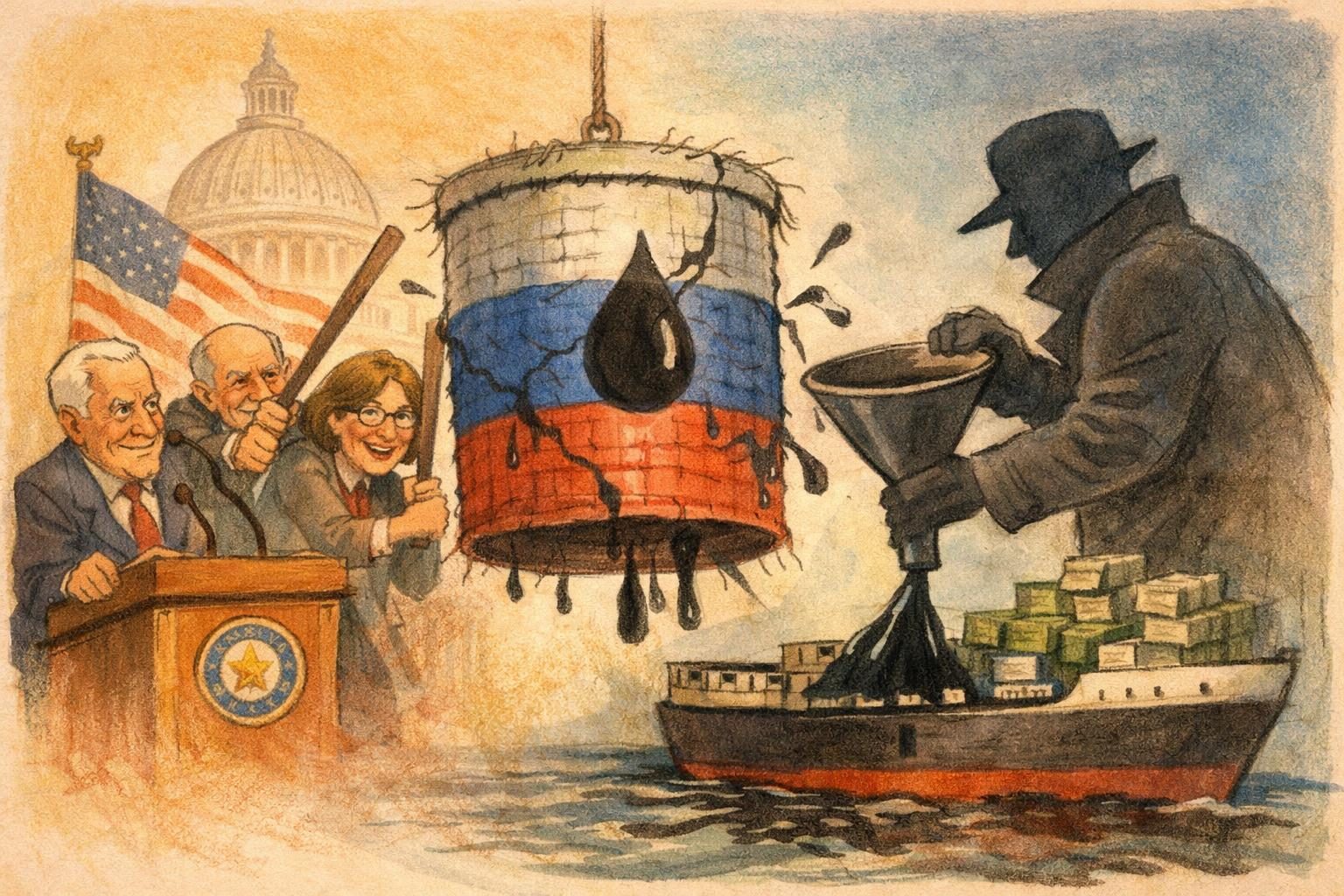
A Senate office said there is overwhelming bipartisan support for moving legislation aimed at holding purchasers of Russian oil accountable, a sign that lawmakers are still trying to turn their anger over Moscow’s war into something more concrete than talking points. The development matters because it suggests the chamber is prepared to advance a measure tied directly to the administration’s foreign-policy posture and sanctions strategy, not merely issue another round of statements condemning Russia. For now, it is still a step in the process rather than final law, but that distinction is important: in Washington, momentum can be real even when the end result remains uncertain. The political incentives are easy to understand. Members of Congress want to appear tough on Russia, tough on sanctions evasion, and tough on the buyers that help keep Russian oil revenue flowing. The harder part is converting that posture into a system that actually changes behavior.
That tension sits at the center of nearly every sanctions debate. Lawmakers can produce broad agreement quickly when the target is politically popular and the language is punitive, especially when the measure can be framed as cutting off money that supports Russia’s war machine. But sanctions do not work automatically just because they pass with a strong vote count. Their effect depends on enforcement, coordination with allies, clarity in the rules, and the willingness of the executive branch to pursue violators aggressively enough to matter. If loopholes remain large, if the chain of buyers is opaque, or if enforcement agencies lack the staffing and tools to keep pace, a law can end up functioning more like a declaration of intent than a pressure mechanism. That is the familiar gap in Washington between symbolic unity and practical consequences. It is also why a Senate push that sounds forceful on paper can still leave the central question unanswered: will the penalties actually bite?
The legislation’s broader significance is less about one procedural step than about the continuing attempt to convert anti-Russia sentiment into operational policy. Congress has spent years expressing outrage over Russian aggression, sanctions evasion, and the willingness of third parties to keep purchasing energy that helps bankroll the Kremlin. Yet every new round of punishment runs into the same old realities. Some countries have different economic incentives. Some companies search for workarounds. Some enforcement structures are slow to adapt to evolving trade patterns. And some sanctions simply lose force over time if they are not updated, monitored, and enforced with discipline. That is why even strong bipartisan movement can still leave room for skepticism. A bill can advance because the politics are safe, even while the mechanics remain difficult. The chamber may be eager to tighten the screws, but Washington has a long record of discovering that screws slip when nobody is actually turning the wrench.
So the immediate takeaway is not that the United States has solved the sanctions problem, but that the Senate is once again trying to show it has not gone soft on Russia. The likely result, at least in the short term, is more pressure on the administration to demonstrate that whatever legislation emerges will be backed by real enforcement and not just a stern press release. That means more scrutiny of how penalties would be applied, who would be targeted, and whether the relevant agencies can follow through. It also means the usual Washington performance of certainty may have to coexist with the reality of implementation, where details matter more than slogans and compliance is harder than condemnation. Even a big Senate push can leave the same uncomfortable question hanging over the policy: will this be one more message bill, or something that forces actual costs on the people helping finance Russia’s war effort? The answer will depend less on the applause around the legislation than on what happens after the votes are counted.
Comments
Threaded replies, voting, and reports are live. New users still go through screening on their first approved comments.
Log in to comment
No comments yet. Be the first reasonably on-topic person here.