
Judge Says Trump’s IRS Deal Used the Courts for an Improper Purpose
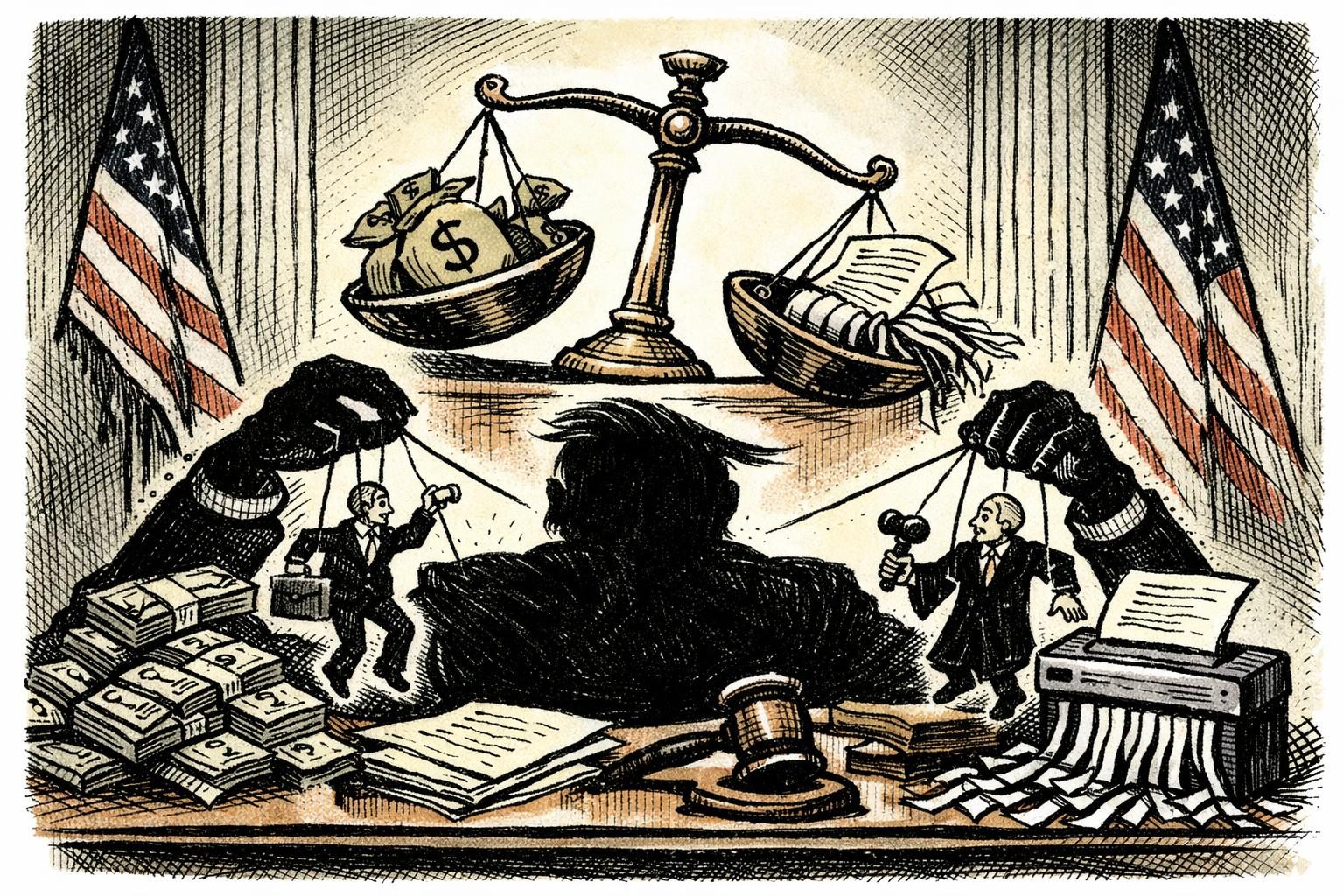
A federal judge has ruled that President Trump and senior Justice Department lawyers used the courts for an improper purpose in the fight over an IRS settlement, giving the already controversial arrangement a fresh layer of judicial condemnation. The decision does more than criticize the parties’ conduct in passing. It suggests that the case was handled in a way that did not reflect the normal clash between opposing sides that courts are supposed to see. In the judge’s telling, the process itself was compromised, which is a far more serious charge than a simple disagreement over legal strategy. That finding deepens the ethical cloud hanging over a deal that critics had already treated with suspicion from the start.
The settlement has been a magnet for criticism because opponents say it appeared to benefit people and entities tied to the president while also creating a taxpayer-funded reserve for claims that were never clearly grounded in law. The exact scope of those grievances has been part of what made the arrangement so hard to defend in public. Supporters of the deal have argued that the underlying dispute needed to be resolved and that the government was entitled to negotiate a settlement, but the judge’s ruling shifts the terrain by focusing on how the litigation was used rather than only on the substance of the compromise. If the court was effectively asked to bless a prearranged outcome, then the judicial stamp of approval becomes part of the controversy rather than a cure for it. That is why the ruling is likely to be read as a rebuke not only of the deal itself but of the method used to get there.
The practical consequence is that the case now carries a stronger implication that the executive branch may have used litigation as a tool to manufacture legitimacy for a politically sensitive arrangement. That is a particularly sharp problem when the president’s own interests are entangled with the federal government’s actions, because the line between public authority and private benefit becomes harder to defend. The court’s finding does not by itself answer every factual question about who knew what, when they knew it, or how the settlement was crafted. But it does make clear that the judge believed the posture of the case was wrong in a way that mattered to the integrity of the process. For lawyers and officials involved, that means the dispute is no longer just about an IRS agreement. It is also about whether the government’s legal machinery was used to give an arguably dubious deal the appearance of normality.
That is where the fallout becomes bigger than the tax matter alone. A ruling like this invites closer scrutiny of the Justice Department lawyers and other officials who helped shape the arrangement, and it raises awkward questions about whether proper ethical boundaries were respected. It also feeds a broader argument that the courts should not be treated as a decorative seal for decisions already made behind closed doors. The judge’s decision effectively places the misuse of the judicial process on the record, which could matter in future challenges, oversight inquiries, or internal reviews. Even if some supporters of the settlement insist the matter was handled within the law, the optics are now much worse. For an administration that has repeatedly framed itself as fighting government abuse, the episode is a damaging reminder that accusations of misuse can come from within the system itself. The court’s message was not subtle: whatever this was supposed to look like, it did not look like fair adversarial litigation, and that finding now hangs over the deal like an unresolved warning.
Comments
Threaded replies, voting, and reports are live. New users still go through screening on their first approved comments.
Log in to comment
No comments yet. Be the first reasonably on-topic person here.