
White House rolls out another big procurement rewrite
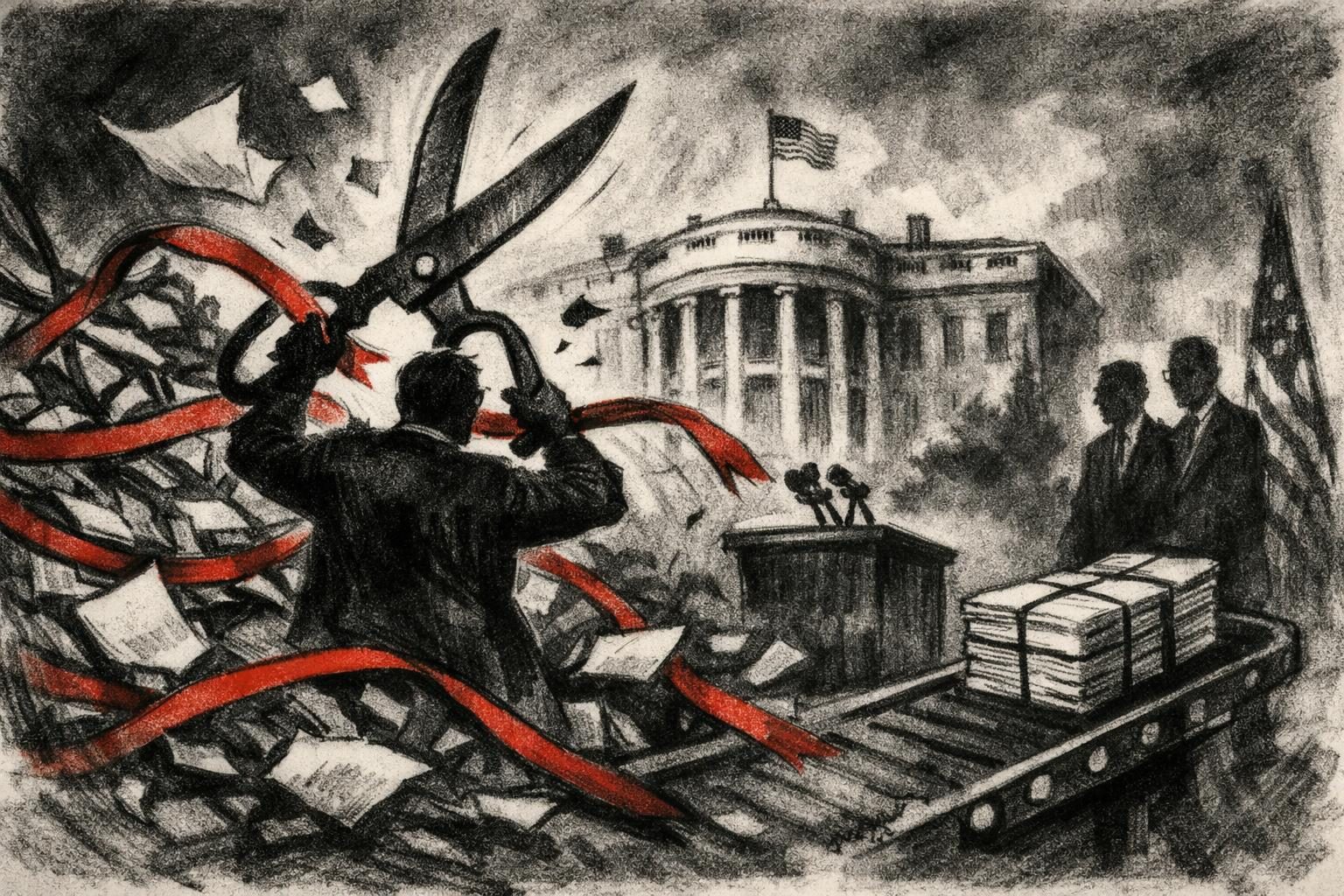
The White House on August 15 moved its government contracting overhaul into a more concrete phase, announcing a new step in the long-running effort to rewrite the Federal Acquisition Regulation. The administration said agencies can begin trimming away roughly one-third of nonstatutory contract requirements that officials say do not materially change outcomes. In plain terms, that means a large block of procurement rules is now being treated as expendable rather than untouchable. The pitch is that the government can make the buying process simpler, faster, and less jargon-heavy without sacrificing core protections. But even if that description is accurate, the scale alone makes this more than a tidy edit. It is a substantial reset of how the federal government tells itself what it must do before it can buy almost anything.
Officials are framing the rewrite as modernization, but the practical consequences will matter far more than the rhetoric. Procurement rules have accreted over decades, and much of that complexity exists because Congress, regulators, inspectors, and agencies have repeatedly tried to solve the last scandal, the last wasteful contract, or the last bureaucratic failure. That history makes simplification politically attractive and operationally risky at the same time. If agencies really can remove needless paperwork and redundant steps, contracting officers may get more room to focus on value, timing, and performance instead of ritual compliance. If the new approach proves too aggressive, though, the result could be thinner guardrails, inconsistent implementation, and more opportunities for bad contracting to slip through under the banner of efficiency. The government is basically betting that a leaner rulebook will produce smarter buying, and that is a bet with a very expensive downside if it is wrong.
The administration is also nudging agencies toward a different purchasing habit: relying more heavily on governmentwide contracts for common goods and services instead of building separate, parallel arrangements across departments. That sounds like a back-office housekeeping measure, but it carries real power because procurement structure shapes who gets access to federal business and how much competition actually exists. Centralized purchasing can reduce duplication, improve leverage, and make it easier for the government to negotiate better terms when the same products are being bought over and over again. It can also steer agencies into a narrower set of approved channels, which may help standardize buying but could frustrate offices that want flexibility or that think their needs are too specialized for a one-size-fits-all vehicle. In other words, the government is not merely removing lines from a rulebook; it is also trying to redirect the flow of how contracts are awarded and managed. That kind of shift tends to create winners and losers long before anyone can measure whether the promised savings are real.
That is why procurement rewrites are often sold as common sense and received as a stress test. The federal contracting system is enormous, deeply technical, and famously resistant to simple fixes, which makes it easy to promise better outcomes and much harder to deliver them consistently across dozens of agencies. Supporters of the overhaul will say the old framework had become too tangled to serve its own purpose, and that agencies need clearer authority to buy commercial products without slogging through pointless procedures. Skeptics will point out that every streamlined system still needs oversight, because speed without accountability is just a faster way to repeat mistakes. The White House is clearly trying to position the change as a cleanup rather than a dismantling, but the difference often becomes visible only after agencies start applying the new rules in real cases. Until then, the true test will be whether the government can reduce friction without creating new loopholes for favoritism, waste, or confusion. If it works, taxpayers may eventually see faster procurement and lower costs. If it fails, the cleanup could end up looking like a long and expensive detour through a more permissive version of the same old mess.
Comments
Threaded replies, voting, and reports are live. New users still go through screening on their first approved comments.
Log in to comment
No comments yet. Be the first reasonably on-topic person here.