
Justice Department keeps suing local governments over policies it says interfere with federal law enforcement
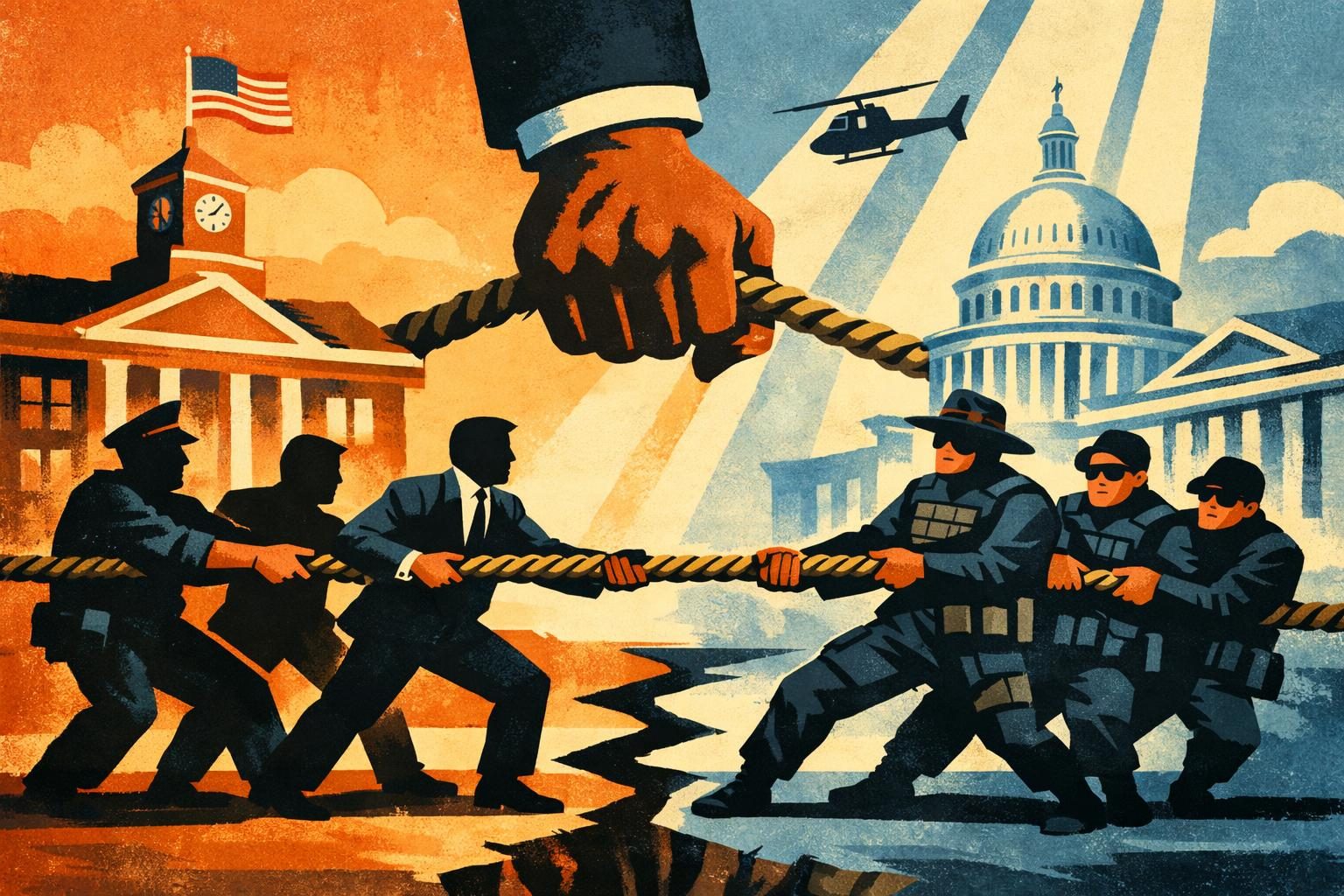
The Justice Department is continuing a legal campaign against state and local policies it says interfere with federal law enforcement, and the latest filings show that the effort is not just rhetorical. In recent weeks, the department has moved against Montgomery County, Maryland, over a firearm-restriction ordinance, while also filing a separate complaint challenging Milwaukee rules on masks and identification. Taken together, the cases reflect a broader posture from federal officials: local governments are not simply being criticized in speeches, they are being sued. That distinction matters because it turns a policy fight into a courtroom contest with deadlines, discovery, and immediate political consequences. The department’s message is that local rules cannot be allowed to frustrate federal authority, especially when officials believe those rules make enforcement harder in practice. Critics see something else entirely, namely a deliberate effort to pressure blue-state and blue-city governments through litigation that carries both symbolic and financial weight.
The Montgomery County case, filed on August 3, has become the most visible example of that approach because it sits at the intersection of gun policy, federal power, and the Supreme Court’s recent guidance on public carry. The department argues that the county’s ordinance is so restrictive that lawful carry becomes functionally impossible in ordinary daily life, a claim that goes to the heart of how local governments can regulate firearms after major court rulings have narrowed the space for blanket restrictions. The legal theory is important, but so is the political framing: by invoking federal civil-rights authority and Supreme Court precedent, the department is presenting itself as enforcing constitutional limits rather than merely advancing one side in a culture-war dispute. That framing gives the case a much wider reach than Montgomery County itself. It suggests the administration is prepared to test just how aggressively it can use the Justice Department to roll back local policymaking that it considers hostile to enforcement priorities. Even if the county eventually prevails on some points, the process forces local officials to spend time, money, and political capital defending rules they say were lawfully adopted.
The Milwaukee complaint points in the same direction, even if the subject matter is different. There, the department is challenging local mask and identification rules it says create barriers for federal officers and undermine lawful operations. The details matter less than the pattern: these lawsuits are being framed as disputes over administrative friction, but they also function as a warning to other jurisdictions that may try to set their own conditions for public rules, public access, or interactions with federal personnel. The department’s public messaging emphasizes law enforcement, identification, and the practical need for federal officers to do their jobs without obstruction. Opponents argue that the real effect is to police local policy choices that are popular with some city and county constituencies and deeply unpopular with federal officials. The result is a legal battlefield where each complaint reinforces the same broad argument: local autonomy ends where Washington says federal enforcement begins. That is not a neutral principle in practice, because the selection of targets and the timing of the suits carry obvious political meaning. It also makes the litigation cumulative, since each new filing helps normalize the idea that local ordinances can be treated as suspect if they complicate federal activity.
What makes this campaign politically potent is that it lets the department act as both prosecutor and messenger. On one level, the lawsuits are ordinary enforcement tools, aimed at specific ordinances and specific municipal practices. On another level, they are public statements about which kinds of local governance the administration is willing to tolerate and which it wants to challenge. That dual role gives the department a built-in advantage in the broader debate over law and order, because it can claim to be defending federal authority while forcing local governments into a defensive posture. The practical consequences are immediate: county attorneys, city lawyers, and elected officials must decide whether to fight, settle, or narrow the policy under pressure. That process itself becomes part of the punishment, even before any court reaches a final judgment. For supporters of the administration, the lawsuits are proof that federal agencies are finally pushing back against rules they say hamstring enforcement. For critics, they are evidence that the government is using the machinery of civil litigation as a political weapon, selecting cases that maximize embarrassment for local officials while claiming the mantle of neutral law enforcement.
The larger takeaway is that this is no longer a series of isolated disputes over technical policy details. It is a sustained effort to redefine the boundary between federal authority and local self-government, with the Justice Department insisting that certain local rules are not merely inconvenient but impermissible. That claim may succeed in some places and fail in others, and the legal outcomes will depend on the precise wording of each ordinance and the precedents the courts choose to emphasize. But the political effect is already visible. Repeated lawsuits send a message to other jurisdictions that local experimentation can trigger federal retaliation, especially when the policies touch firearms, masks, identification, or the day-to-day conditions under which federal officers operate. In that sense, the cases are both legal actions and demonstrations of power. They show a department willing to stretch its enforcement role into a broader campaign against local rules it sees as obstacles, while leaving opponents to argue that the real target is not obstruction at all but political resistance. Whether the courts ultimately side with the government or not, the immediate fallout is the same: local governments are being pulled into expensive, high-stakes fights that turn ordinary policymaking into a front line in the larger conflict over federal pressure and local control.
Comments
Threaded replies, voting, and reports are live. New users still go through screening on their first approved comments.
Log in to comment
No comments yet. Be the first reasonably on-topic person here.