
Court enforcement forces immigration arrest policy back into the box
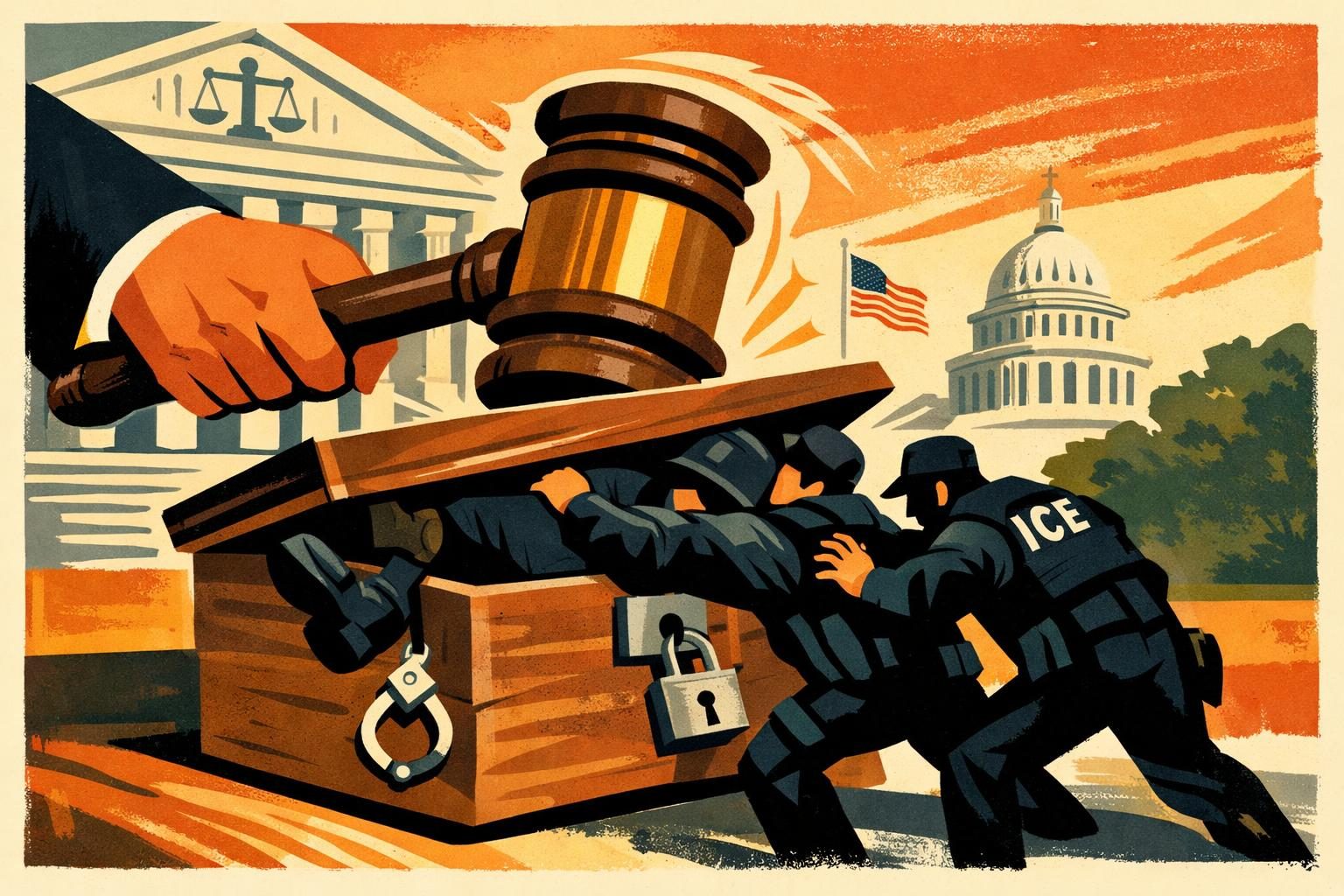
A federal court in Washington, D.C., has moved to enforce an earlier order barring warrantless immigration arrests in the city, a step that sharpens an already familiar fight over how far immigration officers can go when they say they have probable cause. The court’s action on August 16 does not mean the broader legal battle is over, but it does indicate the judge believed the government was not following the earlier ruling the way it was supposed to be followed. That distinction matters. Courts can issue strong orders, but if agencies continue operating as though the limits are optional, the whole point of the injunction starts to collapse. In this case, the enforcement move reads as a direct warning that the government cannot treat judicial restraint like a technicality to be managed after the fact.
At the center of the dispute is a basic but consequential question: can immigration officers keep making arrests without warrants by leaning on an expansive reading of probable cause, even when a court has already said the practice cannot continue in that form? The answer, at least from the court’s perspective, appears to be no. The judge’s enforcement step suggests skepticism that the administration was honoring the prior order in practice, not just on paper. That is not a minor procedural complaint; it is the court signaling that compliance has to be real, not cosmetic. When a ruling is supposed to stop unlawful arrests, then continued arrests under a new label or a stretched interpretation may look less like enforcement and more like evasion. And when a judge begins policing the gap between what an agency says it is doing and what it is actually doing, the legal fight usually gets sharper, slower, and more expensive.
Washington is not just any jurisdiction in this context. It is the federal capital, where the government’s reach is unusually visible and where immigration enforcement can become part of a larger test of institutional limits. The city is also a place where federal agencies operate with a directness that can make local residents feel like they are living inside the machinery of national policy rather than alongside it. That makes the stakes especially high for immigrants, workers, and families who may already be wary of routine encounters turning into arrests. If officers are allowed to treat probable cause as a flexible concept untethered from ordinary safeguards, then the practical effect is a system where people can be seized first and questioned later. Advocates have long argued that this kind of enforcement environment erodes trust and encourages overreach, especially when the government is under political pressure to appear aggressive. The court’s decision suggests that at least one judge is not willing to let those pressures outrun constitutional limits.
For the administration, the order is both a legal setback and a public embarrassment, because it places the conduct of immigration enforcement under a brighter spotlight just as the government is trying to project confidence and control. Courts do not usually step in to enforce a prior injunction unless they believe something has gone wrong with compliance, and that alone can create uncomfortable questions about agency discipline and internal oversight. It also opens the door to more litigation, more monitoring, and more scrutiny of how federal officers are operating on the ground in the city. If the government argues that it is still within the bounds of the earlier order, it may have to explain precisely how its practices fit that claim. If it cannot, then the judge has effectively told it to stop improvising around the edge of a decision it already lost. Either way, the message is the same: an injunction is not an invitation to search for loopholes.
The broader significance goes beyond one city and one arrest policy. Immigration enforcement has repeatedly served as a testing ground for how aggressively the federal government can push before courts intervene, and the D.C. order suggests the answer is being watched closely. That matters because once one agency starts treating legal guardrails as elastic, others may be tempted to follow suit. It also matters because the people most affected are often the least able to challenge the system in real time, especially when fear of detention can deter complaints or public resistance. The court’s move does not settle every issue in the case, and it does not end the underlying fight over enforcement authority. But it does make one thing plain: if the government wants to keep using broad enforcement tactics, it will have to do so within limits the court is prepared to actually enforce. For now, the judge has taken the rules out of the category of suggestions and put them back where they belong, in the box the government was trying to pry open.
Comments
Threaded replies, voting, and reports are live. New users still go through screening on their first approved comments.
Log in to comment
No comments yet. Be the first reasonably on-topic person here.