
The Supreme Court’s emergency docket is once again doing the heavy lifting for Trump-era governance
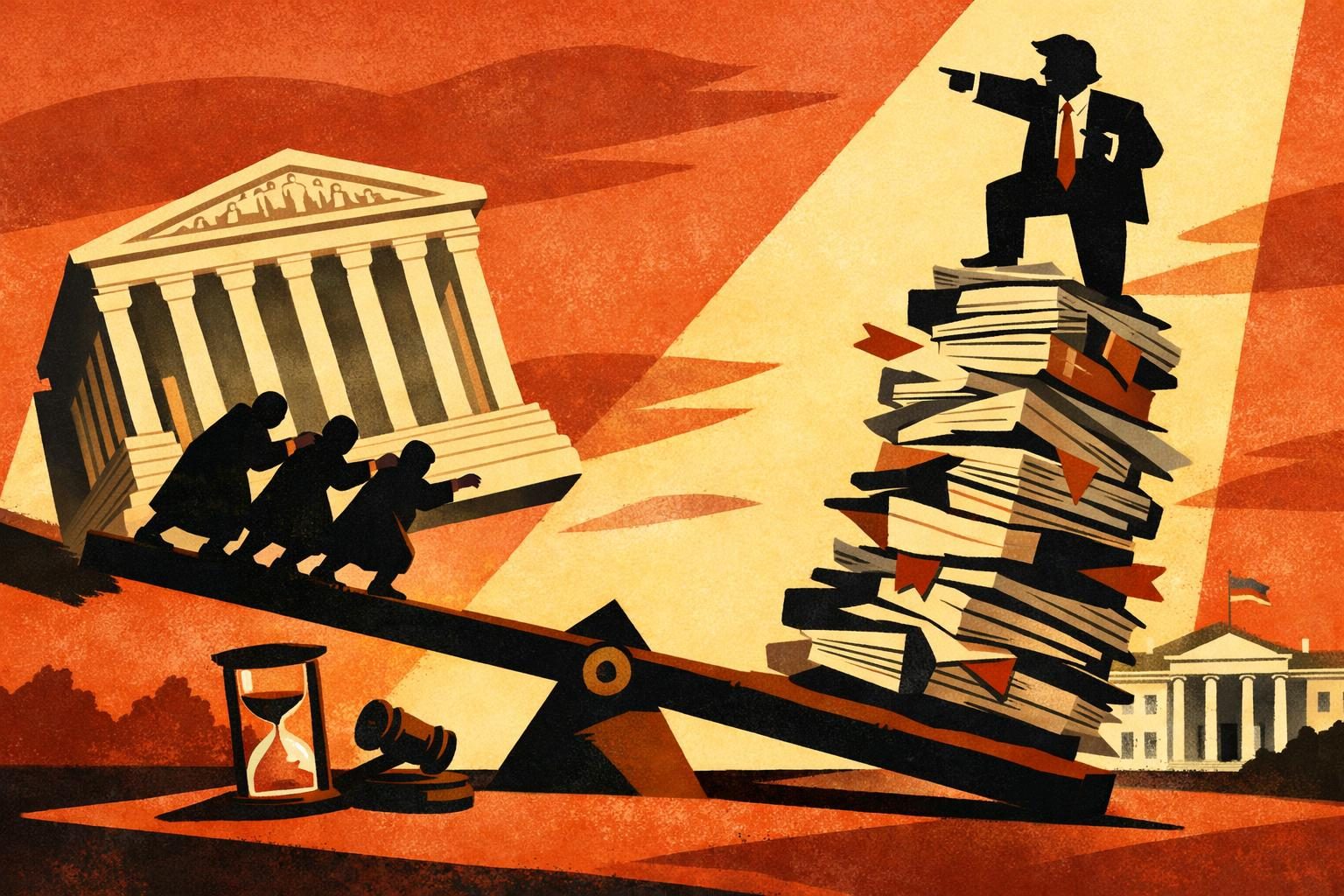
The Supreme Court’s emergency docket was busy again on August 17, and that in itself says a great deal about how much of the Trump-era governing style has migrated from the policy arena into the legal fast lane. What should be ordinary administration has increasingly become a cycle of last-minute stays, injunctions, emergency applications, and appeals that ask judges to decide the fate of major actions before the underlying merits are fully settled. The pattern is not a single, tidy dispute with one clear winner and loser. It is a running stream of urgent requests that make the Court, and often lower courts as well, into a kind of crisis manager for executive branch decisions that were pushed out quickly and then immediately challenged. That is not how stable governance is supposed to work, but it is very much how this moment is working.
The practical significance is bigger than the legal paperwork suggests. When the government moves first and litigates later, it creates a world in which agencies, contractors, regulated parties, plaintiffs, and even state officials are left to guess which version of policy will survive by the end of the week. Emergency litigation can provide temporary clarity, but it can just as easily produce the opposite: a shifting landscape where one court order pauses an action, another limits that pause, and a later appeal resets the clock again. That uncertainty has real consequences. Programs get delayed, staffing and compliance decisions get scrambled, and outside groups start acting as if every major initiative will wind up back on the Court’s emergency calendar. In that sense, the emergency docket is not just a procedural lane; it has become a central feature of the governing environment itself.
The deeper criticism is structural rather than partisan. What these recurring fights suggest is that the legal system is being asked over and over to determine not just whether a policy is politically aggressive, but whether it has a lawful path at all. That distinction matters, because a government can certainly pursue controversial goals and still do so within the bounds of law. But when so many actions are immediately rushed into emergency review, it raises a harder question: is this an administration that is executing policy within clear legal authority, or one that is repeatedly testing the edges and forcing courts to clean up the aftermath under severe time pressure? The answer is not always simple, and in some instances it may depend on the exact order at issue. Still, the sheer volume of emergency activity points to a broader governing method built around speed, confrontation, and appeals.
That method has knock-on effects far beyond the courthouse. Agencies become more cautious when they know every significant move could be frozen within hours. Opponents, seeing that urgency can work, file earlier and more aggressively. Lower courts are pushed to issue rapid rulings in highly compressed windows, often before the facts and legal arguments have fully matured. The result is a kind of procedural whiplash that can be politically useful for an administration eager to project force and momentum, but costly for institutions that need predictability to function well. Even when the White House or its allies secure a short-term win, it often comes with another round of uncertainty and another petition asking for the next emergency fix. That recurring churn is not just exhausting; it is a sign that policy fights are being settled, at least temporarily, by the pace of the litigation rather than by durable resolution. In that sense, the Court’s emergency docket has become less of a backstop and more of a standing feature of federal governance, one that reflects both the aggressiveness of the administration and the fragility of the legal path it is trying to travel.
Comments
Threaded replies, voting, and reports are live. New users still go through screening on their first approved comments.
Log in to comment
No comments yet. Be the first reasonably on-topic person here.