
DOJ Puts Polling Places Under the Microscope in Minnesota
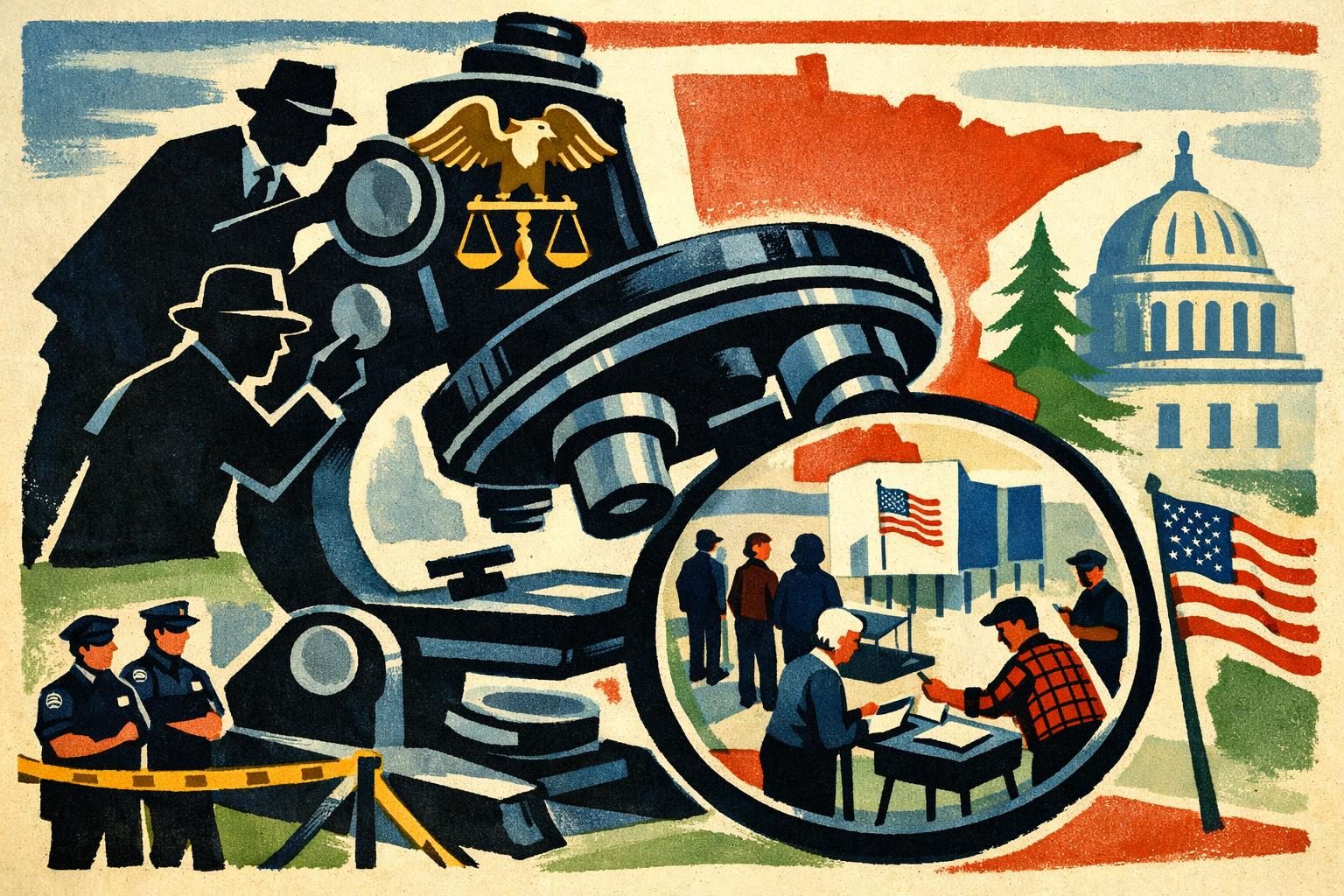
The Justice Department said it will monitor polling sites in two Minnesota counties during the state’s primary election, a move that places federal observers back inside the machinery of local voting on a day when election administration is already under a spotlight. The department cast the effort as a routine and lawful step aimed at transparency, ballot security, and compliance with federal election law. That description is technically straightforward, but it does not fully capture the political weight of federal personnel being inserted into polling-place operations. When Washington sends monitors into local election environments, the action is never read only as a bureaucratic exercise, even when officials insist that is all it is meant to be. The announcement, made on August 18, 2026, is a concrete enforcement step, and the symbolism is unavoidable.
Election monitoring is one of those tools that can serve multiple purposes at once, which is why it tends to reassure some voters and unsettle others. In principle, federal observers can help ensure that voters are not improperly turned away, that polling sites follow the law, and that election workers are not left to improvise in ways that invite disputes later. In practice, the same federal presence can be interpreted as a signal that something is already wrong, or as a form of pressure placed on local officials who are trying to run a clean election under difficult conditions. That tension is especially sharp in the current political climate, where disputes over election integrity have become a standing feature of public life rather than an occasional flare-up. Supporters of stronger oversight are likely to frame the monitoring as a prudent safeguard, while critics are likely to ask whether the move is narrowly tailored or whether it risks turning lawful oversight into a public performance.
The Justice Department does have real authority to monitor elections under federal law, and that authority matters. But the legal basis does not remove the political consequences, particularly in states where election administration is already closely watched and frequently litigated in the court of public opinion. Federal observation can help document whether polling places are accessible and whether procedures are followed consistently, which is the benign explanation the department will emphasize. At the same time, the decision to place monitors in specific counties raises the inevitable question of why those locations were chosen and what, if anything, prompted the federal presence there rather than elsewhere. Officials have not publicly turned the announcement into a broader accusation, and there is no indication from the department’s statement that the monitoring reflects a finding of wrongdoing. Even so, the message received by local administrators may be less about enforcement and more about scrutiny, which can alter behavior before anyone says a word.
For county election workers, the immediate effect is likely to be administrative and psychological rather than dramatic. Local officials will have to manage the optics of federal observers without allowing voters to think their ballots are somehow under suspicion or their polling place has become a scene of conflict. They will also need to explain, repeatedly if necessary, that monitoring does not mean federal control over the election and does not imply that voters should expect trouble. That kind of reassurance matters because election trust is fragile and often shaped less by law than by atmosphere. Civil-rights advocates and voting-rights groups will likely want to know whether the monitoring is focused on actual access concerns, such as voter assistance, language access, or polling-place procedures, or whether it is simply a broad surveillance posture. If the effort stays narrow and transparent, it can look like a legitimate enforcement step; if it expands into something more open-ended, it may be seen as intimidation wearing a badge of neutrality. Either way, federal officials have now entered the room, and that changes the stakes for everyone else in it.
Comments
Threaded replies, voting, and reports are live. New users still go through screening on their first approved comments.
Log in to comment
No comments yet. Be the first reasonably on-topic person here.