
Illinois mine managers indicted over fire evacuation and record-falsification allegations
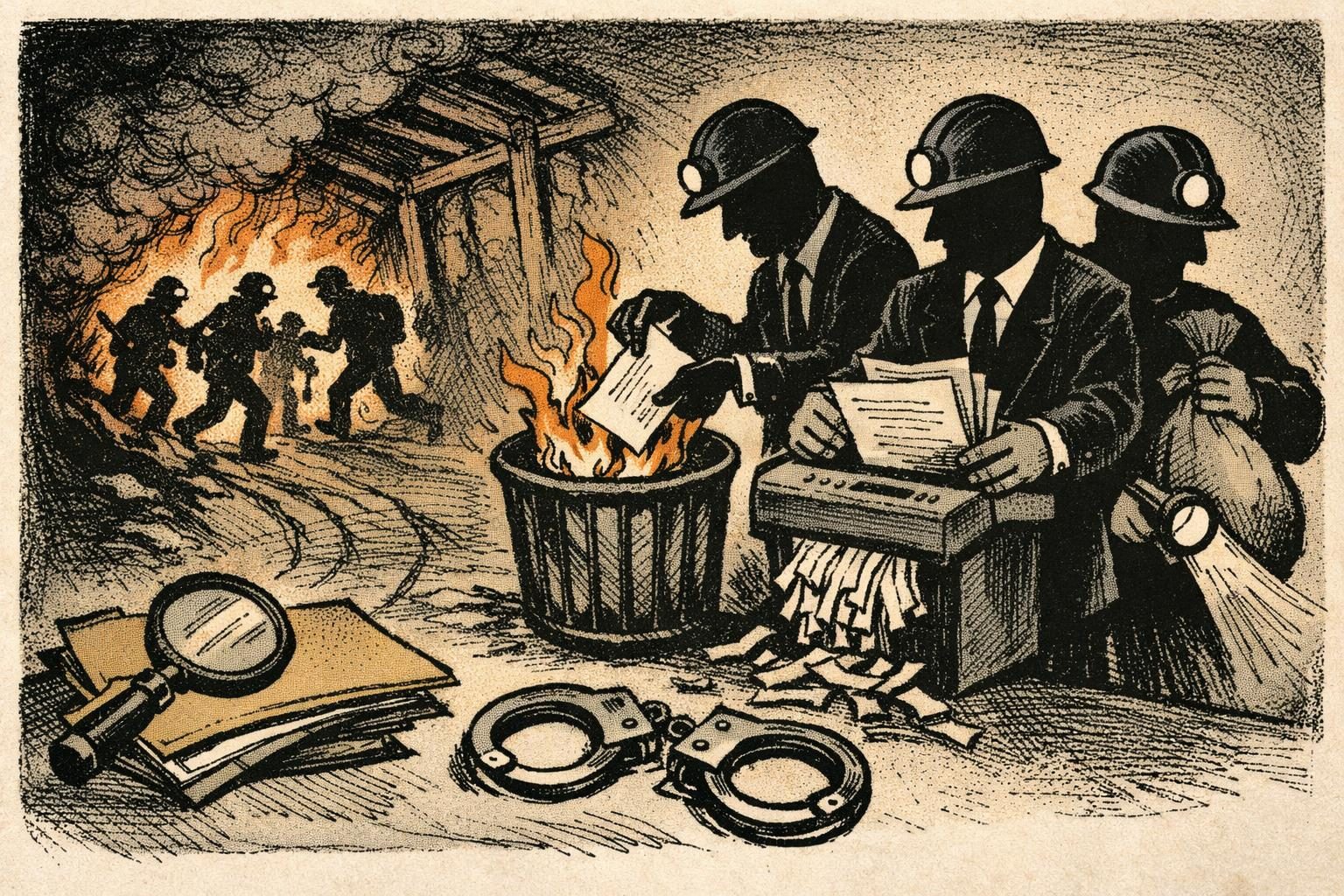
Federal prosecutors say four managers and supervisors tied to an Illinois mine face serious criminal allegations after an underground fire, including claims that workers were not evacuated when they should have been and that records were later falsified to obscure what happened. The indictment announced Aug. 18 puts the case squarely in the realm of worker safety, emergency response, and possible obstruction of a federal investigation. According to the government, the conduct at issue was not simply a matter of confusion during a dangerous event, but part of a broader effort to manage the fallout after the fact. That distinction matters because mine emergencies move quickly, and the difference between a bad call and a cover-up can determine whether investigators treat the incident as an accident, a violation, or something worse. In a setting where underground conditions can become lethal in minutes, the allegation that leaders failed to get miners out in time is as troubling as the claim that they then tried to hide the record.
The case also highlights how much mine safety depends on routine compliance before a crisis ever begins. Outside the industry, evacuation procedures, reporting rules, and maintenance logs can sound like paperwork, but in a mine those systems are part of the life-and-death infrastructure. Federal prosecutors allege that those obligations were not followed here and that the response to the fire did not end when the immediate danger passed. If investigators prove the charges, the story would not be limited to one incident in one Illinois mine; it would suggest a breakdown in the basic chain of accountability that is supposed to protect workers when underground conditions turn volatile. That is why the allegations are so consequential. They go beyond the question of whether a fire happened and ask whether managers put the company’s interests ahead of the miners who were exposed to the danger.
For labor advocates and mine safety observers, the indictment is likely to be read as another example of what happens when emergency decisions are left in the hands of people with a strong incentive to minimize bad news. The government’s allegations point to an environment where evacuation was allegedly delayed or ignored, and where the official record may have been altered to make the response appear more defensible. That is the kind of charge that resonates far beyond one workplace because it cuts to a familiar concern in hazardous industries: rules look sturdy on paper, but they can be bent or buried when production, reputation, or liability are on the line. If the case develops as prosecutors describe, it could reinforce the argument that enforcement is not some bureaucratic afterthought but the only meaningful backstop when employers fail to police themselves. Mine safety often gets discussed only after tragedy, but this indictment suggests the more uncomfortable truth that some of the most dangerous decisions happen after the alarm has already sounded.
The reputational consequences are immediate, even though the legal process has only begun and the allegations remain to be tested in court. Once prosecutors accuse managers of obstruction and record-falsification, the matter stops looking like a one-off emergency failure and starts looking like a broader integrity problem in the safety system itself. That can affect worker confidence, regulatory scrutiny, and how other employers in high-risk settings think about documentation, supervision, and emergency planning. It also gives federal authorities a fresh example of why they treat mine safety violations as more than technical mistakes. If the charges hold up, the message will be plain enough: when workers are left in danger and the paperwork is then manipulated, the government may treat the cover-up as part of the harm, not a separate administrative issue. For an industry that depends on trust in rules, inspections, and rapid response, that is a warning that is hard to ignore.
Comments
Threaded replies, voting, and reports are live. New users still go through screening on their first approved comments.
Log in to comment
No comments yet. Be the first reasonably on-topic person here.