
California and Oregon escalate their fight against Trump’s election order
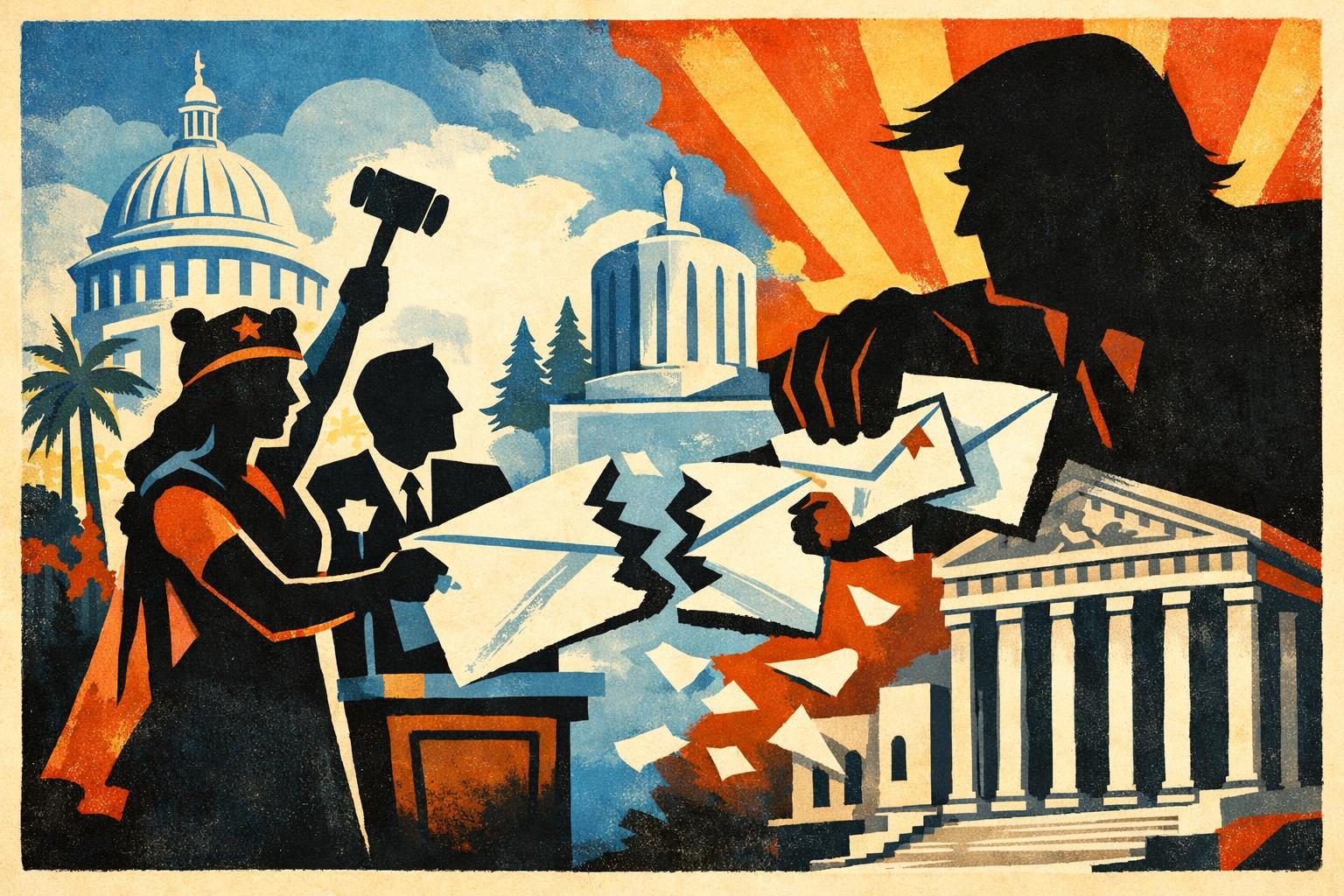
California and Oregon spent Aug. 24 signaling that they are not backing down from a fight that has quickly become one of the sharpest state-level rebukes yet to the Trump administration’s election agenda. Both states are responding to the administration’s election order after the Supreme Court’s latest move kept the dispute alive rather than shutting it down. In Oregon, officials tried to calm voters by saying mail ballots remain safe to use, while also making clear that the underlying legal battle is still active and could shift again before November. In California, Gov. Gavin Newsom said the state intends to sue and paired that announcement with new legislation designed to protect ballots from interference. Taken together, the messages were not subtle: state leaders are treating the order as an attack on how elections are run, not as a narrow administrative tweak. They are also treating it as something that could force immediate changes if courts ultimately let it stand.
That stance reflects more than partisan theater. State election offices are being asked to prepare for a legal fight that could change the mechanics of voting in the middle of an already crowded election calendar. If the administration’s order survives, officials could be forced to deal with new voter-list requirements, altered envelope markings, revised data-sharing rules, and fresh compliance obligations involving the Postal Service. Even before any final ruling, those kinds of demands can consume staff time, money, and attention that would otherwise go toward routine election preparation. That is part of why state officials are describing the order not as a harmless procedural correction but as a system-level disruption. Election administrators do not get to wait until the last minute and hope the rules settle themselves. They have to plan early, build contingencies, and keep those plans updated every time the courts move the goalposts.
The political argument around the order is equally direct, and it is already hardening into familiar lines. Democratic officials say the administration is wrapping suppression in the language of integrity, using federal power to make mail voting harder while claiming the opposite intent. State election leaders counter that they are being pushed toward tasks they believe are either impossible, unlawful, or both. The Supreme Court’s Aug. 24 action did not resolve those core disputes, and it did not give either side the kind of final answer that would quiet the fight. Instead, it preserved a live controversy that now has to run in parallel with ballot preparation, litigation planning, and public reassurance campaigns. That makes the issue especially combustible because it is not happening in the abstract. It is landing on top of the practical machinery of elections, where deadlines are inflexible and confusion spreads fast. The longer the case drags on, the more each new filing or ruling becomes part of the operational burden facing states.
The California and Oregon responses also fit into a broader pattern of resistance from states that view the White House as trying to centralize election control through executive action. California’s newly announced legal challenge and legislation are meant to show that the state will not simply absorb new federal directives and sort them out later. Oregon’s message, meanwhile, is designed to protect confidence in mail voting even as its officials prepare for a continuing court battle. Similar concerns are surfacing elsewhere, including in statements from other state election officials who are watching the legal fight closely and preparing for the possibility of fresh compliance demands if the order advances. That is the larger significance of the dispute: it is not only a courtroom argument over one election rule, but a test of whether states still set the basic terms for running their own elections. If the administration succeeds, the precedent could reach well beyond mail ballots. If it fails, the scramble it has already triggered will still have left a mark on election planning, budgets, and voter confidence. Either way, the states are making clear that they intend to fight on, and they are doing so in a way that frames the order as a direct threat to democratic administration rather than a technical dispute over paperwork.
Comments
Threaded replies, voting, and reports are live. New users still go through screening on their first approved comments.
Log in to comment
No comments yet. Be the first reasonably on-topic person here.