
White House Unveils Another Iran Crackdown With Comic-Book Branding
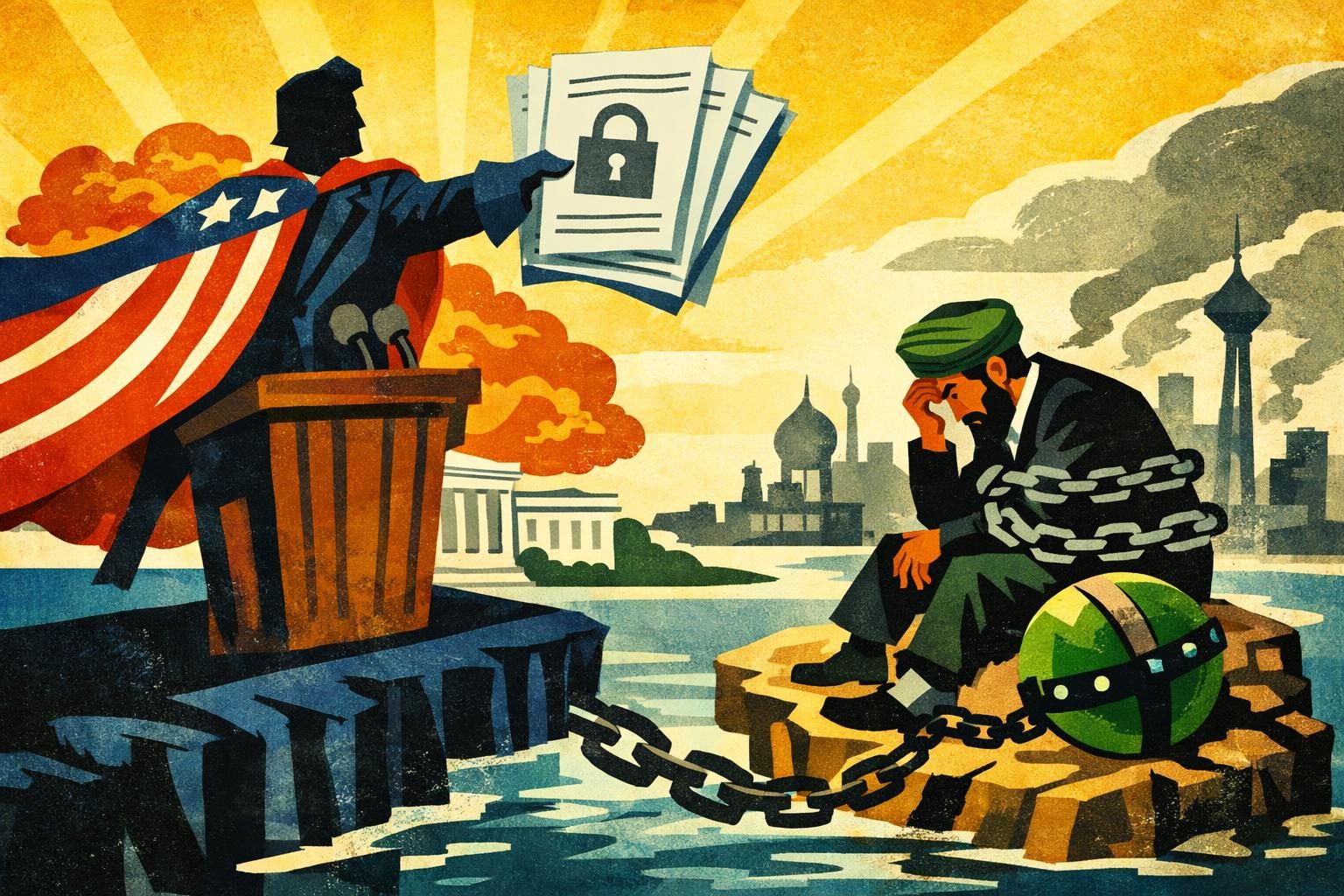
The White House on August 24 rolled out a new sanctions campaign against Iran with a name that sounds like it was designed by a focus group that grew up on dystopian comic books: Operation Economic Outcast. The Treasury-led push is meant to cut off what administration officials describe as Iran’s remaining economic lifelines and to deepen the pressure that has already been building after earlier military action and months of escalation. In practical terms, the government is signaling that it wants not just to punish Tehran, but to make the country’s room to maneuver smaller, costlier, and harder to predict. The messaging is classic maximal pressure politics: the sanctions package is framed less as a tool of statecraft than as the next chapter in a campaign to isolate the Iranian regime as completely as possible. That may sound forceful in a briefing room, but it also tells banks, shippers, and corporate compliance teams that the ground rules can keep shifting under their feet.
The administration is presenting the move as a necessary response to Iran’s behavior and as a continuation of a broader effort to keep the regime from recovering economically after the damage already inflicted on its strategic position. Officials say the objective is total isolation, which is the sort of phrase that looks clean in a statement but becomes far messier when it meets the real world of trade, finance, and international enforcement. Sanctions rarely stop at the intended target, especially when they are broad enough to touch the intermediaries that keep global commerce moving. Banks have to decide whether a payment is too risky to touch, shipping firms have to wonder whether a port call could trigger penalties, and multinational companies are left parsing a compliance environment that can turn on a single designation or clarification. The White House is betting that that uncertainty itself is part of the pressure. It probably is. But uncertainty is also how sanctions spill outward, creating spillover effects that can be hard to control once they start moving through the system.
That is why supporters and critics will likely talk past each other on this one. Backers of the administration’s approach will argue that Iran has earned every legal and economic constraint Washington can bring to bear, and that a regime under pressure is a regime with fewer resources to fund regional activity or rebuild its capacity. They will see the new campaign as a logical next step in a confrontation that the White House has already chosen to frame in hard, uncompromising terms. Critics, meanwhile, will point out that sweeping sanctions often end up hurting civilians before they change elite behavior, and that they can strengthen hardliners by letting leaders blame outside enemies for domestic pain. There is also the familiar question of whether a government that constantly speaks in the register of total domination is leaving enough room for an off-ramp if one ever becomes available. The administration’s branding suggests a desire not simply to pressure Iran but to perform toughness for an audience that expects theatrical certainty. That is politically useful. It is less obviously a recipe for careful diplomacy.
The immediate consequences of Operation Economic Outcast will likely be felt first in Treasury enforcement and in the worldwide network of firms that spend their days guessing where the next red line will be drawn. International banking compliance teams are likely to tighten screening, review counterparties, and retreat from anything that looks even faintly exposed to Iranian risk. Regional middlemen and commercial channels that have survived previous rounds of pressure may find themselves under sharper scrutiny, even if Washington does not say every last detail out loud on day one. Tehran, for its part, is expected to respond with familiar rhetoric, denunciations, and attempts to portray itself as the victim of economic warfare rather than the author of its own isolation. All of that fits a broader pattern in which the administration seems to prefer escalation first and explanation later, announcing the latest blow with a slogan and only afterward letting the bureaucracy clean up the consequences. That approach may energize loyalists who want to see Washington act like it is winning. It still leaves open the harder question of what, exactly, counts as success if the result is more pressure, more friction, and no clear end to the cycle of retaliation and sanctions that has come to define the relationship.
Comments
Threaded replies, voting, and reports are live. New users still go through screening on their first approved comments.
Log in to comment
No comments yet. Be the first reasonably on-topic person here.