
States sharpen their fight after Trump’s election order survives the first round
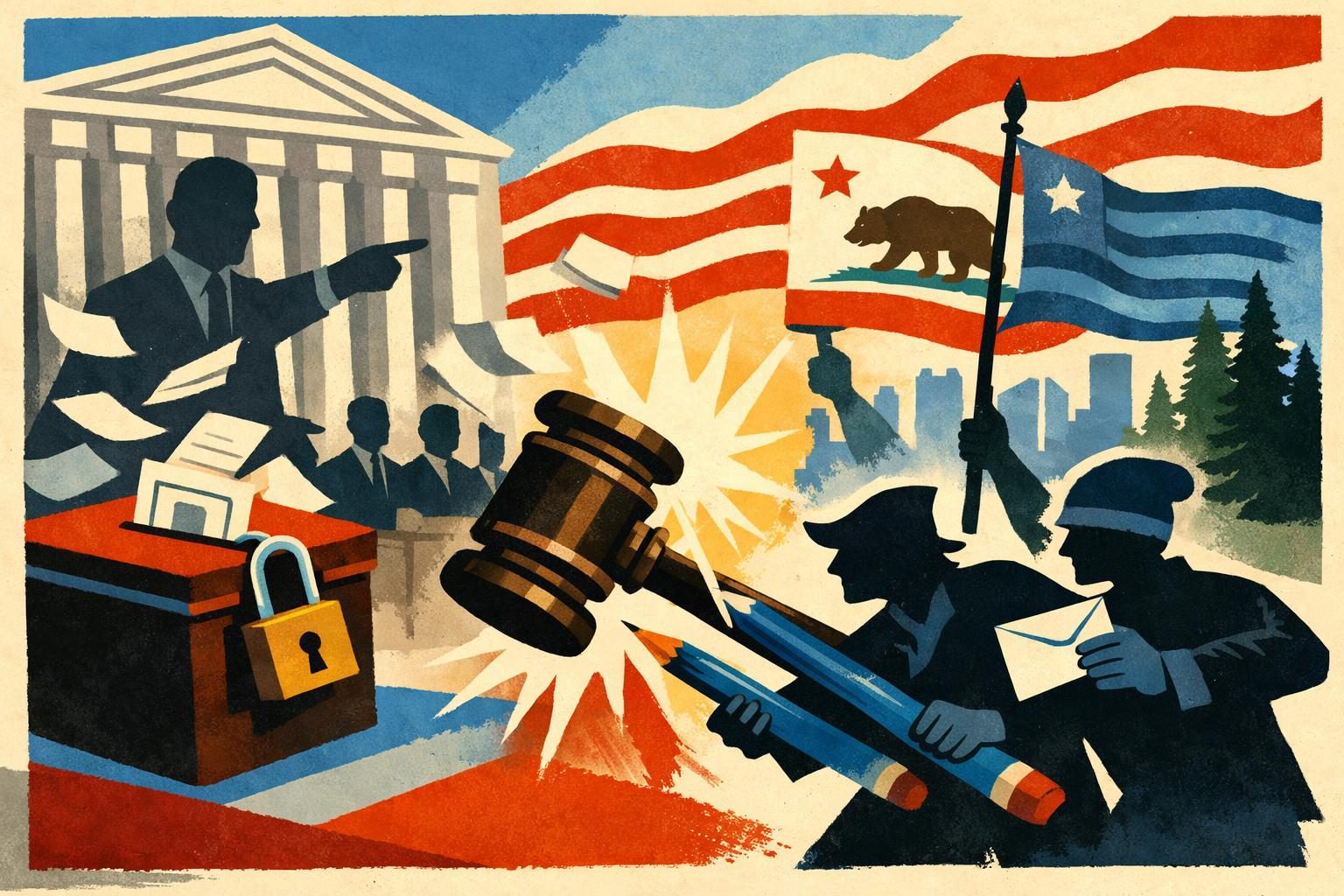
California and Oregon are treating the Supreme Court’s latest action on President Trump’s elections order as a temporary procedural setback, not a legal vindication, and they are making that distinction loudly. On Monday, officials in both states said the court’s move did not answer the central question at the heart of the dispute: whether the administration can force changes to how states administer elections, especially around mail voting, by way of a presidential directive. California Attorney General Rob Bonta said the ruling was about timing and did not decide the underlying legality of the order. Oregon leaders struck a similar note, saying the administration’s approach is still an attempt to interfere with state control over elections. The immediate message from both states was not caution, but defiance.
That response matters because election administration is not something Washington can simply rewrite on paper and expect to be carried out on the ground. States, counties, and local officials are the machinery that actually designs ballots, processes mail votes, sets deadlines, and certifies results. If those officials view a federal order as hostile, unlawful, or designed to punish them, compliance becomes far less likely even before the courts resolve the merits. Bonta’s comments made clear that California sees the order as a live threat, not a theoretical one, and that the state expects the administration to justify both the authority behind it and the practical means of carrying it out. Oregon’s posture was equally pointed, with state leaders framing the dispute as another attempt by Trump to intrude into an area traditionally left to the states. The legal question may still be open, but the political and administrative reaction is already hardening.
The stakes are elevated because Trump’s order does more than raise broad complaints about voting procedures. According to the states challenging it, the directive is aimed at mail voting and includes threats of prosecution directed at state officials who do not go along. That turns a policy fight into something more combustible, since it suggests the administration is not merely asking for cooperation but warning of consequences if states resist. For blue states like California and Oregon, that reads less like an administrative correction and more like an attempted federal takeover of elections. Their leaders have responded accordingly, presenting the issue as a defense of state sovereignty rather than a narrow legal argument over deadlines or drafting details. Once the dispute is cast in those terms, compromise becomes much harder, because any concession can be portrayed as surrendering control over a core democratic function.
The Supreme Court’s procedural ruling has therefore had the opposite of its intended calming effect in some state capitals. Instead of easing tensions, it appears to have reinforced the belief that the administration will keep pressing until someone draws a hard line. That helps explain why the reaction from California and Oregon was so immediate and so categorical. They are not waiting for the federal government to claim momentum from the ruling. They are signaling to election workers, county clerks, and voters that state officials still intend to resist what they see as an unconstitutional intrusion. Whether the order ultimately survives on the merits is still unresolved, but the political damage may already be done. The states most likely to oppose it are now more entrenched, not less, and the administration has given them another reason to frame the fight as a defense against federal overreach rather than a mere dispute over paperwork.
Comments
Threaded replies, voting, and reports are live. New users still go through screening on their first approved comments.
Log in to comment
No comments yet. Be the first reasonably on-topic person here.