
States blast the mail-voting order and vow to keep fighting
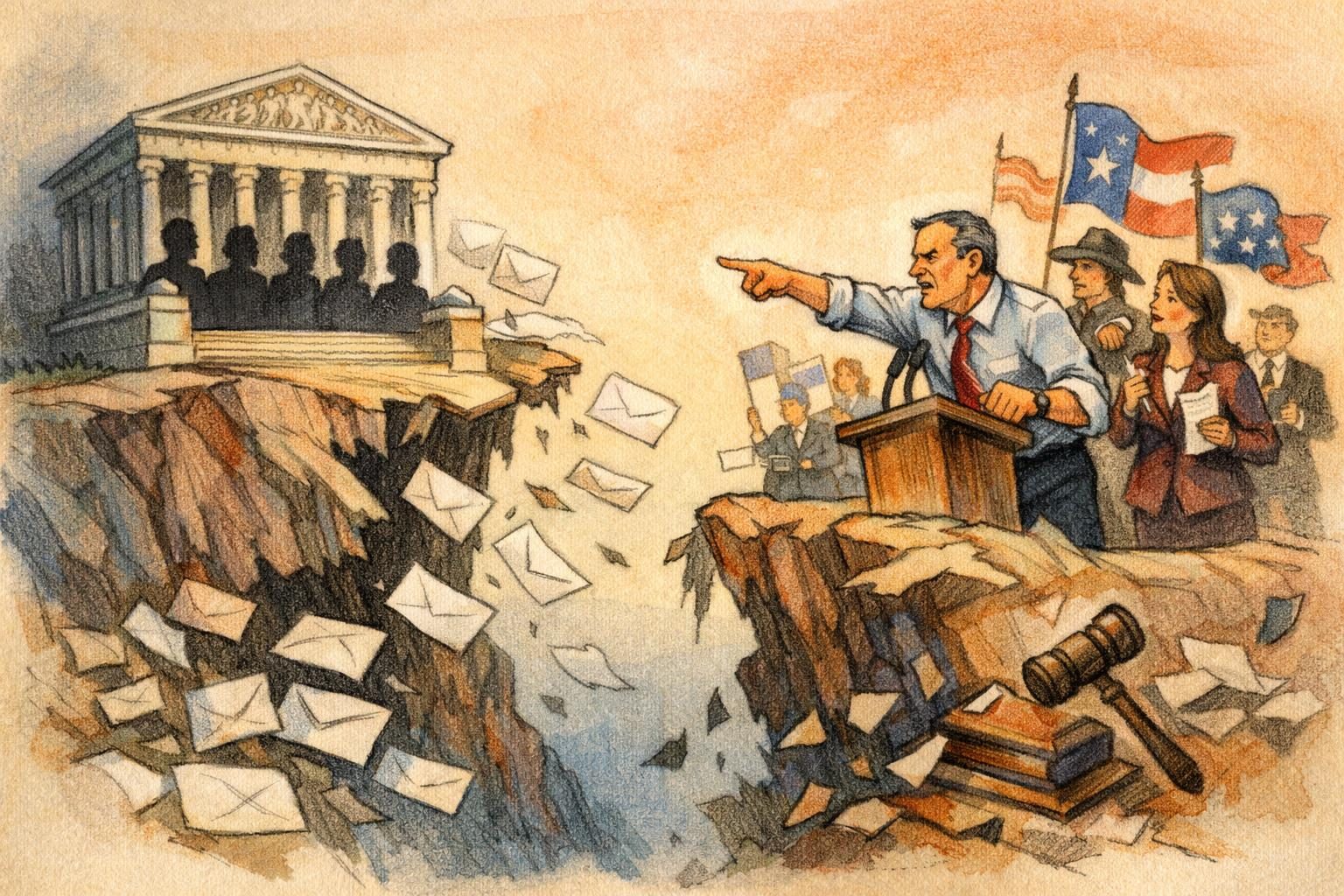
State officials moved quickly after the Supreme Court’s emergency action to block or narrow the immediate impact of Trump’s mail-voting order, and their message was blunt: they believe the administration overreached, they believe the order is unlawful, and they are not done fighting. Attorneys general in several states issued statements within hours, portraying the ruling as a temporary setback rather than a final answer and promising to keep pressing their arguments in lower courts. That response is politically important for reasons that go beyond the legal briefs. Election administrators do not run on speculation, and yet that is exactly the position this fight has put them in, forcing states to prepare for a process that may still change while voting deadlines and training schedules are already in motion. The White House may have won a round in the courtroom, but the broader battle is now about whether it can force states to reorganize election systems on the fly. In practical terms, this means public officials are having to tell voters and local clerks that the ground beneath them is still shifting, which is a terrible way to manage something that is supposed to inspire trust and routine.
The pushback from states is rooted in a basic institutional point: election administration is primarily a state and local function, and the federal government cannot simply step in and rewrite the rules because it wants a different outcome. Officials in places like Massachusetts, Oregon, and Washington argued that the order would create immediate operational headaches, cost money, and produce confusion at the very moment election preparation is becoming more intense. Their objections are not abstract constitutional theory, even if those arguments matter in court. They are talking about staffing, chain-of-custody procedures, ballot processing, training materials, technology systems, and the simple fact that local election workers need stable guidance long before ballots are mailed or received. If federal agencies are suddenly told to intervene in systems that states have built over years, the burden does not disappear just because the legal dispute remains unresolved. It lands on counties, municipal clerks, and state election offices that have to keep the machinery running while also guessing whether they may need to redo parts of it. That is why the backlash has been so immediate and so practical: the states are not only objecting to the policy, they are objecting to the chaos of being ordered to reorganize their elections under emergency conditions.
There is also a broader political pattern here that state officials are eager to highlight. Critics of the administration say the White House is using litigation as a policy tool because it cannot get the same result through Congress or through ordinary regulatory channels. That accusation has extra force when the administration issues a sweeping election directive and then relies on emergency court action to defend it. Supporters of the order frame it as an integrity measure, but the states counter that no election system becomes more legitimate when it is built on federal overreach, rushed implementation, and repeated emergency injunctions. The dispute has the familiar shape of a Trump-era governing strategy: announce an aggressive change, force opponents into court, and treat legal upheaval as proof of strength rather than evidence of instability. State attorneys general are clearly trying to flip that script by making the administrative costs visible. They are telling the public, in effect, that whatever one thinks of the policy goal, the method itself is reckless. And because election law is already an area where confusion can become a political weapon, the stakes of this method are larger than the immediate docket number or the timing of one ruling.
For voters, the immediate consequence is uncertainty, and uncertainty is exactly what election systems are supposed to avoid. Even if the administration eventually persuades the courts on some aspect of the order, the damage created by this kind of improvisation may already be done. Public confidence depends on clear rules, predictable timelines, and the sense that election officials are not being forced to improvise under political pressure. Instead, state leaders now have to warn that the rules may still change, that litigation is still unfolding, and that local officials may need to adapt again if the case keeps moving. That is a lot to ask of a system that already asks a great deal of county workers and state agencies. The White House can insist this is about election integrity, but integrity is not served by a process that starts with a dramatic directive and ends with emergency court fights, state-level outrage, and last-minute operational scrambling. For now, the states are making clear that they intend to keep contesting the order at every available stage, and that the legal and political fight over mail voting is nowhere near settled.
Comments
Threaded replies, voting, and reports are live. New users still go through screening on their first approved comments.
Log in to comment
No comments yet. Be the first reasonably on-topic person here.