
Supreme Court Lets Trump’s Elections Order Move Forward, For Now
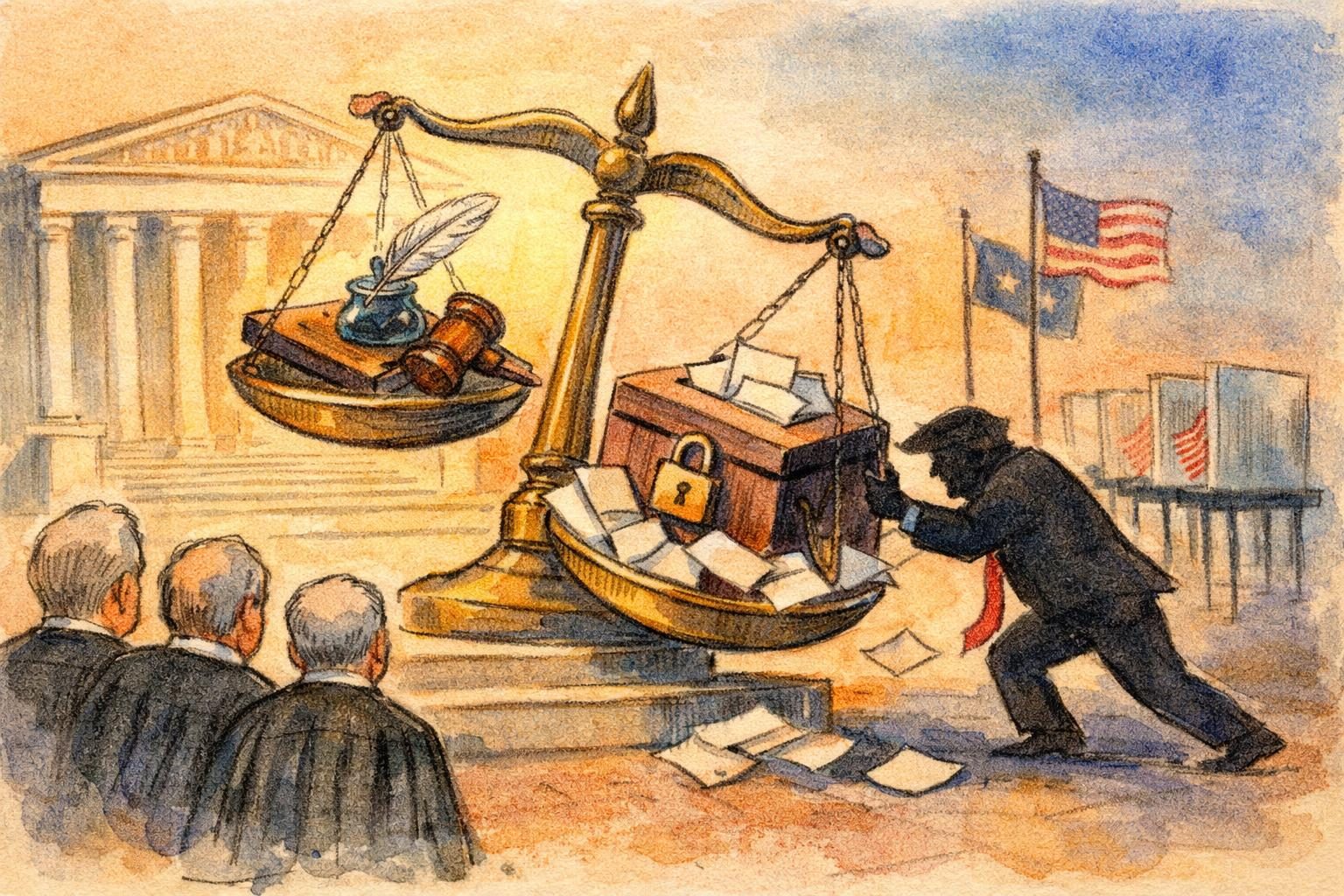
The Supreme Court has allowed President Trump’s elections executive order to move forward, at least temporarily, lifting a lower-court block on key parts of the directive while the underlying legal fight continues. The order was stayed on August 24, which means the justices did not decide whether the policy is ultimately lawful, only that the challengers had not yet won the kind of immediate relief that would keep it frozen in place. For the administration, that is a meaningful procedural victory because it opens the door to implementation while the case is still being litigated. For state officials and voting-rights opponents, it is a setback that could force them to fight on multiple fronts at once. The ruling leaves in place a highly consequential question about how much the federal government can push into the mechanics of election administration before a court reaches the merits.
The executive order at issue is not a narrow or symbolic gesture. According to the challengers, it reaches into voter-list maintenance, mail-in voting rules, and the potential prosecution of election workers, all areas that traditionally sit close to the core of state control over elections. That is why the order has drawn immediate resistance from Democratic state officials, who argue that it would inject federal pressure into local election systems and create confusion at a time when states need certainty, not threats. Their concern is not just about the text of the order, but about what happens if agencies, election offices, and local officials start altering procedures while courts are still sorting out the lawfulness of the directive. Once administrative systems begin changing, they are often difficult to unwind, especially when deadlines, training schedules, and ballot preparation are already in motion. In practical terms, the court’s decision gives the White House room to press ahead and forces opponents to keep litigating while the machinery of election administration keeps turning.
State attorneys general from multiple Democratic states moved quickly to condemn the ruling, calling it a dangerous expansion of federal power over voting and election administration. California Attorney General Rob Bonta said the decision would allow the president’s order to advance despite what his office sees as serious legal problems, while New York Attorney General Letitia James and Washington Attorney General Nick Brown also issued statements warning that the directive would interfere with lawful mail voting and state election operations. Their central argument is that the administration is trying to build a system that relies heavily on federal data and federal leverage, even though that data may be incomplete and the Constitution does not give the White House a blank check to redesign elections. They also say the threat of prosecution against election workers could have a chilling effect, discouraging the people who actually run elections from making ordinary, good-faith decisions. Those objections are more than political talking points, because if federal agencies begin demanding changes on a compressed timeline, state officials could face a real compliance problem with no easy way to satisfy both state law and Washington’s demands.
The immediate legal significance of the Supreme Court’s move is that the dispute is now a durability test rather than a final ruling. The plaintiffs still have the chance to argue that the order exceeds presidential authority and intrudes on powers reserved to the states or Congress, but they will have to do so while the administration benefits from a live window to implement at least some of the directive. That dynamic matters in election law because temporary orders can shape actual voting rules long before a court reaches a final judgment. If states are forced to alter procedures, retrain staff, or adjust systems in response to federal pressure, the practical consequences can outlast the lawsuit itself. The case now becomes a test of whether procedural patience can preserve election rules long enough for courts to resolve the underlying constitutional questions, or whether the administration can create enough momentum that the fight becomes harder to reverse. For now, the White House has gained breathing room, and its critics are left warning that a short-term court order may carry long-term effects for how Americans cast and count their votes.
Comments
Threaded replies, voting, and reports are live. New users still go through screening on their first approved comments.
Log in to comment
No comments yet. Be the first reasonably on-topic person here.