
Supreme Court clears the way for Trump’s mail-voting order, and election officials are bracing for chaos
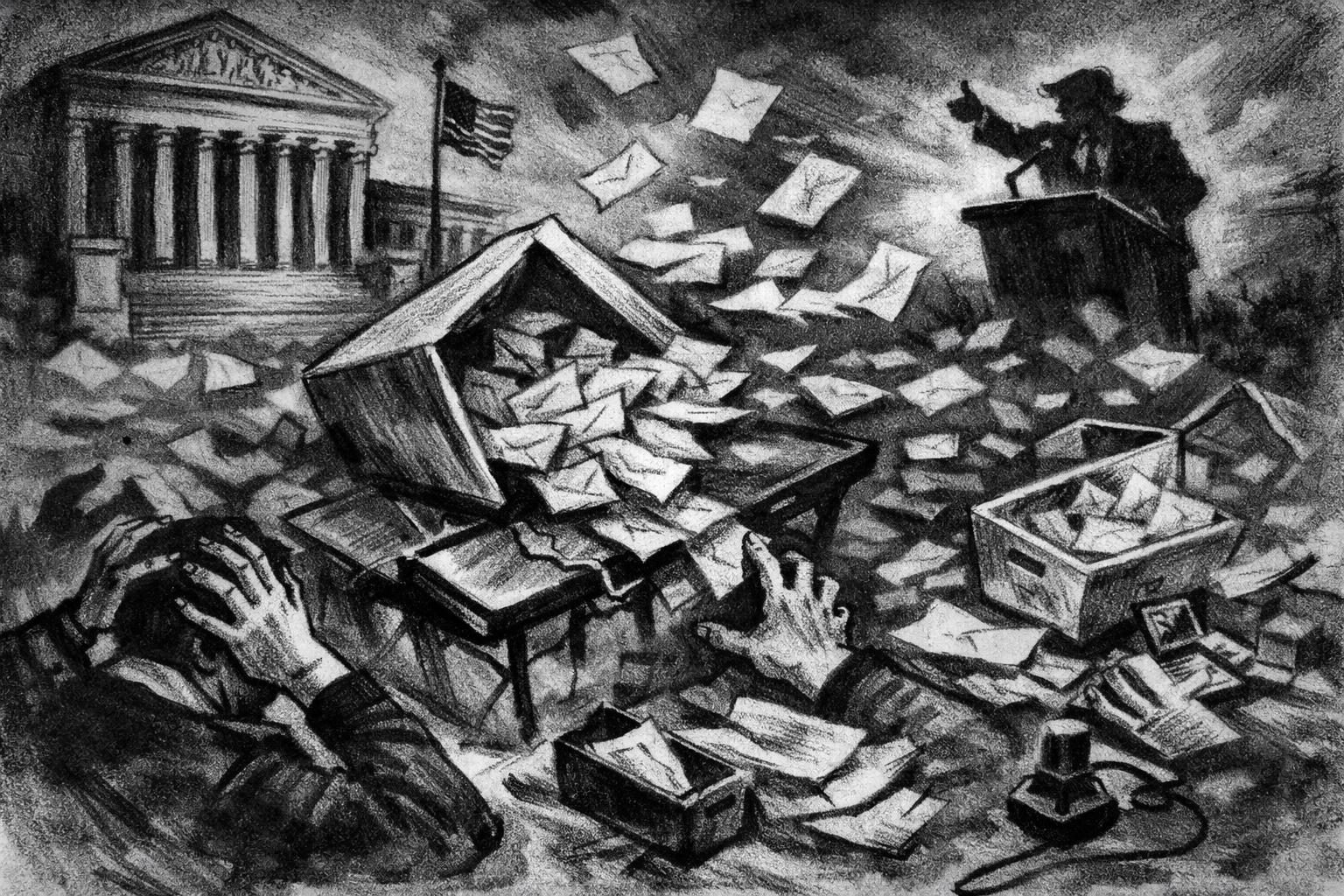
The Supreme Court’s latest move on Monday did not settle the fight over President Donald Trump’s mail-voting order, but it did something almost as disruptive: it let the administration keep pushing while the clock keeps ticking toward the midterm election cycle. By clearing a procedural path and pausing a lower-court block, the justices left election officials, lawyers, and state governments to operate in a fog of uncertainty about what parts of the order might survive long enough to matter. That is not the kind of clarity election administrators need in a system that depends on tight deadlines, printed materials, and advance planning measured in weeks, not days. It also means the real-world consequences may begin before the legal merits are even fully sorted out. For the states that have already built their voting systems around absentee ballots, the immediate effect is not reform. It is confusion.
That confusion matters because mail voting is not a side issue in American elections. In many states, it is a central part of how ballots reach voters, especially for military personnel, older voters, people with disabilities, and those who simply prefer to vote before Election Day. Local election offices spend months preparing ballot envelopes, voter instructions, signature verification procedures, return deadlines, and postal coordination. If the administration tries to change that machinery on a compressed timeline, even a limited change could have outsize effects. Election officials have already warned that abrupt shifts can create mismatches between state law and federal directives, and those mismatches tend to land on the desks of county workers and clerks who are already operating under pressure. The problem is not only whether the order ultimately survives judicial review. The problem is whether election systems can absorb a moving target without making mistakes that are hard to unwind.
The underlying constitutional question remains unsettled: who actually controls the rules for elections, and how far can the president go by executive order when those rules are already defined in large part by state law and congressional statutes? The Supreme Court’s procedural action did not answer that question. Instead, it postponed the most direct confrontation and pushed the dispute deeper into the season when absentee ballots begin to go out and election calendars become less forgiving. That timing is what makes this case so combustible. A court fight over election procedure in the abstract is one thing; a court fight that collides with ballot printing, mailing deadlines, and voter notification is something else entirely. Even if the administration’s order is later narrowed or struck down, states may have already been forced to redesign processes, train workers, or issue guidance that becomes obsolete. At that point, the legal outcome may matter less than the administrative damage caused by waiting so long to resolve the issue.
The broader political strategy here also looks familiar. The administration has repeatedly leaned on litigation, emergency procedure, and high-pressure executive action to force changes that would be difficult to enact through the normal legislative process. Supporters describe that approach as a necessary correction to a voting system they say is too loose or too vulnerable. Critics see something more ominous: an attempt to reshape election rules from the top down and then leave the courts, states, and local officials to sort out the wreckage. Either way, the Supreme Court’s move has shifted the fight from legal theory into operational reality. State officials now have to plan for multiple scenarios at once, including the possibility that rules change after ballots are already being prepared or distributed. That is a nightmare for any election administrator, because uncertainty itself can function like a policy. It slows the process, complicates public guidance, and increases the odds that voters will receive mixed messages about what is valid, when it is valid, and how to make sure their ballot counts.
What happens next is likely to be a rapid sequence of new filings, emergency requests, and warnings from states that the federal government is forcing them into a race against the calendar. Lawsuits are almost certain if the administration moves to implement the order before the merits are resolved, and judges will be asked again to decide how much disruption is acceptable while the underlying case moves through the system. In the meantime, election offices will have to decide whether to proceed as if the order may take effect, or to stick with existing procedures and risk scrambling later if the law shifts under them. That is the kind of uncertainty that causes real harm long before anyone casts a ballot. If voters lose confidence in whether their mail ballot will arrive, be accepted, or be counted on time, the damage is not theoretical. It is baked into turnout, turnout confidence, and the basic functioning of the election. The Supreme Court has not yet resolved the case, but it has made one thing clear: the next phase of this fight will not be fought in the abstract. It will be fought in county offices, in postal bins, and in the narrow space between a printed ballot and the deadline that decides whether it matters.
Comments
Threaded replies, voting, and reports are live. New users still go through screening on their first approved comments.
Log in to comment
No comments yet. Be the first reasonably on-topic person here.