
Federal prosecutors charge Minneapolis money transmitter operator in cartel-laundering case
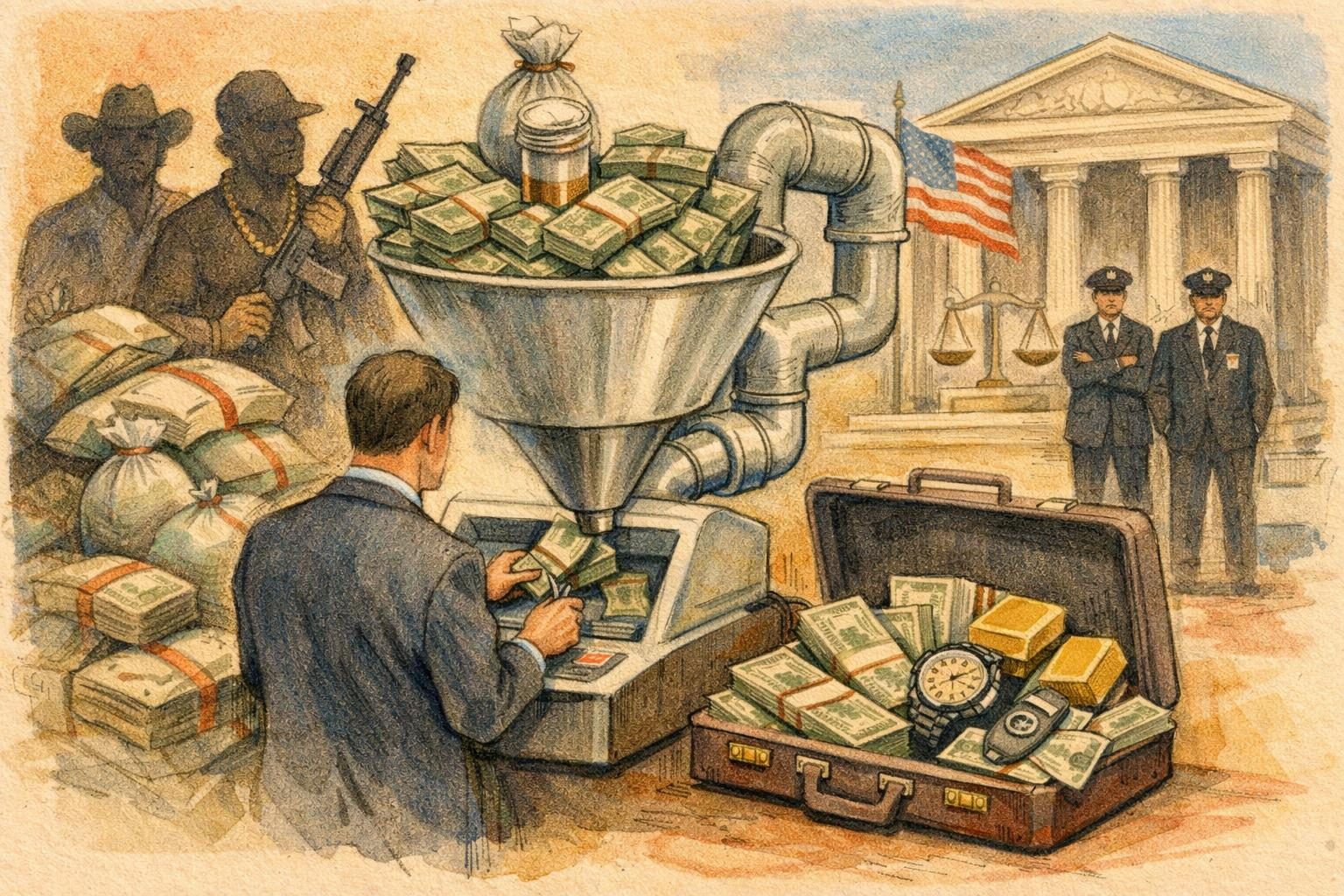
Federal prosecutors in Minnesota have brought a cartel-laundering case that puts an unglamorous but essential part of the drug trade under a brighter light: the money. A federal grand jury indicted Christopher A. Bravo Marin, a Minneapolis-based money transmitter operator, on allegations that he conspired to launder at least $750,000 in drug proceeds tied to the Jalisco New Generation Cartel. The indictment was returned on August 20, and federal officials publicly announced the case on August 25, bringing it into the current news cycle and signaling that prosecutors view it as a significant enforcement action. On its face, the case is not about rhetoric or broad claims of criminality. It is about a specific financial role allegedly used to move dirty cash through an ordinary American city and into a larger transnational trafficking system.
That makes the case noteworthy well beyond the courtroom. Money laundering is often the hidden infrastructure of the narcotics economy, the layer that allows profits from street-level distribution to be converted into something the organization can actually use. If prosecutors can prove their allegations, the case would show how cartel-linked networks can draw on local intermediaries and financial businesses to obscure the source of illicit funds. That dynamic matters because it reveals how organized crime can operate through otherwise routine commerce, not just through dramatic acts of violence or border crossings. The public sees the drugs and sometimes the violence, but the financing mechanisms are what keep the enterprise moving, and they can be far closer to home than many people expect. A Minneapolis-based money transmitter operator allegedly helping move cartel cash is a reminder that cartel reach is not limited to remote smuggling corridors or international safe houses.
The broader political significance is hard to miss, even if the underlying case will rise or fall on evidence in court. Supporters of tougher border and financial enforcement will likely point to the indictment as proof that cartels are not abstract threats but active criminal enterprises with infrastructure inside the United States. They will argue that cases like this justify more aggressive surveillance of financial channels, stronger anti-money-laundering controls, and more resources for prosecutors and investigators who follow the money. Critics are likely to respond that criminal networks exploit weaknesses in oversight, compliance, and regulation, and that the problem cannot be reduced to slogans about migration or border theater. Both things can be true at once. Cartels benefit from porous enforcement in multiple domains, and a case like this gives prosecutors a concrete example of how financial disruption can matter as much as, or more than, high-profile enforcement gestures. It also lands at a moment when immigration dominates much of the political conversation, even though the quiet mechanics of narcotics finance often do more to sustain cartel power than the most combustible campaign rhetoric.
The next stage will be legal, not rhetorical. Prosecutors still have to prove the laundering conspiracy and establish the scope of the proceeds involved, including how the money moved and what role Bravo Marin allegedly played in the operation. An indictment is an accusation, not a conviction, and the case will turn on documents, witness testimony, financial records, and whatever other evidence the government has assembled. Still, the allegation itself is a clean illustration of how organized crime depends on seemingly mundane financial actors to keep its operations alive. If the case holds up, it will offer another example for federal officials who want to show they are attacking cartel networks at their weakest point: the flow of cash. And even if the courtroom outcome is still ahead, the indictment already serves as a reminder that the real machinery of the drug trade is often not cinematic at all. It is transactional, bureaucratic, and embedded in places that look, on the surface, like any other part of the American economy.
Comments
Threaded replies, voting, and reports are live. New users still go through screening on their first approved comments.
Log in to comment
No comments yet. Be the first reasonably on-topic person here.