
Federal prosecutors file civil fraud case over alleged PPP scam
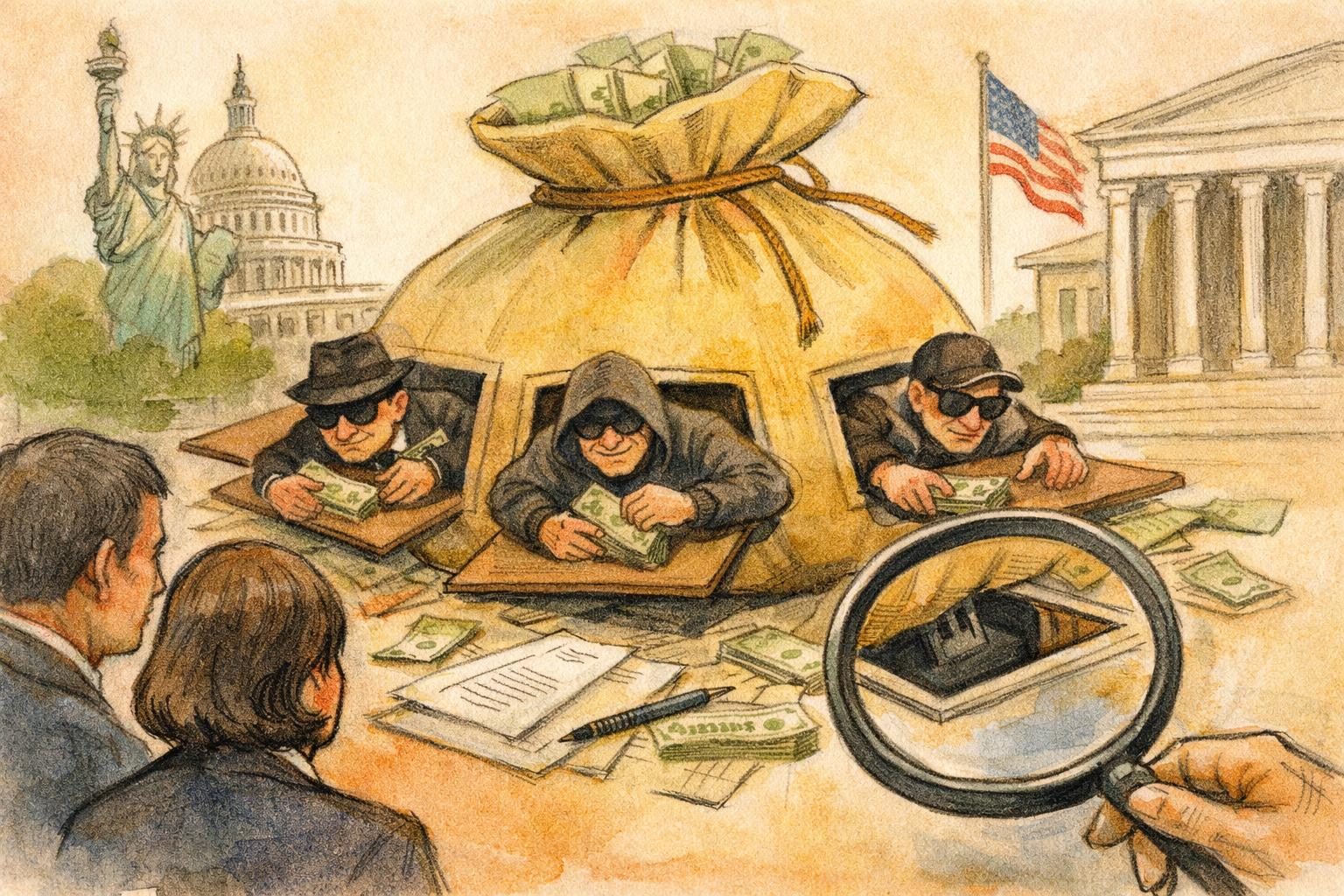
Federal prosecutors in New York have opened a civil fraud case that targets what they describe as a web of related companies that hid their connections to one another in order to improperly secure Paycheck Protection Program money. The complaint, filed in federal court in White Plains on Aug. 24 and announced publicly the next day, names Michael Shabsels, SIMAD Holdings, DAMIS Holdings, and 26 related entities. According to the allegations, the companies presented themselves in ways that obscured how closely linked they were, allowing them to obtain pandemic relief funds that were meant to help keep workers employed and businesses operating during the public-health emergency. The government is seeking damages, civil penalties, and recovery of the money it says was wrongly obtained. At this stage, the case is still an allegation, but the filing itself marks a concrete enforcement action rather than a general warning about fraud.
The legal theory behind the complaint appears to be straightforward: emergency aid was supposed to go to eligible businesses, not to a chain of entities that could multiply access or mask ineligibility by hiding the real structure of the enterprise. If prosecutors can prove the allegations, the case would suggest that the defendants used corporate layering and related-party concealment as tools to turn a rescue program into a private source of cash. That is the kind of conduct federal officials have increasingly highlighted as pandemic relief cases continue to surface years after the loans were issued. PPP fraud has become one of the clearest examples of how a fast-moving government program, designed to move money quickly, can be vulnerable to schemes that exploit its speed and loosened controls. The complaint does not just accuse a borrower of making a bad certification; it suggests an organized structure built to make multiple companies look independent when they were not.
That distinction matters because the government’s focus is not limited to isolated loan applications or a single false statement. A case built around alleged network fraud points to something broader: whether the entire business family was arranged to create a false picture of eligibility. Civil fraud cases of this sort can be especially consequential because they often draw scrutiny not just to the named defendants, but also to affiliated companies, lenders, intermediaries, and the compliance checks that were supposed to catch problems before the money went out. The lawsuit also fits a broader pattern in which federal prosecutors are trying to show that pandemic relief enforcement is still very much active, even if the crisis itself has faded from daily life. In practical terms, the government is signaling that older pandemic-era programs can still generate fresh liability when investigators believe the underlying conduct was more elaborate than a simple paperwork mistake.
The fallout is likely to be financial first, since the complaint seeks to recover funds and impose penalties, but the reputational damage from allegations like these can be extensive even before the case is resolved. Companies accused of hiding their ties to each other may face closer review from banks, business partners, and regulators, especially if the complaint suggests a broader pattern rather than an isolated application error. For the defendants, the stakes include not only the possibility of paying back money and penalties, but also the stigma that comes with being portrayed as part of a coordinated effort to divert relief intended for struggling businesses. For the government, this case is also a chance to demonstrate that it is willing to pursue complex corporate structures, not just obvious one-off frauds. Whether the allegations hold up in court will determine the final outcome, but the filing alone shows that pandemic-era relief fraud remains a live enforcement priority and that prosecutors are still willing to follow the paper trail wherever it leads.
Comments
Threaded replies, voting, and reports are live. New users still go through screening on their first approved comments.
Log in to comment
No comments yet. Be the first reasonably on-topic person here.