
DOJ moves to emergency-schedule three potent opioid compounds
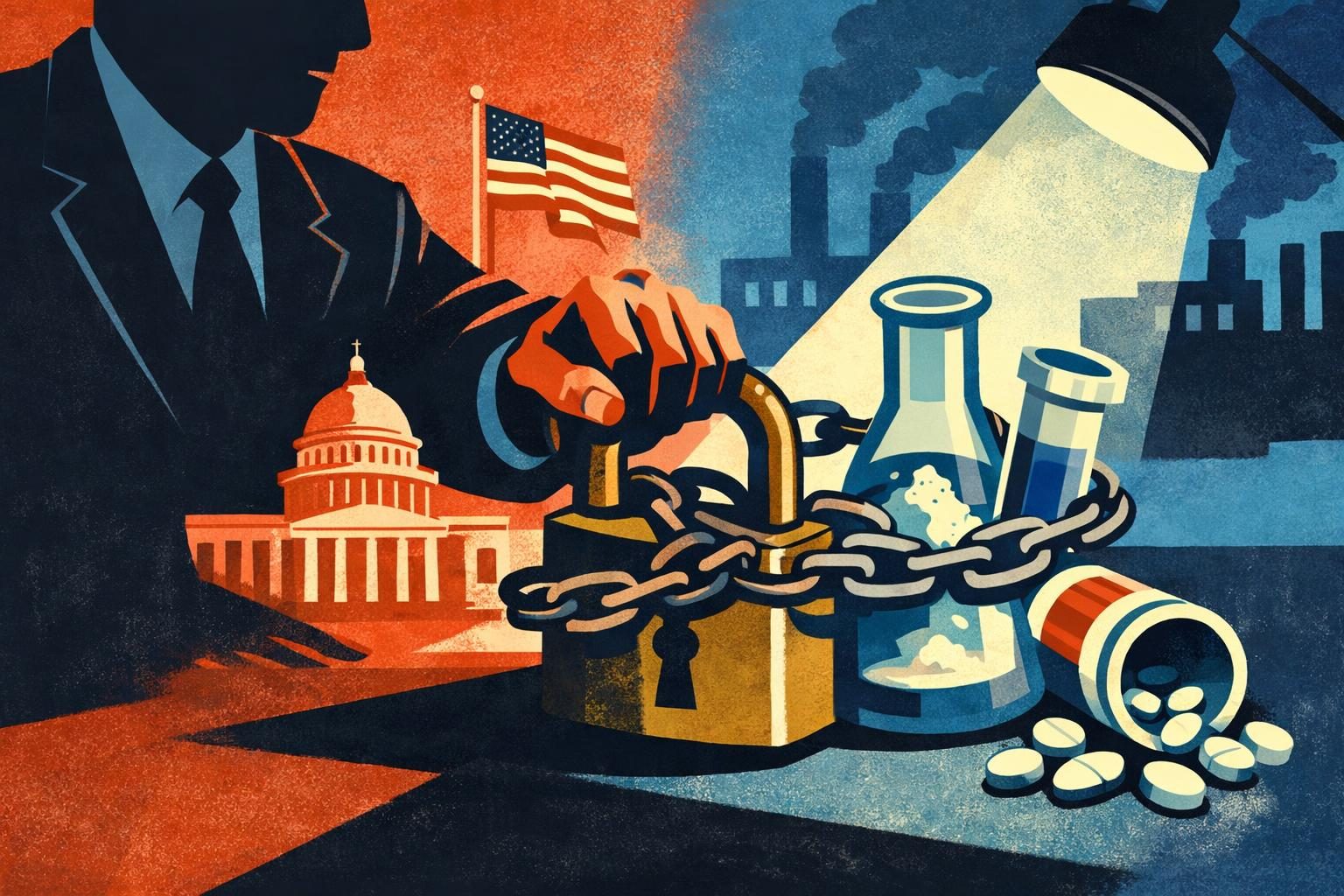
The Justice Department said on August 25 that federal drug officials are moving three potent opioid compounds into Schedule I on an emergency basis, a step that immediately tightens the legal noose around substances the government says pose an imminent hazard to public safety. The compounds are mitragynine pseudoindoxyl, MGM-15, and MGM-16, all of them part of a fast-changing synthetic-drug landscape that tends to outpace the rules written to control it. Officials said the substances are being sold in consumer products under labels that obscure their actual risks, which is part of what makes the case for emergency action so aggressive and so politically useful. This is not just a warning about a dangerous trend, or a signal that regulators are worried about some future problem. It is a concrete scheduling decision that changes how the federal government treats the drugs right now.
The move fits a familiar pattern in drug enforcement: chemistry evolves, the market finds a new loophole, and regulators respond by trying to shut the door before the harm scales up. Emergency scheduling is one of the bluntest tools available to the federal government, but it is also one of the fastest, and speed is clearly what the Justice Department wanted here. By placing the substances in Schedule I, officials are signaling that they believe the compounds have no accepted medical use and present a serious risk of abuse, at least under the legal framework that governs controlled substances. That designation can matter quickly in practice because it changes what prosecutors, distributors, importers, and sellers can do without running into federal enforcement. It also sends a warning to the broader synthetic-drug market that novelty and evasive branding are not enough to stay ahead of the law forever.
There is, however, a reason emergency scheduling usually draws criticism even when the public-safety case looks strong. People who argue against these moves say the government often reaches for the most restrictive classification before the scientific record has fully caught up, and that broad enforcement can run ahead of careful research. That critique is not frivolous, especially in a field where compound-by-compound differences can matter a great deal and where overreaction can muddy the line between public health and criminal law. The administration, for its part, appears to be making the opposite bet: that waiting for clearer overdose data or a longer evidentiary record would amount to conceding the field to traffickers and manufacturers who are already adapting in real time. In that sense, the policy choice is less about certainty than about which risk the government thinks is worse, acting too soon or acting too late. The Justice Department has chosen to act now and argue about the details later.
What makes this decision politically significant is that it shows the federal government trying to get ahead of a drug threat that thrives on novelty, packaging tricks, and legal gray areas. Synthetic opioid products are especially difficult for regulators because the market can shift faster than the rulemaking process, with one version replaced by another before the first is even fully understood. Emergency scheduling is an attempt to compress that lag and give enforcement agencies a sharper tool while the broader scientific and policy conversation continues. Whether that strategy works will depend on what happens next: whether traffickers move to other compounds, whether substitutes appear in the same market, and whether health officials can keep pace with whatever chemical workaround comes next. For now, the administration is making a clear statement that it wants to be seen as preemptive rather than reactive, and in drug policy that usually means the government believes the threat is already well into the danger zone. The question is not whether the federal response is serious. It is whether seriousness arrives early enough to matter.
Comments
Threaded replies, voting, and reports are live. New users still go through screening on their first approved comments.
Log in to comment
No comments yet. Be the first reasonably on-topic person here.