
DHS proposed a $103,265 H-1B fee, and the immigration system braced for impact
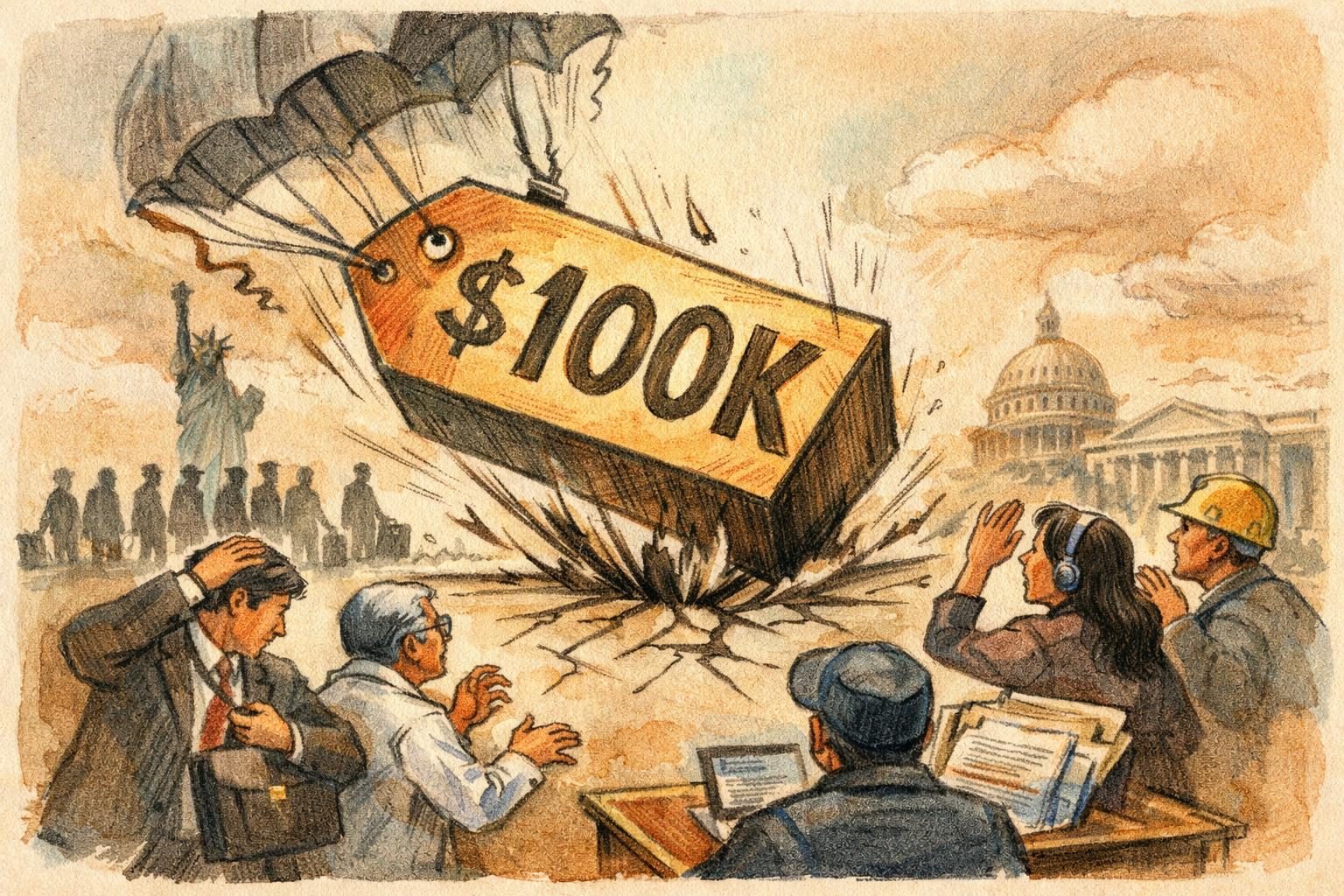
The Department of Homeland Security has proposed a $103,265 fee for H-1B cap-subject petitions, a move that instantly turns one of the country’s most important high-skilled work visas into a far more expensive gamble for employers. According to the agency’s Federal Register notices dated August 25, 2026, the fee would apply at filing and would come on top of the existing costs attached to the visa process. That means the figure is not a symbolic placeholder or a marginal increase; it is a six-figure price tag designed to hit before a petition even gets off the ground. For companies, hospitals, universities, and smaller firms that depend on specialty workers, the message is hard to miss. If the rule survives in anything close to this form, it will not merely adjust the system. It will reshape who can afford to use it.
The administration’s justification is familiar enough to sound procedural, but the size of the proposal gives it a different political meaning. Officials say the fee is meant to support the lawful immigration system and recover administrative costs, which is the kind of explanation that can accompany almost any user fee if the numbers are kept modest. But a figure above $103,000 per petition is not modest, and it is difficult to read it as anything other than a deliberate choke point. Supporters may argue that the government has every right to set prices that reflect the cost of processing and enforcement, and that employers who say they cannot function without foreign talent should be willing to pay for access. Critics are more likely to see a policy engineered to reduce legal immigration by making it financially punishing rather than by changing the statute itself. If that is the strategy, it is politically cleaner than a direct rollback and, for that reason, potentially more effective. The door is not being locked; the toll is just being raised until many applicants can no longer justify entering.
The practical fallout would extend well beyond the technology sector, even if that is where the loudest complaints are likely to come from first. H-1B visas are woven into fields where employers say specialized labor is hard to find domestically, including health care, education, engineering, research, and other professional services that depend on credentialed workers. A hospital recruiting physicians, a university hiring a researcher, or a small engineering firm trying to land a niche specialist would all have to confront the same basic arithmetic: absorb a crushing new expense, rework hiring plans, or walk away from the visa program entirely. That would not just affect individual employers. It could spill into local labor markets, staffing levels, project timelines, and, eventually, consumer costs if the burden gets passed along. Smaller firms are especially exposed, because a fee at this level may be survivable for a giant corporation and impossible for a mid-sized business. The result could be a system where access to legal high-skilled immigration depends less on need or merit than on balance-sheet size. That is not an incidental side effect. It is the policy.
The proposal also carries a larger institutional question: whether the executive branch is trying to accomplish through regulation what it could not or would not secure through Congress. That has become a recurring theme in federal immigration policy, where administrations of both parties have increasingly leaned on agency action to redirect flows, tighten eligibility, or slow access to benefits. In this case, the use of a fee rather than a categorical ban gives the move a veneer of administrative regularity, even though the effect may be similarly restrictive. If challenged, the rule could face immediate litigation from employers, advocacy groups, and immigration attorneys who would argue that the agency has gone far beyond cost recovery and into penalty territory. That argument would likely focus not only on the dollar amount, but on whether the fee is so large that it effectively becomes a barrier to lawful participation in the program. Even before any court has a chance to weigh in, the proposal creates uncertainty that employers dislike almost as much as the cost itself. Hiring plans are hard enough to manage when rules are stable. They become much harder when the ground can shift under every petition.
If the proposal is finalized, employers will have to decide whether the H-1B program remains viable for their needs or whether the price now makes it functionally unusable except for the richest firms and the most urgent hires. That decision could reverberate through recruiting pipelines, staff retention strategies, and long-term planning across sectors that rely on skilled immigration to fill gaps. It would also deepen the sense that legal immigration is being transformed into a stress test, where the outcome depends not just on meeting eligibility criteria but on surviving an economic toll booth. The administration may calculate that the political benefits outweigh the institutional damage, especially if the goal is to signal toughness on immigration while avoiding the spectacle of an outright statutory confrontation. But the broader system would still have to absorb the shock. Even if the fee is narrowed, delayed, or blocked later, the proposal itself has already done damage by injecting fresh instability into a visa process that employers, schools, and health systems use to plan staffing months or years ahead. In that sense, the policy works immediately, even before any final rule is issued. It changes behavior by making everyone involved ask the same question: who can still afford to participate? And for many potential applicants, the answer may be fewer and fewer.
Comments
Threaded replies, voting, and reports are live. New users still go through screening on their first approved comments.
Log in to comment
No comments yet. Be the first reasonably on-topic person here.