
Justice Department announces election monitoring in Florida and Wyoming primaries
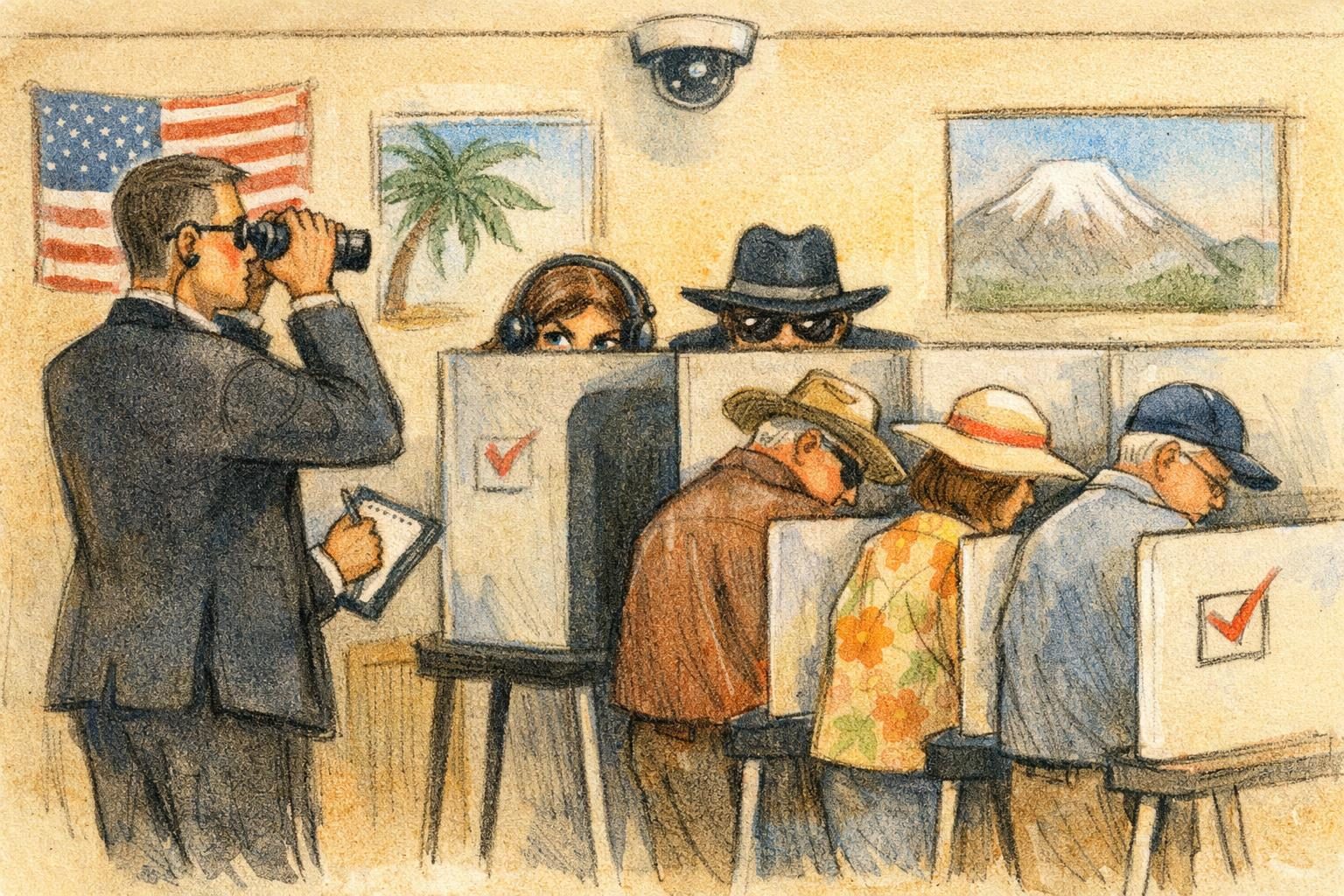
The Justice Department said Tuesday that it will send election monitors to primary voting sites in Florida and Wyoming, a move that is ordinary in form but unusually loaded in the current political environment. Election monitoring is not a spectacle in itself; it is a basic federal tool used to watch for violations of voting rights law, to observe access at polling places, and to make sure local procedures are being followed. Even so, the announcement lands in a moment when nearly every gesture around elections is read through a partisan lens. Federal involvement in state-run voting is always sensitive, but it has become even more so as disputes over access, administration, and eligibility continue to pile up. The result is that a routine enforcement mechanism now carries the weight of a broader argument about whether the country still trusts its own voting process.
The department did not frame the monitoring as extraordinary, and that is part of what makes the decision worth noticing. Washington typically does not place federal observers in state primaries unless officials believe there is a concrete reason to keep a closer eye on the process, whether that involves compliance with election law or concerns about how voters will be treated at the polls. Florida and Wyoming are not being singled out in a vacuum; they are being added to a national backdrop in which voting rules have become one of the most contested pieces of domestic politics. The announcement also comes as the administration continues to seek a more assertive role in election administration from the federal level, while critics argue that such efforts risk turning oversight into pressure. That tension makes even a familiar action feel heavier than usual. In practical terms, the monitors are there to observe, not to run the election, but the politics surrounding their presence can make that distinction difficult for voters to see.
The broader significance is that election monitoring is no longer just a technical safeguard tucked away in the background of democracy. It has become part of a public struggle over who gets to define whether an election is secure, fair, and legitimate. Supporters of federal oversight will say the government has a duty to step in when there are credible concerns about access or compliance, especially in a climate where voting rules are constantly challenged. Opponents, by contrast, are likely to see the move as an intrusion by Washington into matters they believe should be handled locally. Both reactions are predictable, which is exactly why the step matters politically. When a federal monitoring presence is treated as either a rescue mission or an act of intimidation, that tells you how much trust has eroded in the system itself. The monitoring may help reassure some voters, but it may also deepen suspicion among others who already believe election administration has become a partisan battlefield. In that sense, the monitors are not just watching the election; they are also a marker of how fractured the public conversation around elections has become.
That fracture is what gives the announcement its larger meaning. The Justice Department will present the deployment as a routine protection of voting rights and a normal part of its enforcement role, and in a narrow legal sense that is true. But routine actions do not take place in a political vacuum, and this one arrives at a time when federal, state, and judicial battles over elections are all feeding into one another. The Supreme Court’s recent mail-voting ruling remains part of the same landscape, as do continuing disputes over who should set election rules and how aggressively the federal government should intervene when states do things differently. None of that means the monitors themselves are controversial on their own terms, and it would be overstating the case to treat them as evidence of a crisis by themselves. Still, their presence is a reminder that the country’s election machinery is being scrutinized more closely than ever, and that scrutiny reflects deep distrust, not calm confidence. If the federal government feels compelled to send observers into primary elections this often, then the underlying problem is not just administrative. It is political, structural, and increasingly hard to separate from the larger fight over whether Americans still accept the legitimacy of the process when the results do not break their way.
Comments
Threaded replies, voting, and reports are live. New users still go through screening on their first approved comments.
Log in to comment
No comments yet. Be the first reasonably on-topic person here.