
Justice Department sends election monitors into South Carolina primary
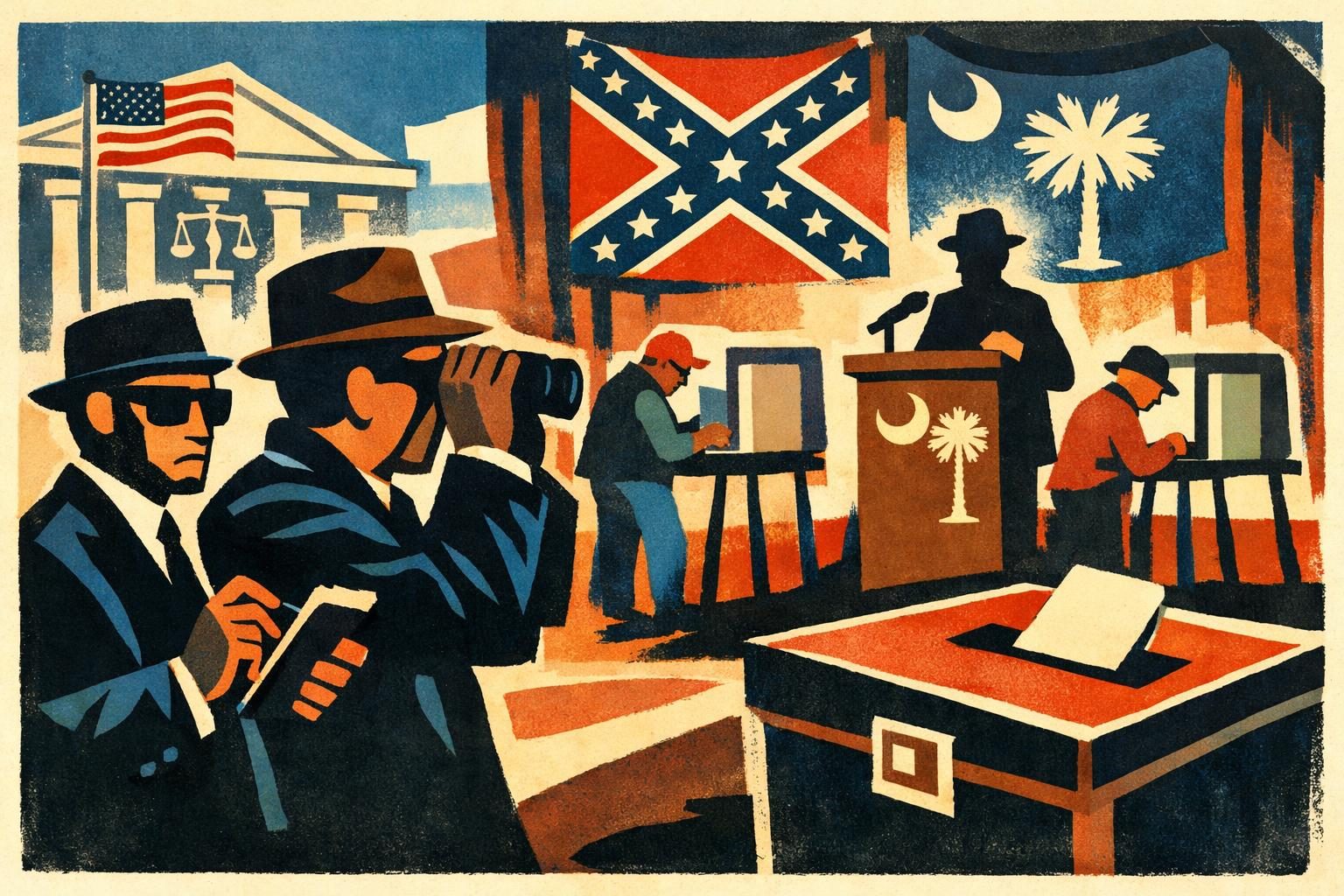
The Justice Department said Tuesday that it will send election monitors to South Carolina for the state’s primary, a move that is ordinary in form but unusually heavy with political meaning. Federal monitoring of elections is not new, and in many places it is simply part of the routine machinery of election administration. But the context in which this announcement arrived makes it feel less like housekeeping and more like a statement of intent. In a moment when voting rules, ballot access, and election enforcement are all being argued over at once, even a standard monitoring deployment reads as a signal. The department is not just saying it will watch the process; it is saying the process is important enough, and potentially vulnerable enough, to merit formal federal attention.
That matters because election monitoring does more than add observers to the room. It tells local officials that their procedures, staffing, and handling of complaints may be scrutinized beyond the usual state and county channels. It tells voters that the federal government believes the primary deserves an added layer of oversight. And it tells political actors on both sides that any dispute, however small, may be interpreted through a wider lens of federal involvement. In a less charged era, that would be reassuring and largely unremarkable. In 2026, when public confidence in elections remains fragile and every administrative step can become a partisan fight, the presence of federal monitors can carry a much larger symbolic weight than the assignment itself. It is one more sign that election administration has become a place where law, politics, and suspicion constantly overlap.
The announcement also lands at a time when the federal government’s role in elections is being viewed through conflicting expectations. Supporters of oversight often argue that monitors can deter intimidation, discrimination, or procedural breakdowns before they spiral into bigger problems. They can help ensure that polling places are accessible, that complaints are documented, and that local practices do not drift into violations of federal law. But critics are likely to see a deeper contradiction in the current moment. A government that is active in shaping voting rules or defending tighter election controls may struggle to present itself as a neutral referee. That tension does not necessarily mean the monitoring is improper, but it does mean the optics are fraught. Federal oversight can look protective to one side and political to another, especially when trust in institutions is already thin. The result is a familiar but increasingly corrosive dynamic: the same step that is meant to reassure one set of observers can be read by another as proof that the system is already under strain.
For South Carolina election officials, the practical effects may be modest if the primary proceeds smoothly. Monitors do not run the election, and their presence alone does not imply that wrongdoing is expected. In many cases, the job is simply to observe, record, and report. But if there are disputes over access, ballot handling, poll worker conduct, or voter complaints, the existence of federal monitoring can expand the stakes of whatever follows. It gives the Justice Department a more visible role in any post-election review and can make local irregularities harder to dismiss as isolated administrative problems. If the day goes off without incident, the deployment may fade quickly from public view. If there are long lines, challenged procedures, or claims of unfair treatment, the monitoring announcement will become part of the narrative and may invite deeper scrutiny. That is the uneasy reality of election enforcement now: what should be a routine safeguard increasingly carries political baggage, and what should be a boring procedural action can instantly become evidence in a much larger argument about who gets to oversee democracy and on what terms.
Comments
Threaded replies, voting, and reports are live. New users still go through screening on their first approved comments.
Log in to comment
No comments yet. Be the first reasonably on-topic person here.