
Labor Department cites Wisconsin plant after three deaths
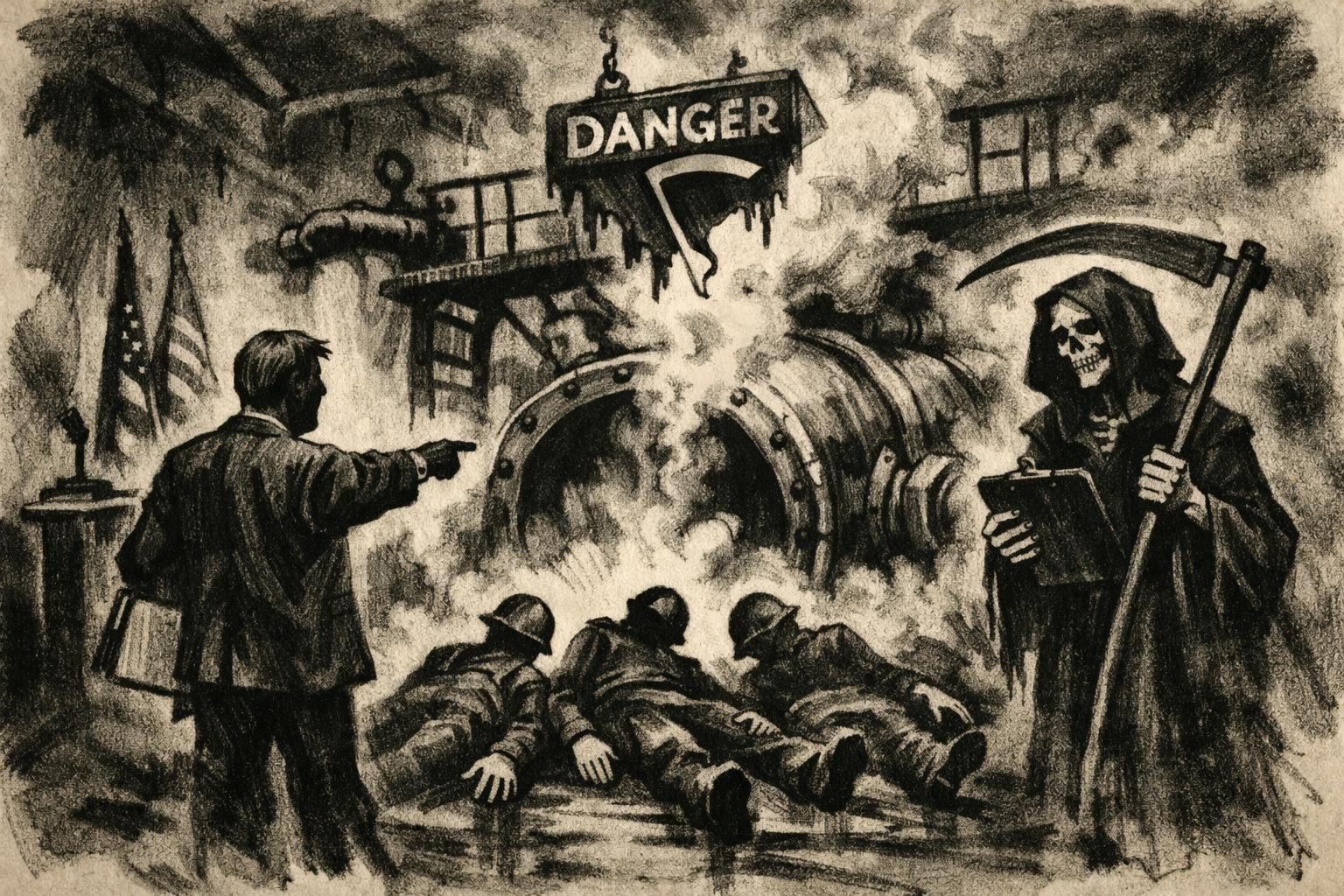
The Labor Department said on Aug. 20 that it had cited a Wisconsin food manufacturer after two steam-related incidents left three workers dead and two others seriously injured, a stark reminder that workplace safety failures are still measured in human lives rather than in abstract policy language. According to the department’s release, the accidents involved industrial kettles and exposure to hot steam and liquid, the kind of hazard that should be hard to miss in a plant where temperature, pressure, and containment matter every day. The details alone make the case grim, but the larger point is even harder to avoid: this was not a minor compliance lapse or a paperwork dispute. It was a pair of catastrophic events that turned an ordinary production setting into a site of fatal harm. Once that happened, federal enforcement was no longer optional window dressing. It was the government stepping in after the consequences had already become irreversible.
That matters because workplace safety is one of the few areas where the public can plainly see whether labor policy is being enforced in practice or merely described in speeches. If the federal government claims to stand with workers, it has to prove that claim in places like factory floors, processing plants, warehouses, and loading docks, where the cost of weak oversight is immediate and often permanent. A citation after the fact cannot bring anyone back, but it can at least force the underlying failure into the open and require a response from the employer. The active release from the department suggests the case is still moving through the normal enforcement process, with possible penalties and corrective measures still ahead. That process matters because it is one of the few mechanisms that can pressure employers to treat safety as a continuous obligation rather than a slogan. In a case involving steam, hot liquid, and deadly machinery conditions, there is little room for anyone to pretend the danger was theoretical.
The political context gives the episode added weight. Labor enforcement has been a recurring test for whichever administration is in power, especially when worker advocates are watching for signs that the government is willing to lean hard on employers rather than settle for symbolic action. The transition in federal labor posture has already led to concerns among some worker-side advocates about whether enforcement will stay as aggressive as it needs to be, and cases like this become the clearest way to measure that concern. No administration wants to be judged by tragedy, but workplace deaths have a way of cutting through the usual rhetoric about growth, productivity, and American competitiveness. When a fatal pattern is serious enough to draw federal citations, it raises the question of whether inspection systems, hazard recognition, and employer accountability were all strong enough before the deaths occurred. The answer does not have to be partisan to be damning. If a plant can expose employees to steam and hot liquid in a way that ends in three deaths and two serious injuries, something essential broke down long before the citation arrived.
For the company, the fallout is likely to be both legal and reputational, and those consequences may unfold on different timelines. Penalties can be assessed, corrective steps can be ordered, and the case can continue through the normal enforcement channels, but the public damage is already visible in the fact pattern alone. Workers, unions, and safety advocates will likely read the citation as evidence that some employers still treat basic precautions as negotiable until the consequences become fatal. Employers elsewhere will read it as a warning that similar failures can bring scrutiny, enforcement, and public attention. That is the practical purpose of citations in cases like this: they do not just punish a single incident, they are meant to deter the next one. But deterrence only works if the system is credible enough that companies believe the government will act before the next funeral instead of after it. In that sense, the case is bigger than one Wisconsin plant. It is another measure of whether industrial safety is being enforced as a real standard or left to fail in the spaces where workers are least protected.
Comments
Threaded replies, voting, and reports are live. New users still go through screening on their first approved comments.
Log in to comment
No comments yet. Be the first reasonably on-topic person here.