
Education Department rolls out another Kansas parental-rights push
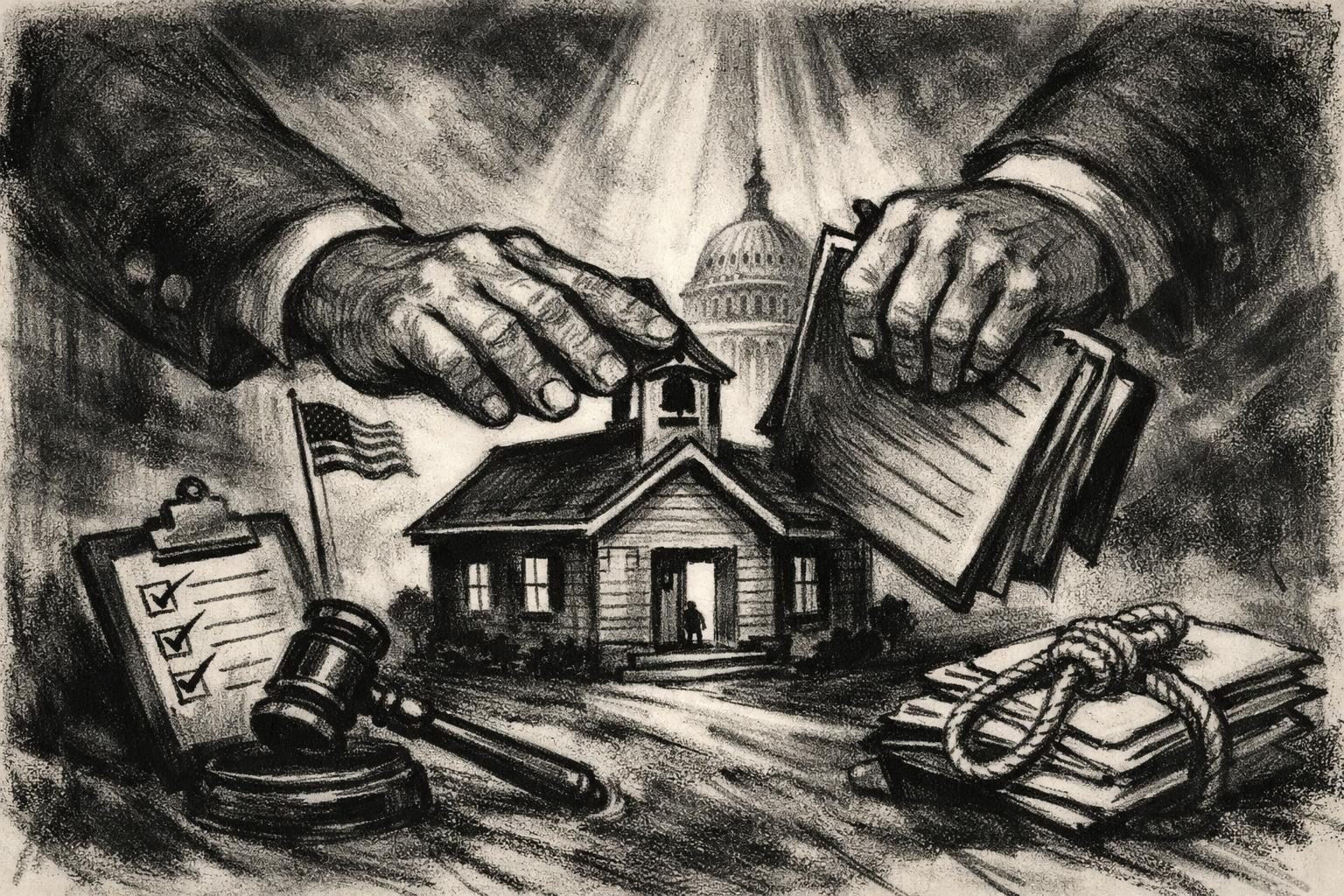
The Education Department said Tuesday that it is taking additional steps in Kansas under its parental-rights agenda, a move that keeps the administration’s school-compliance campaign firmly in the foreground of federal education policy. The latest action centers on Topeka Public Schools, which the department said has agreed to come into compliance with federal law. That may sound procedural, but it matters because the department is presenting the case as more than a routine administrative matter. Officials are using it to show that their preferred reading of parental rights can be translated into enforcement pressure, not just rhetoric. In a political moment when schools are already under intense scrutiny over curriculum, student privacy, and family notification rules, that kind of federal intervention carries more weight than a standard agency bulletin.
The Kansas move fits into a broader strategy that has been taking shape across multiple fronts, one that links civil-rights enforcement, privacy disputes, and the administration’s broader culture-war messaging. The Education Department has repeatedly framed these disputes as questions of whether schools are respecting parents’ legal rights to know what is happening with their children. Critics see a different pattern: selective enforcement aimed at districts that have become symbolic targets in fights over gender identity, surveys, records access, and parent notification. The department’s posture suggests it wants these disputes to be understood as national examples, not isolated local disagreements. In that sense, Kansas is less about one district than about establishing a model of pressure that can be pointed to elsewhere. Once a district agrees to change its practices, the federal government can argue that its approach is working and that other districts should not assume they can simply ignore the rules.
That is where the political and practical consequences start to overlap. School districts tend to respond to federal attention in one of two ways: they either fight, which is expensive and slow, or they settle, which may bring immediate relief but can also force policy changes that ripple through the system. By publicizing the Kansas actions, the administration is making clear that it wants districts to feel that choice. The message is not subtle. Compliance may be preferable to becoming the next test case. For school leaders already balancing state laws, local politics, staff concerns, and parent demands, that creates a complicated environment in which nearly every policy decision can be framed as a legal exposure. The department’s critics are likely to argue that this is exactly the point of the campaign: to turn compliance questions into leverage and leverage into public pressure. Supporters, by contrast, will say the government is simply insisting that schools follow federal law and respect families. Either way, the federal role is no longer passive. It is being used as an instrument to shape behavior.
Kansas also matters because local disputes have a way of becoming templates, especially when federal officials are eager to point to a concrete outcome. If one district agrees to make changes after federal pressure, that can influence negotiations far beyond that one school system. Other districts may decide that it is safer to revise policies preemptively than to wait for investigators, civil-rights complaints, or public letters from Washington. That dynamic can produce a cascading effect, where a single agreement quietly changes the calculations of administrators in other states. It can also deepen the sense that school policy is being decided less through local deliberation and more through a compliance minefield managed from Washington. The administration appears comfortable with that outcome, or at least willing to use it if it advances the parental-rights agenda. The question is whether that approach will stabilize policy or simply keep the conflict alive by encouraging every side to treat schools as the next battleground. For now, the Kansas case shows that the federal government is not just talking about parental rights. It is using agency power to make those rights a national standard, and it is doing so in a way that ensures the fight over schools is likely to continue well beyond one district, one state, or one announcement.
Comments
Threaded replies, voting, and reports are live. New users still go through screening on their first approved comments.
Log in to comment
No comments yet. Be the first reasonably on-topic person here.