
House Democrats press DHS over deaths in ICE custody and private detention failures
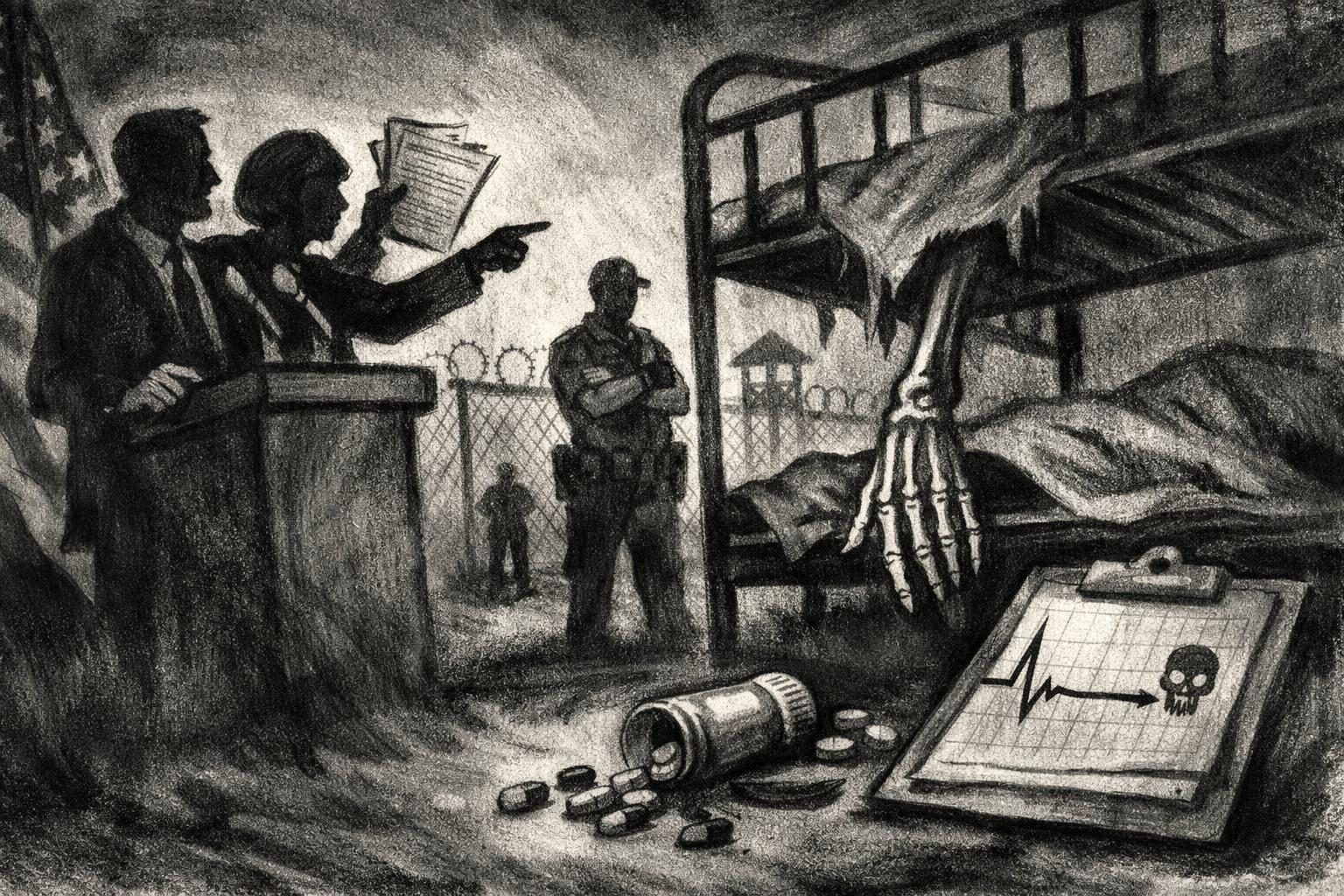
A large bloc of House Democrats is pressing the Department of Homeland Security and Immigration and Customs Enforcement for answers about deaths in custody and the quality of medical care inside private detention facilities, turning a long-running complaint about immigration detention into a sharper political and policy confrontation. On August 25, 2026, 87 Democrats led by Representative Frank Pallone sent a letter demanding explanations for what they describe as failures in treatment and oversight at facilities where the federal government has handed day-to-day operations to private contractors. The lawmakers say the question is not abstract: they are pointing to more than 50 deaths in ICE custody and asking what the government knew, when it knew it, and whether dangerous conditions were allowed to persist. The letter is framed as an accountability demand, but its underlying argument is broader than any single incident. If people are held by the federal government, the lawmakers are saying, then the government remains responsible for whether they live long enough to get proper care.
That issue lands at the center of the debate over private detention, where the basic arrangement is supposed to separate enforcement from direct operation while still leaving Washington responsible for the outcome. In practice, critics say, the model can blur accountability just when transparency matters most. The lawmakers’ message suggests that the federal government cannot continue outsourcing detention and then treat contractor failures as if they are somehow outside its control. If a detainee’s access to care depends on a private company meeting standards that are poorly enforced or inconsistently monitored, then the line between public duty and private management starts to look less like a safeguard and more like a loophole. The Democrats are not merely asking for a tally of incidents; they are asking whether the entire structure of detention has become a way to distance policymakers from the human consequences of the system they operate. That criticism has been building for years, but the scale of the death toll gives it new force. In this case, the concern is not just that some facilities may be falling short. It is that the system may be producing predictable neglect while claiming the efficiencies of privatization.
The focus on medical care is especially significant because detention facilities are supposed to house vulnerable people whose health needs can be urgent, chronic, or easily worsened by delay. When medical staffing is thin, records are incomplete, or treatment is slowed by bureaucracy, the consequences can be severe. The lawmakers’ letter points to those risks without pretending every death can be reduced to a single cause, but it does argue that repeated complaints and repeated fatalities demand a systemic response. That is why the political tone of the letter is unusually blunt. It does not read like a routine oversight request or a polite request for guidance; it reads like a warning that Congress believes the federal government may have tolerated conditions that put lives at risk. The presence of private contractors makes that question harder, not easier, because it introduces additional layers between the detainee, the facility operator, and the agency responsible for custody. If problems are identified only after serious harm occurs, then oversight is functioning too late to matter. And if the government keeps expanding detention capacity while oversight remains thin, lawmakers argue, it is effectively building more room for the same failures to recur.
The political implications are substantial even if the immediate fallout is still unfolding. Congressional oversight can sometimes be noisy without changing much, but this complaint is landing on top of an already grim record of allegations about detention conditions and medical neglect. The administration now faces pressure to explain not only what happened in specific facilities, but also how contract oversight, inspection practices, and care standards are supposed to prevent deaths in the first place. That includes the broader question of whether the private-detention model is being used because it works better or because it allows the government to scale up enforcement while keeping some of the worst consequences at arm’s length. The Democrats’ letter puts the burden back on DHS and ICE to answer for deaths, contracts, and the widening gap between enforcement rhetoric and the reality inside detention centers. Whether the response is substantive or defensive will matter, because the underlying critique is no longer limited to isolated complaints about one jail or one contractor. It is about a custody system that appears to have normalized the possibility of preventable harm, and about a federal government that now has to explain why that should be acceptable at all.
Comments
Threaded replies, voting, and reports are live. New users still go through screening on their first approved comments.
Log in to comment
No comments yet. Be the first reasonably on-topic person here.