
Education Department escalates its Kansas parental-rights fight into formal enforcement
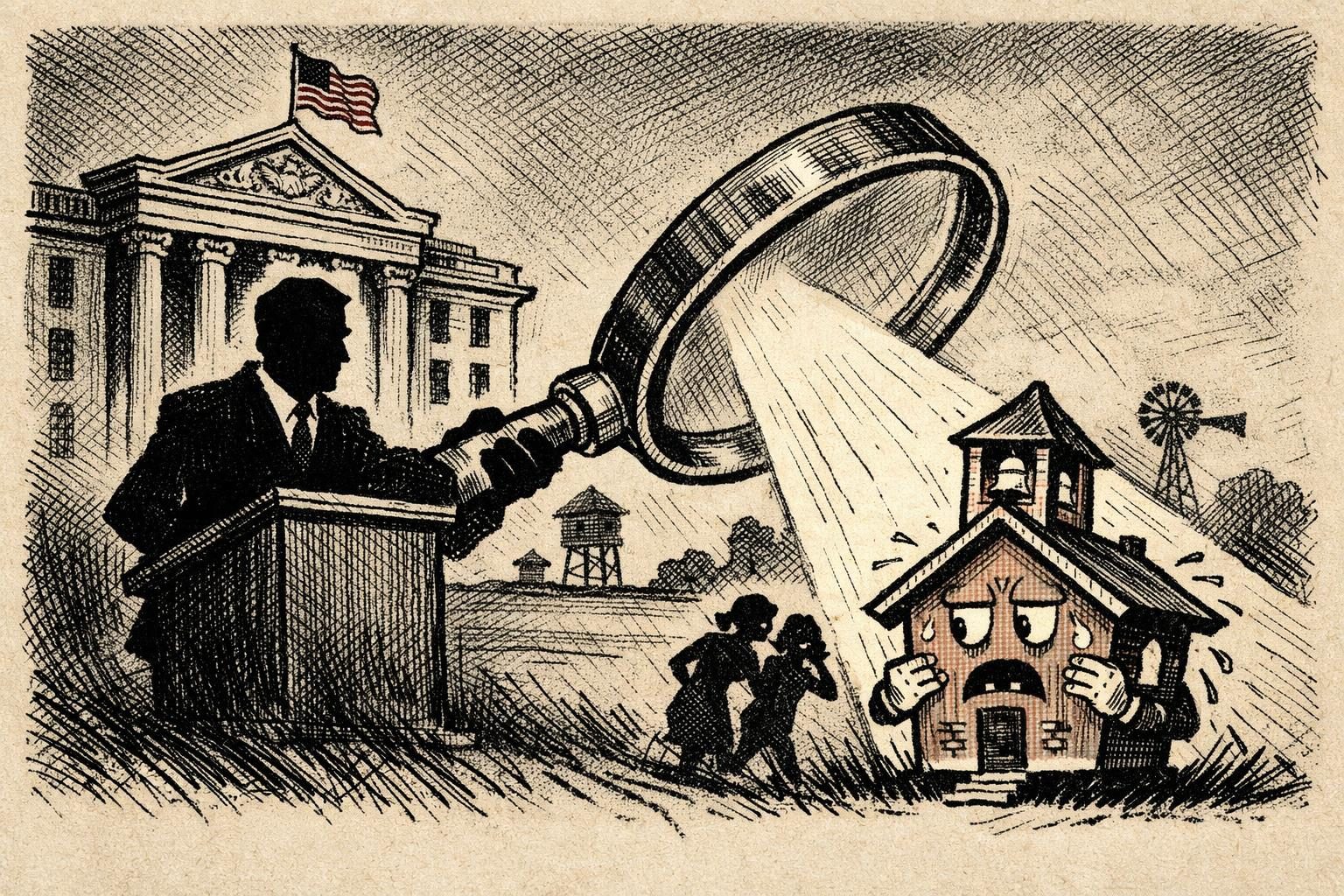
The Education Department on August 25 turned a long-running Kansas dispute over parental access and student privacy into a more formal enforcement fight, saying it had reached a resolution agreement with Topeka Public Schools while also preparing to press forward against Olathe Public Schools and Shawnee Mission Public Schools. The department said its investigation found that Topeka had policies that violated the Family Educational Rights and Privacy Act, commonly known as FERPA, and that the district has now agreed to change those practices. At the same time, the department said the other two districts had not come into voluntary compliance, and that it would work with the Justice Department’s Civil Rights Division to pursue enforcement. The underlying conflict centers on district practices that federal officials say kept parents from accessing records connected to student gender identity and related school support plans. What had largely been framed as a political fight over schools, parents, and transgender students is now being presented by the federal government as a privacy-law compliance case with real consequences attached.
The move matters because it shows the administration is willing to use one of the federal government’s bluntest tools to force school districts to alter policies in an area that has become a flashpoint in conservative politics. FERPA is not a new law, and the department’s position is straightforward on its face: parents generally have rights to inspect their children’s education records, and districts cannot create side channels or secret files that deny those rights. Supporters of the action are likely to argue that this is exactly what federal enforcement is for, especially if they believe districts adopted policies that effectively blocked parental access to information schools were required to disclose. Critics are likely to say the government is stretching student privacy law to reach much broader ideological goals, and that the administration is selectively targeting school systems that handle transgender-related issues in ways it dislikes. Those two arguments can exist at the same time, because the legal question is real while the political framing is impossible to ignore. Even so, the department’s decision to put enforcement weight behind the issue is what changes the story from rhetoric into pressure.
Topeka’s resolution agreement is the clearest sign that the department believes it found enough leverage to extract a change in conduct. The district’s decision to settle suggests federal officials identified policy gaps serious enough to warrant formal correction, and that the district chose not to drag the dispute into a more prolonged fight. The department said the agreement reflects its conclusion that Topeka had been operating under policies inconsistent with FERPA, and that the district will now need to adjust its practices and retrain staff. That kind of outcome often matters as much for precedent as for the immediate district involved, because other school systems watch to see what the federal government is willing to demand and what local officials are willing to concede. If Topeka’s agreement becomes a model, districts elsewhere may conclude that resistant policies are no longer sustainable once they attract Washington’s attention. On the other hand, if the settlement is viewed as narrow and case-specific, its impact may be more limited. Either way, the department is signaling that it expects school districts to take parental-records rights seriously even when those rules intersect with politically sensitive student-support arrangements.
The more volatile part of the dispute is what happens next in Olathe and Shawnee Mission. By moving toward enforcement rather than voluntary compliance, the department is elevating the pressure and increasing the odds of a legal and political showdown that could outlast this one case. That posture also raises the stakes for any district that has adopted confidentiality practices around gender identity or related student services, especially if those practices were built to balance privacy concerns with family access. Parents’ rights advocates are likely to see the Kansas action as overdue and to treat it as a sign that the federal government is finally making districts answer for policies they believe were designed to exclude families. Civil-liberties and education advocates, by contrast, are likely to warn that the government is flattening complex student-support questions into a partisan test that could chill school efforts to protect vulnerable students. The administration is not just making a statement here; it is establishing a model in which school policy can become a federal investigation trigger when officials believe privacy law has been used to shield information from parents.
That is why the broader consequences may extend well beyond Kansas. If the department follows through aggressively, the action could become a template for future enforcement efforts in other states where districts have adopted internal rules touching on student identity, family notification, or confidential support plans. The threat of federal funding consequences makes the issue more than symbolic, and it gives conservative activists and parents’ rights groups a powerful new channel for challenging local school governance. It also means districts across the country will have to reassess whether their policies can survive scrutiny if federal officials decide they run afoul of FERPA. None of that means every district will face the same outcome, or that every confidentiality policy is necessarily unlawful. But it does mean the department is testing how far it can go in turning a culture-war grievance into a compliance case. For school systems, that is a significant shift. For the administration, it is an opportunity to show that parental-rights language can be converted into enforcement action with real institutional force. And for everyone else, it is a sign that this fight is likely only getting started.
Comments
Threaded replies, voting, and reports are live. New users still go through screening on their first approved comments.
Log in to comment
No comments yet. Be the first reasonably on-topic person here.