
Judge Slams the Brakes on Trump’s Mail-Voting Overhaul
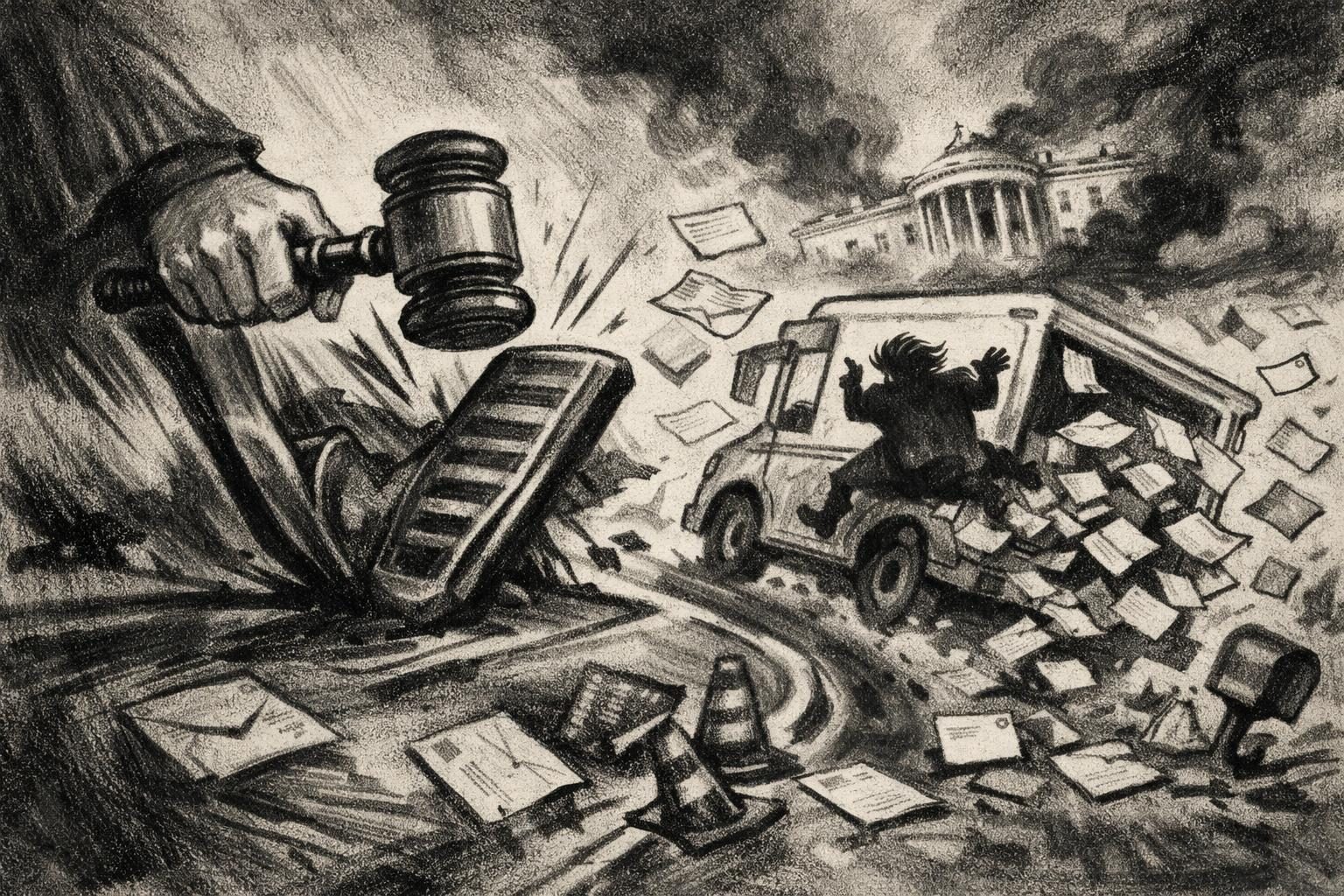
A federal judge in Boston dealt another blow Tuesday to the administration’s effort to impose new restrictions on mail voting and tighten election administration ahead of the November midterms, extending a legal fight that has already become one of the season’s messier voting-rights showdowns. The ruling keeps the core dispute over the president’s election executive order very much alive, but it also adds to the sense that the White House’s bid to force sweeping changes through the federal system is running straight into the limits of judicial review. For now, the government cannot simply act as though the disputed policy has settled into law while states, election officials, and voters wait to see what survives the court process. That matters because election rules are supposed to be predictable, and this one is becoming anything but. Instead of clarity, the country is getting more injunctions, more appeals, and more uncertainty about what rules will actually govern the ballots that are about to go out. The legal calendar is now colliding with the election calendar, and that is exactly the kind of timing problem state officials warned would happen.
The administration’s order was presented as a broad push to standardize and police mail-in ballots, but the practical effect has been to trigger a round of litigation that is already reshaping how states and federal officials talk about voting procedures. The ruling in Boston is not the final word, and it does not resolve the larger constitutional question of how far a president can go in trying to direct election administration through executive action. But it does underscore that the government is facing serious resistance whenever it attempts to treat voting rules as an area where the White House can simply move first and sort out the legal details later. That approach may sound efficient in theory, but in practice it is producing the opposite of stability. States are being forced to respond to shifting deadlines and overlapping court orders while trying to keep their own systems functional. Every new filing and temporary block makes the underlying process look less like careful administration and more like an improvised scramble. That is a dangerous way to handle election machinery, especially when the country is already close enough to the midterms that even minor disruptions can turn into major problems.
Critics of the order argue that the administration is pressing the maximum possible federal reach under the banner of election integrity, while the actual legal fight suggests the claims behind the policy may be premature, overbroad, or flatly unlawful. State officials have warned that efforts to build nationwide controls and data lists could easily misfire, especially if federal records are incomplete or mismatched in ways that affect eligible voters. Those concerns are not abstract. In an election system, a bad data match is not just a clerical headache; it can become a real disenfranchisement problem if people are flagged incorrectly or forced to jump through extra hoops at the last minute. That is why the court fight has begun to feed its own momentum. Each new order, appeal, and counterorder makes the system look less like a sober effort to improve election administration and more like a stress test nobody asked for. The administration can keep saying it is trying to protect ballot integrity, but the process it has unleashed now comes with visible confusion and a growing sense that the government may be overreaching.
The fallout is already showing up in the form of litigation velocity and mixed signals that keep pushing the issue deeper into the election season. The administration still has the option to appeal and continue arguing that its approach is lawful, necessary, and grounded in federal authority. But it cannot avoid the optics of trying to rewrite voting rules on the fly and repeatedly getting told by judges to slow down. The broader consequence is that any attempt to sell this as a clean anti-fraud reform now arrives bundled with uncertainty, judicial skepticism, and the possibility that key pieces of the plan will not survive intact. That is not the kind of message that builds public confidence in how elections are run. It is the kind of message that tells voters and election administrators alike to brace for more turbulence. If the White House wanted to demonstrate that its overhaul would bring order to mail voting, it has so far managed to produce a different lesson: when election rules are pushed too hard from the top, the result can be a legal and political mess that only gets worse as the clock runs down.
Comments
Threaded replies, voting, and reports are live. New users still go through screening on their first approved comments.
Log in to comment
No comments yet. Be the first reasonably on-topic person here.