
Maryland governor rips DHS deportation sweeps as disruptive, heavy-handed, and economically damaging
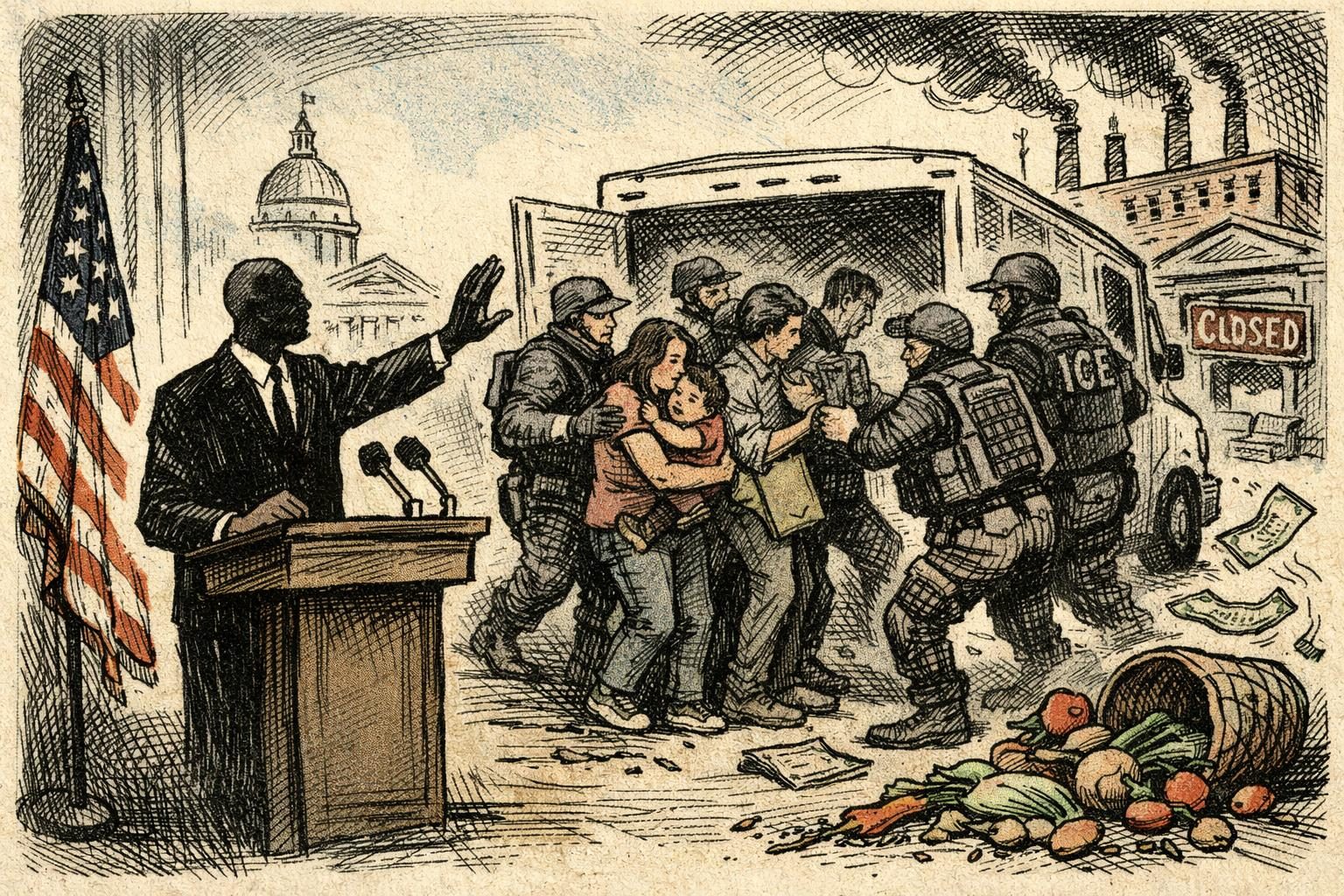
Maryland Gov. Wes Moore delivered a sharp rebuke Tuesday to the Department of Homeland Security after the agency launched mass deportation operations in the state without first notifying state leaders. In a statement that mixed anger with an attempt at measured policy criticism, Moore said the raids were disruptive, heavy-handed, and economically damaging, and he argued they were being carried out in a way that imposed broad costs on communities far beyond the people federal officials say they are targeting. He made clear that violent offenders should be removed lawfully, which placed his objection on the method and scope of the operation rather than on the basic idea of immigration enforcement. But the thrust of his message was unmistakable: if the government is going to claim these sweeps are about public safety, it has to show more than fear, disruption, and a widening sense that the enforcement is being done first and justified later. The fact that state officials said they were not informed in advance only sharpened the political edge of the criticism.
Moore’s statement leaned heavily on the administration’s own data, and he used those numbers to challenge the claim that the operation is narrowly focused on people with serious criminal records. He said that out of more than 1,300 arrests made over the previous two weeks, only a fraction involved people who had ever been convicted of or charged with crimes. That point matters politically because it goes straight at the central argument federal officials have used to defend aggressive immigration enforcement: that the people being picked up are dangerous and the public is safer when they are gone. Moore’s reading of the figures suggests something much broader is happening, and he framed that broader sweep as a problem in its own right. If the enforcement net is wide enough to catch large numbers of people without criminal histories, then the operation begins to look less like a precise public-safety measure and more like a blunt instrument. That is the kind of claim that can erode public confidence quickly, especially when it comes from a governor speaking for a state that was not given advance notice before the raids began.
The economic argument in Moore’s statement may be the most politically consequential part of his response. He said the raids are pulling legal workers out of nursing homes, frightening farmworkers away from their jobs, and pushing up prices for everyday services, all of which turns immigration enforcement into a real-time labor and cost-of-living issue for residents and businesses. That framing is important because it shifts the debate away from the abstract language of border security and into the practical world of staffing, wages, prices, and the ability of employers to keep basic operations running. In Moore’s telling, these operations do not just affect the people being detained; they ripple through workplaces, family budgets, and local economies that are already under strain. The governor’s critique also reflects a broader political reality: immigration enforcement is no longer being debated only as a border problem or an ideological flashpoint. It is increasingly being experienced as a local economic policy with immediate consequences, especially in industries that rely on immigrant labor and in communities where sudden absences can knock services off balance. That gives the backlash a different kind of force, because it is not only about politics or identity but about whether daily life gets harder and more expensive.
Moore also pointed to disturbing footage and reports of rough arrests, including an allegation that one person suffered a broken neck during an ICE arrest. Those claims, if confirmed, would raise serious questions not just about tactics but about oversight, training, and the line between enforcement and abuse. Even short of final conclusions, the reports intensify the pressure on federal officials to explain how the operations are being conducted and what guardrails are in place. That is where the politics of the story could start to become a legal and civil-rights issue, because use-of-force allegations tend to widen a controversy quickly and force agencies to defend more than just their objectives. The broader backlash is already coming from multiple directions, with business leaders, immigrant communities, and state officials converging on the same complaint: federal enforcement is being carried out in a way that creates fear without delivering a clear public-safety payoff. That combination is politically toxic because it leaves the administration defending both the scope and the execution of the sweeps at the same time. Moore’s criticism does not make the raids disappear, but it does suggest the White House and DHS are now facing not just a policy dispute, but a growing argument that the costs of this approach are being dumped onto states, workers, and employers who had no say in how the operation was launched."}]}
Comments
Threaded replies, voting, and reports are live. New users still go through screening on their first approved comments.
Log in to comment
No comments yet. Be the first reasonably on-topic person here.