
New York says a former state trooper is out after jeopardizing a narcotics case
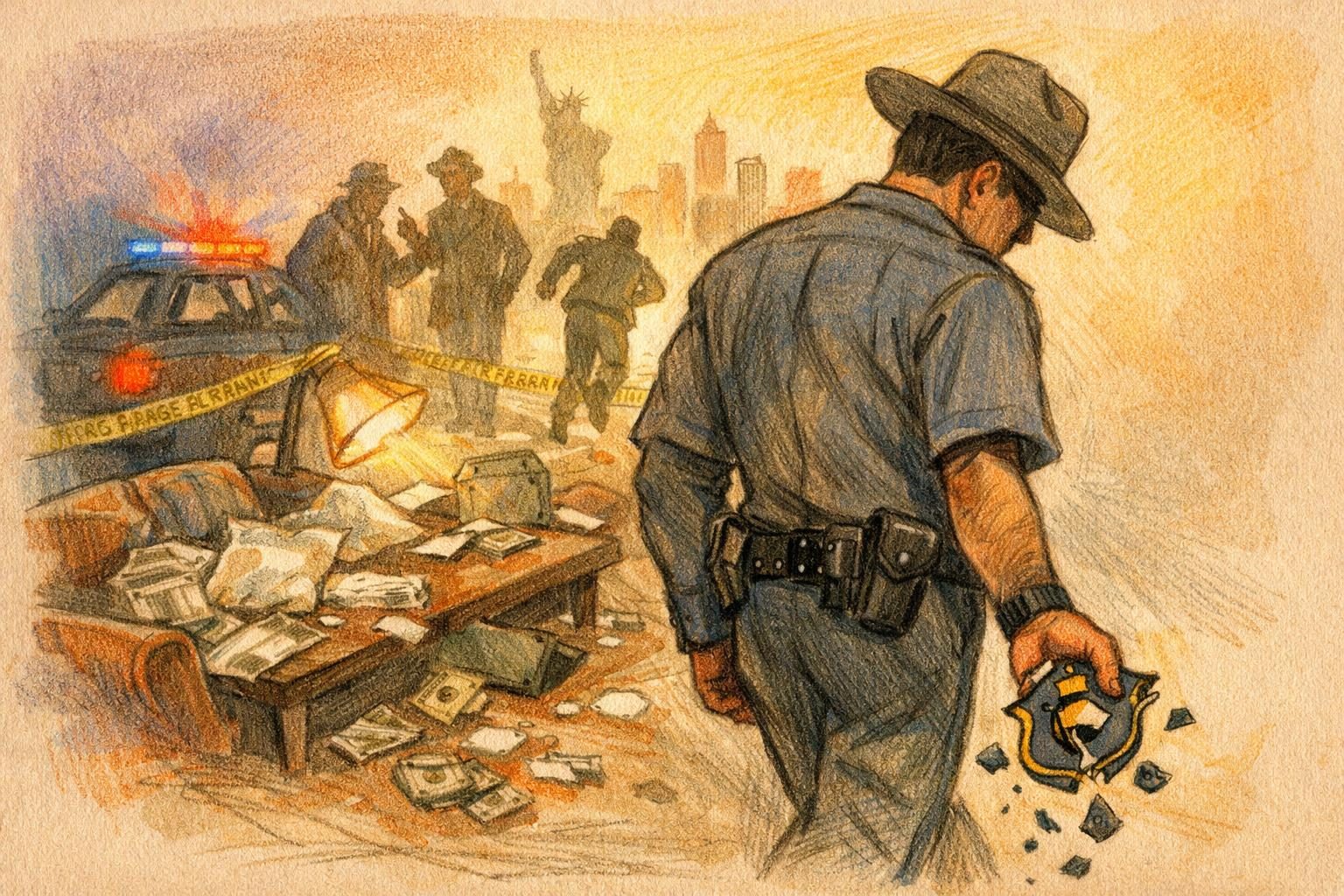
New York’s attorney general said Tuesday that a former New York State Police trooper has been convicted and forced out after conduct that jeopardized a narcotics investigation, turning what might have looked like a routine internal discipline matter into a public example of how one officer’s actions can contaminate a broader case. The announcement was blunt in its implication: when a sworn law-enforcement officer crosses the line, the damage is not limited to the person wearing the badge. It can reach prosecutors, investigators, defendants, and witnesses, all of whom depend on the basic assumption that the people handling a case are following the rules. That is why the episode matters beyond the statehouse and beyond the agency’s own personnel file. A compromise inside a drug probe can ripple outward in ways that are hard to repair once trust has been broken.
The attorney general’s account places the matter in the category of criminal accountability as well as professional failure, which makes the case more serious than a simple resignation after an administrative review. A conviction means the conduct was not treated as a minor lapse or a matter of poor judgment that could be quietly corrected. It was serious enough to carry legal consequences and severe enough to end the trooper’s career. The details released publicly are limited, and the announcement does not read like a full autopsy of every decision that led to the fallout. Even so, the core facts are clear enough: the trooper’s behavior jeopardized an active narcotics investigation, and the state’s response was to pair criminal accountability with removal from the job. In law enforcement, where credibility is one of the most valuable tools available, that kind of outcome is not a bureaucratic footnote. It is an admission that the institution had to clean up after one of its own endangered the work.
Cases like this tend to expose an uncomfortable truth about policing and oversight. Departments often speak in the language of standards, professionalism, and internal accountability only after misconduct has already caused damage. By then, the question is no longer whether an agency has policies on paper. It is whether those policies were effective enough to catch a problem before it interfered with an actual investigation. Narcotics cases are especially vulnerable because they often rely on careful evidence handling, confidential sources, and tightly managed investigative steps. A compromised trooper can threaten all of that, and once the integrity of a case is questioned, everyone downstream pays the price. The attorney general’s announcement does not suggest that the entire investigation collapsed, and it would be unfair to assume that without more detail. But the fact that a sworn officer’s behavior was bad enough to “jeopardize” the probe is itself a measure of how fragile those cases can be.
There is also a broader public trust problem that goes beyond this one former trooper. When misconduct cases come to light, officials often present them as proof that the system works because the bad actor was caught and removed. That may be true as far as it goes, but it is also a low bar. The more important question is how much harm was done before the case surfaced, and whether the institution had enough safeguards to prevent the misconduct in the first place. Residents who rely on police to investigate drug crimes, protect evidence, and act lawfully have a stake in those answers, whether they follow internal disciplinary matters closely or not. This is especially true in New York, where state-level law enforcement actions can have consequences that reach local courts and local communities. The resignation and conviction are concrete outcomes, but they do not by themselves restore confidence. They only show that the damage had already been serious enough to demand a public reckoning.
The political significance of the announcement is modest compared with a high-profile election fight or a major corruption sweep, but it is still real. Law-enforcement accountability is a public issue whenever misconduct threatens the integrity of prosecutions and the legitimacy of government institutions. The state attorney general’s office framed the announcement as a matter of both justice and institutional responsibility, and that framing reflects a familiar tension in policing: agencies want to project strength, but they also need to show that they can police themselves when necessary. Whether this case leads to lasting changes inside the department is unclear from the public statement alone. What is clear is that the former trooper is out, the conviction is on the record, and the episode has added another example to the long list of ways misconduct can leave wreckage behind. In that sense, the story is small in scale but large in what it reveals: a single failure, a damaged investigation, and another reminder that public trust is easier to lose than to rebuild.
Comments
Threaded replies, voting, and reports are live. New users still go through screening on their first approved comments.
Log in to comment
No comments yet. Be the first reasonably on-topic person here.