
Postal Service mail-ballot rule lands the agency back in court
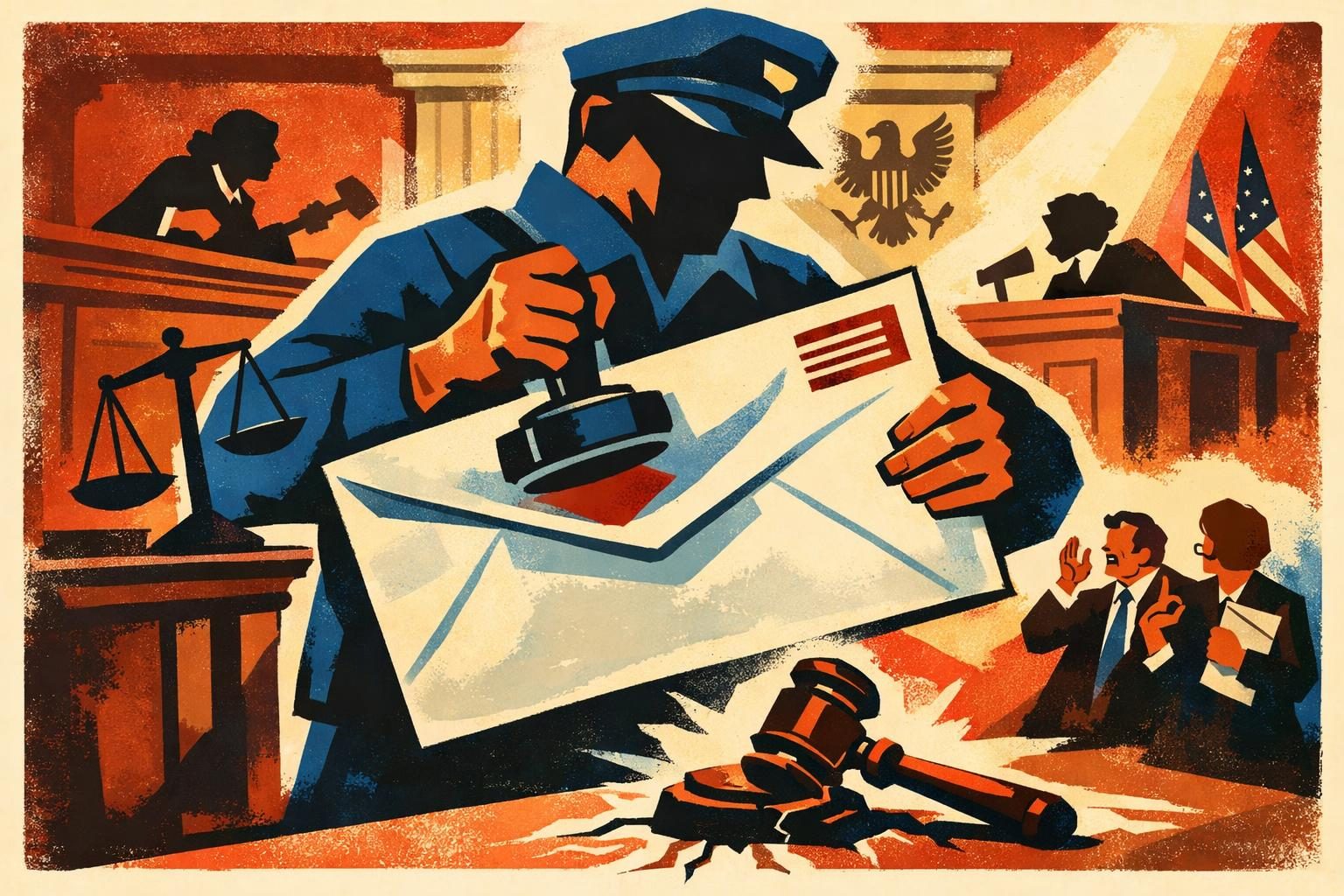
The Postal Service’s effort to put new mail-ballot rules into place has run into another judicial warning, and this time the problem is bigger than simple policy disagreement. On August 25, a federal judge said the agency appeared to have violated an earlier court order while moving ahead with the administration’s voting directive. That finding matters because it suggests the Postal Service was not merely trying to carry out a controversial rule, but may have crossed a line set by the court while doing so. Even so, the judge did not immediately stop the rule from taking effect, leaving the administration with a narrow opening and leaving election officials in the middle of more uncertainty. The result is a familiar kind of Washington mess: a major agency trying to change election-related procedures on a fast track while the legal system tries to catch up. It is a particularly bad look for an institution that is supposed to provide stability, not surprise.
At the center of the dispute is a rule that would force states to comply with new standards for ballot envelopes and could bar the Postal Service from mailing ballots from states that do not satisfy the administration’s requirements. That is not a minor paperwork adjustment, and it is not the sort of technical change that can be made casually without ripple effects. Mail voting depends on timing, uniformity, and predictable handling, which means even a small administrative shift can create confusion for local election offices already working against hard deadlines. If states are required to alter envelope designs, ballot-processing rules, or related procedures on short notice, the burden falls directly on election administrators and voters, not on the agency issuing the rule. The practical consequences could show up quickly as states continue preparing to send ballots to voters, especially in places where election calendars are already moving. That gives the legal fight an immediate urgency, because the rule is not sitting in the abstract. It is aimed at a process that is already underway.
The judge’s latest criticism also sharpens a broader concern about how the Postal Service is being used in the politics of voting. The agency has long been expected to act as a neutral carrier of election mail, but this dispute pushes it into a much more contested role. Instead of simply delivering ballots under established procedures, the Postal Service now looks increasingly like a participant in a policy fight over who gets to set the terms of absentee voting. That shift is corrosive even if the rule ultimately survives judicial review. It creates pressure on state and local officials to guess how aggressively the rule will be enforced, and it leaves voters wondering whether their ballots will be accepted, delayed, or treated differently depending on where they live. Those are not small side effects. They are the kinds of consequences that can weaken confidence in the mechanics of an election before a single vote is counted. And when the institution responsible for moving ballots begins to look like a partisan flashpoint, the damage reaches well beyond one rule or one case.
The court’s decision to stop short of an immediate block leaves the conflict unresolved, which is probably the worst possible outcome for election administration. On one hand, the judge signaled serious concern by saying the agency had not stayed within the limits already imposed by the court. On the other, the absence of an immediate injunction means the administration still has room to argue that the rule should remain in motion while litigation continues. That limbo is likely to keep state officials, lawyers, and postal managers guessing about what happens next, and guessing is a poor foundation for a voting system that depends on precision. There is also a larger institutional problem here: every time the Postal Service is pulled into a courtroom over election procedures, it reinforces the impression that the agency is being asked to do more political heavy lifting than its basic mission can support. If the administration wanted to prove it could handle a sensitive election overhaul in a disciplined way, this case is doing the opposite. It has produced more conflict, more ambiguity, and more evidence that the Postal Service is becoming a litigation magnet instead of a dependable public utility. And with ballots already moving toward the mailstream in some states, the cost of that dysfunction could arrive before the courts finish sorting out who was right.
Comments
Threaded replies, voting, and reports are live. New users still go through screening on their first approved comments.
Log in to comment
No comments yet. Be the first reasonably on-topic person here.