
South Carolina’s GOP Senate Runoff Tightens the Field Again
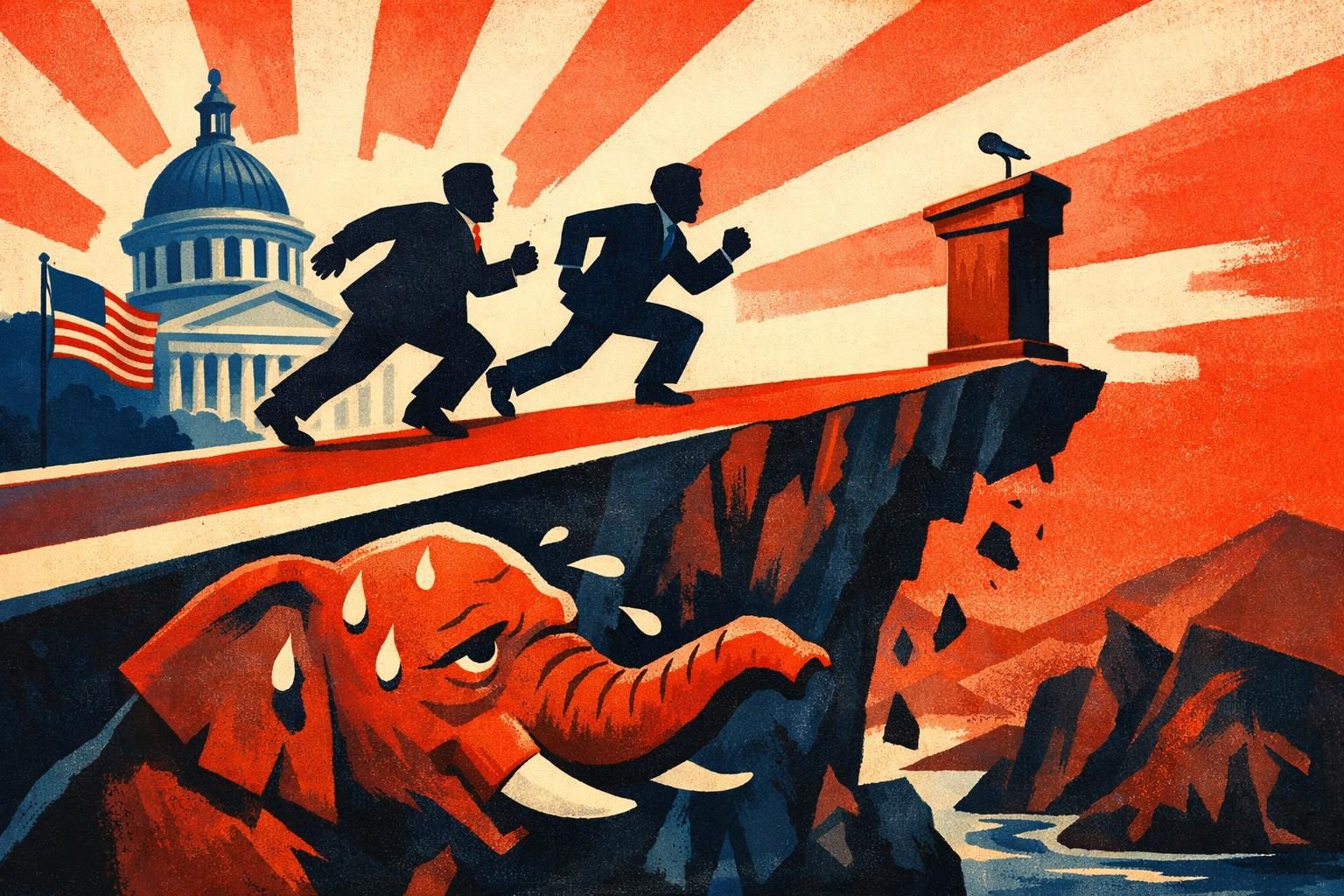
South Carolina’s special Republican primary runoff for U.S. Senate has done exactly what runoffs are supposed to do: it narrowed the field, clarified the stakes, and reminded everyone that the path to November can get messier before it gets cleaner. The state held the runoff on August 25 after the earlier primary failed to produce a majority winner, forcing Republicans back to the polls for one more round of intraparty sorting. That by itself is not dramatic in a national sense, but it is a real political event with real consequences for the general-election map and for the party’s internal balance of power. The South Carolina election commission treated the contest as a full statewide exercise, which matters because runoff elections are not symbolic holdovers. They are the mechanism that decides who gets to carry the party label into the fall and who gets left behind after the first round of voting proves inconclusive.
The deeper importance of a runoff is that it often reveals the fault lines a primary can temporarily paper over. In a first-round contest, a candidate can survive with a pluralistic coalition, a strong early-money advantage, or a favorable split in the field. In a runoff, all of that gets stress-tested. Turnout usually falls, the electorate becomes more intense, and the campaign shifts from broad persuasion to a narrower effort at consolidation. Candidates have to do more than avoid mistakes; they have to prove they can unite factions that may not have been speaking to each other during the first stage of the race. That is why this runoff matters beyond the state boundaries. It is not simply about who wins a nomination. It is about whether South Carolina Republicans can settle on a nominee in a way that leaves the party organized, disciplined, and at least minimally ready for a general election season where every Senate seat is part of the national scoreboard.
There is also a practical reason this runoff carries outsized attention: special Senate races tend to attract more scrutiny than ordinary nomination fights, because they affect the balance of the chamber and can quickly become proxy battles for larger partisan concerns. A vacant or newly contested seat changes the strategic landscape even before the general election begins. Campaigns, donors, and party strategists all read these moments as signals about energy, message discipline, and the state of the coalition. In South Carolina’s case, the runoff did not trigger a policy shift or a governing crisis, but it did create a concrete political outcome that will shape how the party approaches the fall. The winner will not just inherit a ballot line. They will inherit expectations, unresolved loyalties, and the burden of turning a bruising internal contest into a credible statewide campaign. That is the kind of transition that can look straightforward on paper and still produce downstream headaches once the general electorate is watching.
The runoff also came with an added layer of scrutiny from federal election observers, including DOJ monitoring, which put the race in a broader conversation about election administration and oversight. That does not amount to a finding of wrongdoing, and it should not be confused with scandal. But it does mean the contest sat at the intersection of partisan competition, election mechanics, and federal attention at a moment when election processes are already under a microscope. South Carolina’s election authorities had to manage the practical business of a statewide runoff while also operating in a climate where every administrative detail can be interpreted as a political signal. In a quieter year, this would mostly read as procedural housekeeping. In this one, it adds another point of friction to a political environment already defined by distrust, pressure, and the expectation that every contested race will stand in for something bigger than itself. The result is not a constitutional crisis or a policy earthquake. It is something more familiar and, in some ways, more important: a hard-fought election that tightens the field again, intensifies the pressure on the party’s next move, and leaves South Carolina Republicans with less room for error when the general-election fight arrives.
Comments
Threaded replies, voting, and reports are live. New users still go through screening on their first approved comments.
Log in to comment
No comments yet. Be the first reasonably on-topic person here.