
Supreme Court greenlights Trump’s mail-ballot attack, and the election system immediately starts sweating
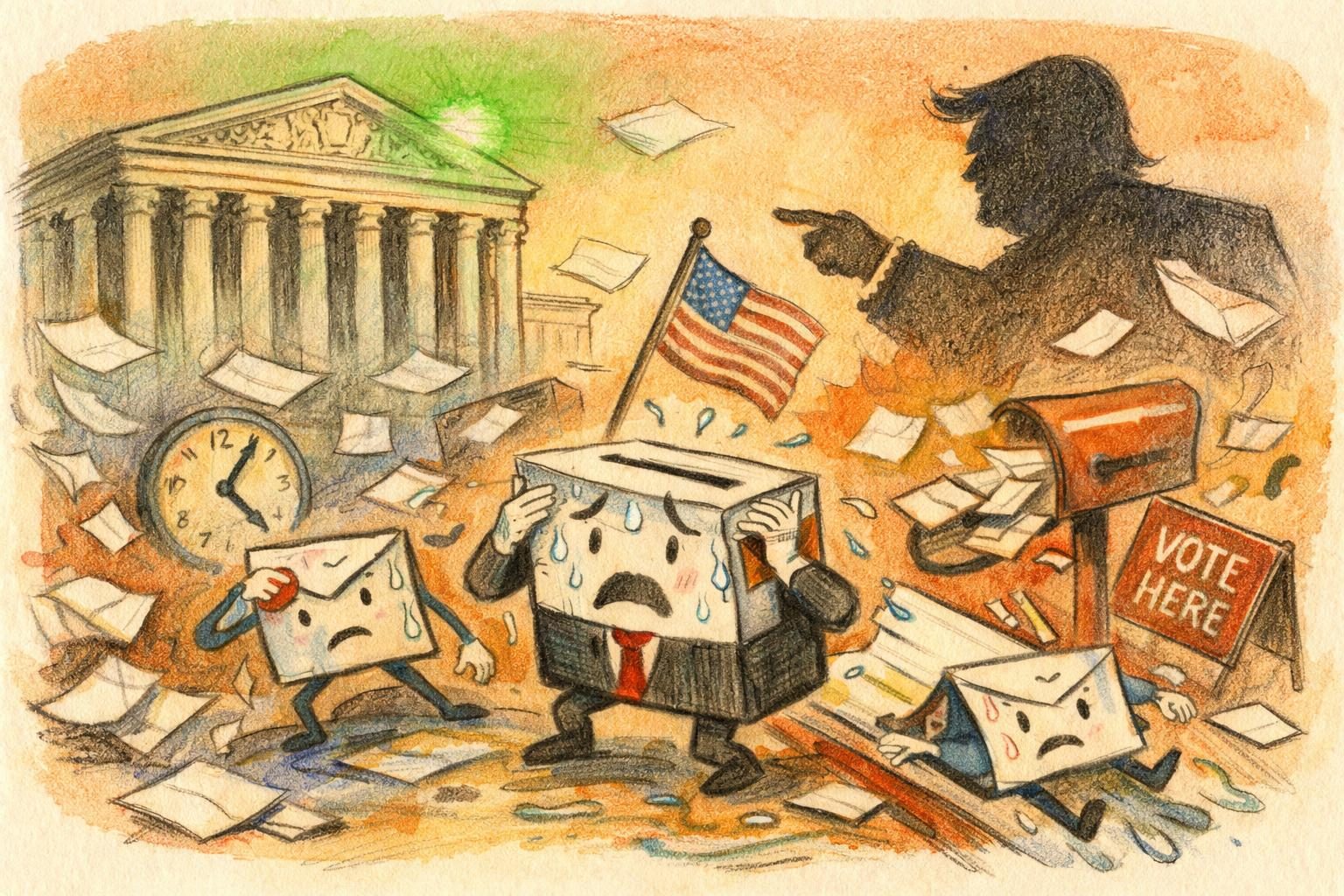
The Supreme Court’s latest move on August 24 gave President Donald Trump another opening to press ahead with his effort to curb mail-in voting, but it did not deliver the clean legal reset his allies might have wanted. Instead, the court’s action leaves election officials, lawyers, and voters staring at a familiar and deeply annoying American ritual: a major political fight with huge practical consequences and almost no immediate clarity. The order does not, by itself, rewrite state election laws or force counties to change the way they are preparing ballots. It also does not wipe away the lower-court disputes still waiting to be resolved. But it does mean the issue is now hanging over the election calendar at exactly the wrong moment, when states are already moving toward printing and mailing ballots. For administrators who need stable rules, that is a nightmare of timing, not a footnote.
The underlying fight is over more than one executive order, because Trump has spent years treating vote-by-mail as a convenient target whenever he wants to raise doubts about election integrity. That messaging has worked politically even when the facts have not cooperated, because mail voting remains a routine and lawful option for millions of Americans across the country. The Supreme Court’s action does not magically validate every part of Trump’s effort, and it does not settle the larger constitutional and statutory questions that surround how much authority a president has over election administration. What it does do is create room for more pressure, more litigation, and more confusion while the courts keep arguing over the edges. In practical terms, that means the White House can keep pushing the issue, election officials can keep getting questions they cannot fully answer, and opponents of the order have to spend even more time and money fighting a moving target. None of that helps the people actually trying to run elections on a tight schedule.
The immediate problem is implementation, because election systems are built on deadlines, not vibes. Several states are already close to the point where ballots go out, and once that machinery starts moving, any new legal uncertainty becomes harder to unwind. If there is a change in guidance, it could force election offices to juggle notices, revised instructions, and possible court-by-court variations in how the order is interpreted or blocked. That is the kind of administrative headache that sounds abstract until it lands on a county clerk’s desk and has to be explained to thousands of voters. Legal experts are warning that overlapping challenges could produce uneven results, especially in places where the process is already in motion and where local officials are trying to follow both state law and federal litigation at the same time. Even if the final effect is limited, the path to getting there may be messy enough to produce confusion, delay, and mistakes. In elections, those are not minor side effects; they are the main event.
The larger danger is not just legal uncertainty but the political theater that tends to follow it. Trump does not need to successfully rewrite the system in order to create the impression that the system is unstable, and that may be the point. If officials have to answer different questions in different states, if courts issue conflicting signals, or if ballots are mailed under one understanding and litigated under another, the public will see turbulence whether or not the underlying rules actually change much. That gives partisan actors plenty of material to stoke suspicion and scream fraud on cue, even in places where the actual voting process continues to function. The cost of that kind of chaos is real: it burns staff time, drains public confidence, and forces election workers to spend their days defending procedures instead of administering them. The Supreme Court has not resolved the fight, but it has made sure the fight will keep bleeding into the weeks when election offices need the least distraction possible. That is the part that should worry anyone who still thinks elections work best when the adults in the room are allowed to do their jobs in peace.
Comments
Threaded replies, voting, and reports are live. New users still go through screening on their first approved comments.
Log in to comment
No comments yet. Be the first reasonably on-topic person here.