
Trump’s ballroom fight keeps chewing through the legal system
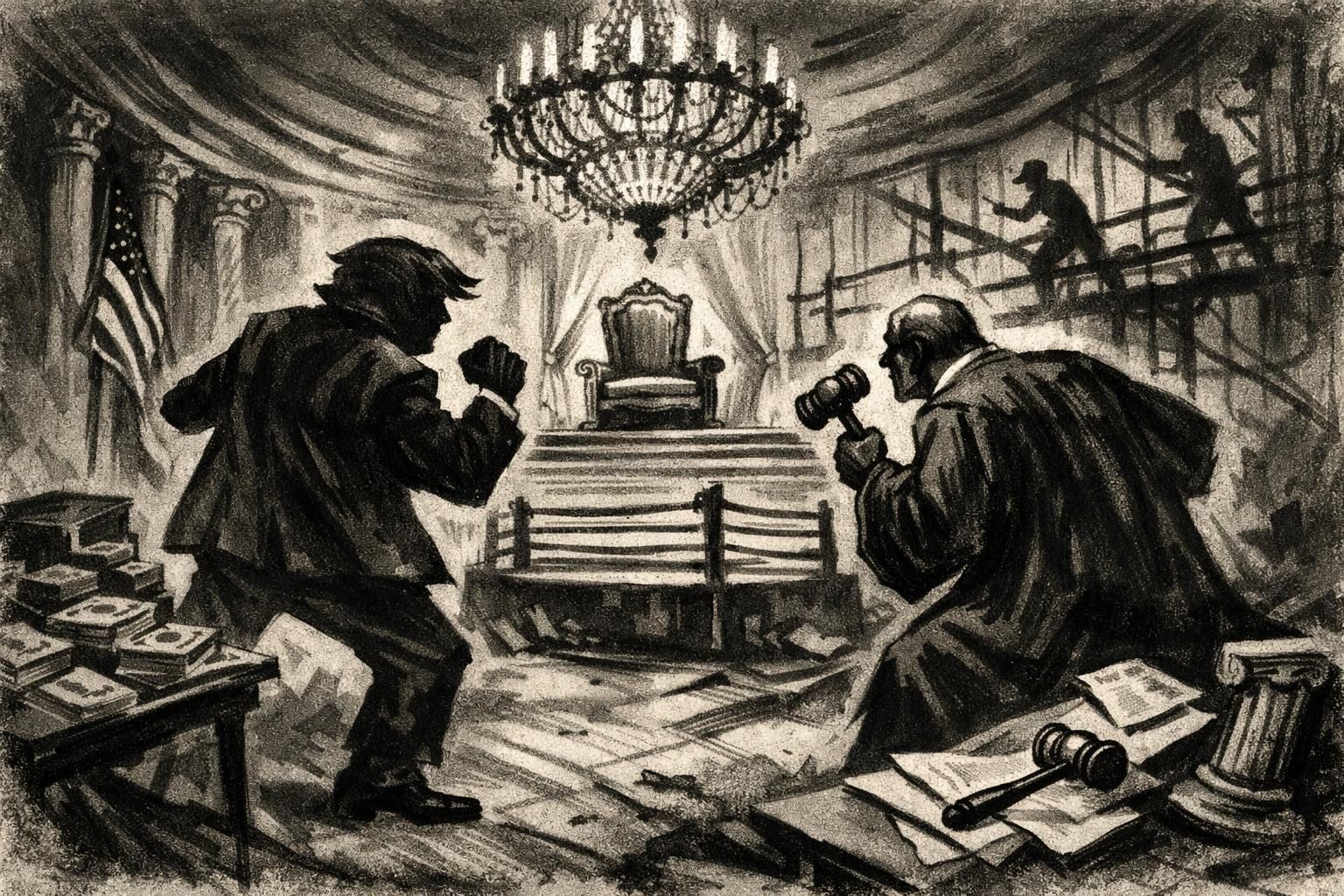
Chief Justice John Roberts on Aug. 25 allowed construction on President Donald Trump’s planned White House ballroom to continue for now, a temporary move that keeps the project alive while the Supreme Court weighs the administration’s emergency request. The order does not settle the underlying fight, but it does preserve the status quo as the justices consider whether lower-court rulings should stand. Those rulings had threatened to stop the work because Trump did not obtain congressional approval before moving ahead. In practical terms, the decision means aboveground construction can continue while the legal system keeps sorting out a dispute that now stretches well beyond architecture.
That is because the ballroom battle is not really about chandeliers, flooring, or even the size of the addition. It is about whether a president can effectively push through a major alteration to the White House without the kind of oversight that normally attaches to public money and public property. The White House is not a private residence in the ordinary sense, and the question raised by the project is whether Trump can treat it more like a personal development site than a federally governed institution. Critics argue that the project represents a familiar pattern: a president pressing ahead first and leaving Congress, the courts, and watchdogs to catch up later. Supporters, for their part, have framed the ballroom as a straightforward modernization effort that falls within executive authority. But at the center of the dispute is a basic constitutional and administrative question: who gets to say yes, and by what authority.
The fact that the Supreme Court had to intervene at all underscores how sharply the disagreement has escalated. Temporary orders like this are not final judgments, but they can signal that the justices see a real live controversy with immediate consequences rather than a hypothetical quarrel. Here, the immediate consequence is whether construction crews keep working or have to stand down while litigation continues. The broader consequence is whether the president can use the machinery of the executive branch to carry out a major White House expansion without the usual congressional approval that might accompany a project touching public assets. That is why the case has become a test not just of project management but of power. The administration’s request puts the courts in the awkward position of deciding how much latitude a president gets when the project in question is attached to the symbolic and functional center of the federal government.
Politically, the ballroom fight has already become a convenient shorthand for larger complaints about Trump’s governing style. Lawmakers and ethics watchdogs have seized on the project as evidence that he is acting as though the White House were his own renovation site, rather than a place constrained by public rules and institutional checks. Democrats, especially, are likely to use the dispute as a vivid example of what they describe as the president’s habit of acting first and treating oversight as an afterthought. At the same time, the administration’s allies can argue that this is simply another round in a familiar battle over executive discretion and the limits of bureaucratic resistance. The temporary Supreme Court order does not answer those arguments. It merely keeps the hammering going while the legal system decides whether the project is an authorized improvement or an overreach dressed up as a facelift. For now, the ballroom is less a room than a referendum on how much slack a president gets when vanity, power, and public property all land in the same frame.
Comments
Threaded replies, voting, and reports are live. New users still go through screening on their first approved comments.
Log in to comment
No comments yet. Be the first reasonably on-topic person here.