
Maryland Court Blocks Democratic Redistricting Amendment From the Ballot
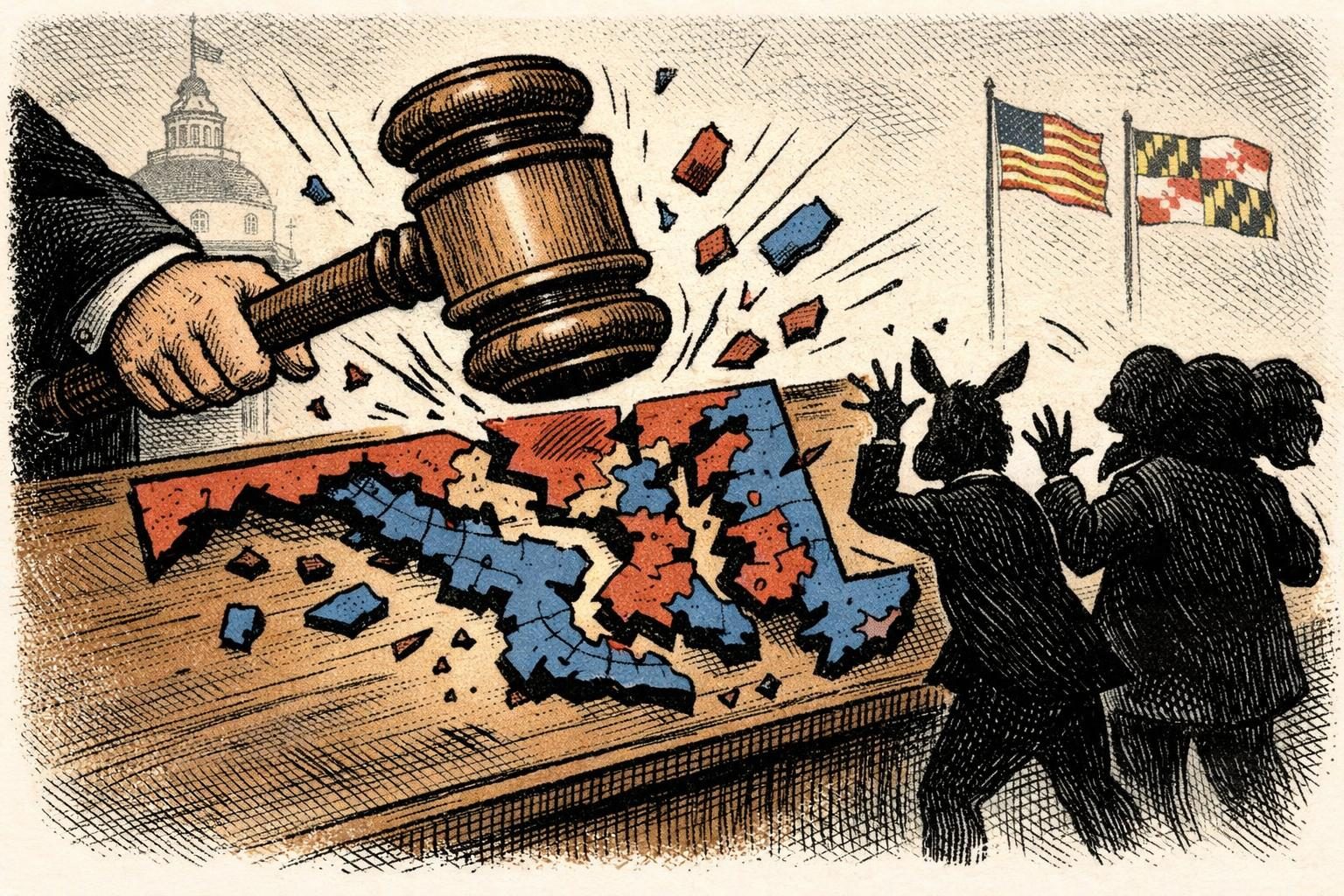
A Maryland court on August 26 blocked a Democratic-backed redistricting amendment from appearing on the November ballot, shutting down a late-stage attempt to give voters a say in a proposal that could have altered how the state draws political lines. The ruling landed as Democrats across the country continue looking for ways to blunt Republican advantages in the redistricting fight, and it immediately removed one option from a party that had hoped to improve its leverage before the midterms. In practical terms, the decision means Maryland voters will not be asked this year to approve the change, and the amendment cannot serve as a vehicle for reshaping congressional boundaries in the near term. The setback is especially awkward for Democrats because it comes during a period when every redistricting opportunity is being treated like a race against the calendar. For a party trying to gain any edge it can, the court has effectively told it to come back with another plan.
The ruling is not just about one amendment or one ballot item; it is part of the larger, increasingly bitter contest over who gets to control political maps before the next major election cycle. Redistricting is often described in technical language because that is how the fight is packaged for courts and voters alike, but the underlying stakes are plain enough: the shape of districts can affect which party has a better shot at winning seats for years to come. Democrats had hoped this amendment would make it easier to revisit map-drawing in a state where earlier legal decisions had already limited their options. A 2022 ruling had frustrated those ambitions, and the new decision suggests that the obstacles are not going away simply because the political urgency is growing. Instead, the legal path remains narrow, and each attempt to widen it can run headlong into constitutional and procedural objections. In that sense, the court’s move is not an isolated procedural hiccup so much as another reminder that redistricting fights rarely unfold on the timetable politicians prefer.
For Democrats, the practical consequences are immediate and politically inconvenient. Without a ballot measure, the party loses a tool that could have helped it respond to Republican-controlled mapmaking elsewhere or at least position itself better for the 2026 cycle and beyond. That does not mean the redistricting fight is over in Maryland, but it does mean the party will have to look for slower, harder, and less certain routes if it still wants to revisit district lines. Legislative action can be difficult to organize, especially when the political arithmetic is tight and the incentives for cooperation are weak. Litigation is another option, but courts can be unpredictable, and prior losses tend to color what comes next. The result is a strategic setback that may force Democrats to spend more time and political capital on process than they would like, all while the larger national map battle keeps moving. If the goal was to create momentum heading into the midterms, this ruling pulls in the opposite direction.
The broader significance lies in what the decision says about the gap between political ambition and legal reality. Redistricting advocates on both sides often talk as if a successful court strategy or ballot measure can quickly reset the landscape, but these fights usually involve years of arguments, appeals, and technical objections that can swallow even well-organized efforts. Here, the court’s decision undercuts a plan that appears to have been designed to work around earlier roadblocks, which makes the loss sting even more. It is the kind of defeat that does not just block a single move; it also signals that the next move may be just as difficult. Critics of these efforts will say the system is doing what it is supposed to do, but that misses the point for the politicians and operatives who were counting on a faster result. For them, the system is not a neutral referee so much as an obstacle course with fewer shortcuts than advertised. What happened in Maryland is therefore more than a local procedural dispute. It is another chapter in a national map war where both parties are trying to write the rules, and the courts keep reminding them that the game has constraints, deadlines, and plenty of places to get tripped up.
Comments
Threaded replies, voting, and reports are live. New users still go through screening on their first approved comments.
Log in to comment
No comments yet. Be the first reasonably on-topic person here.