
Canada answers Trump’s tariff move with retaliation, and the trade fight gets uglier fast
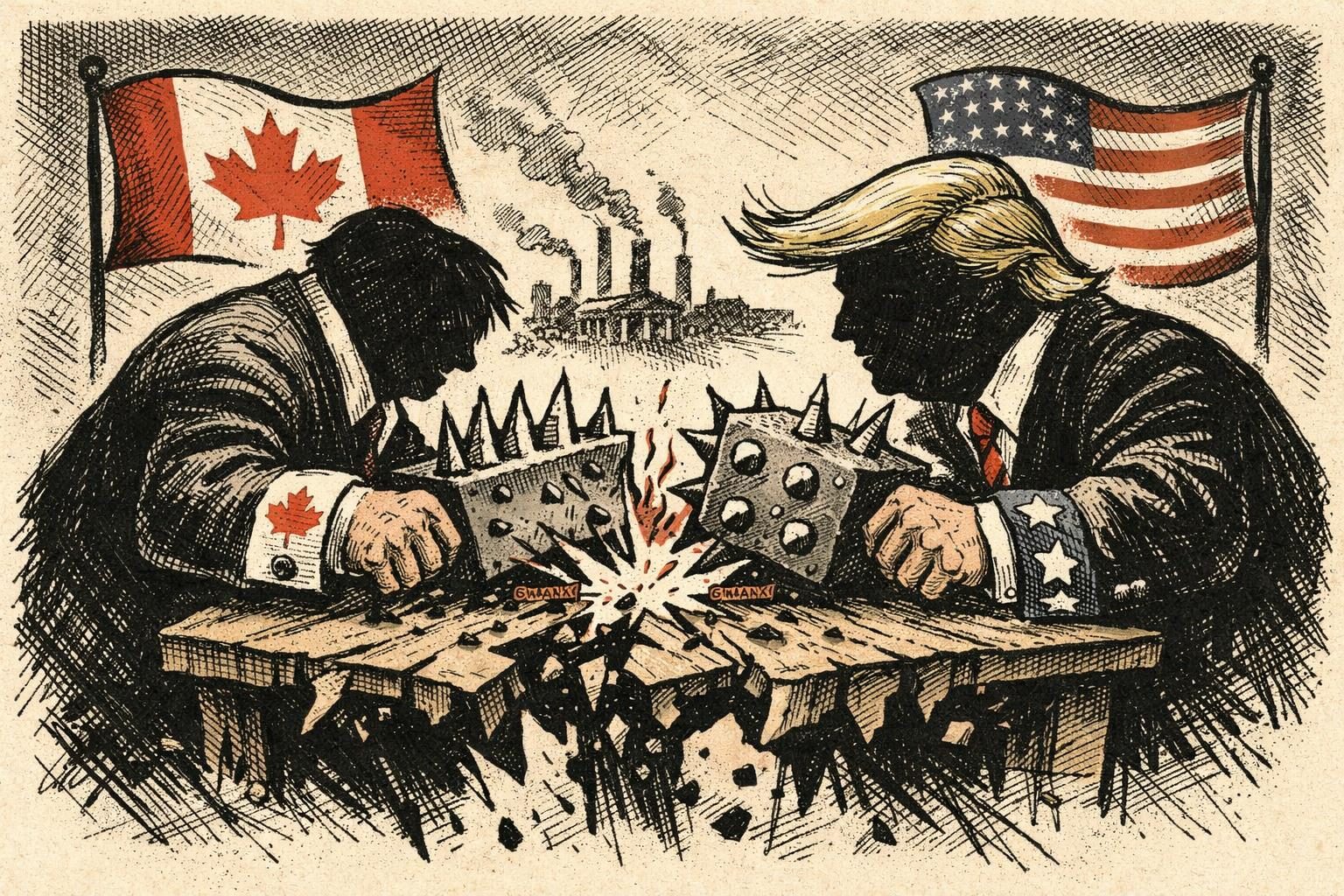
Canada has moved from warning shots to an actual counterpunch, announcing retaliatory tariffs after the Trump administration’s latest tariff pressure hardened into policy and then into a broader trade escalation. That matters because the story is no longer about rhetorical brinkmanship or campaign-stage bluster. It is about real economic costs being assigned to real sectors, with the potential to spread quickly through supply chains that cross the border every day. Ottawa’s response signals that Canadian officials do not believe this can be managed as a temporary irritation. They are treating it as a serious trade conflict with consequences that will reach far beyond a few angry headlines.
The immediate political meaning is easy to read. The White House has spent years presenting tariffs as a kind of magic lever, a way to extract concessions while preserving the image of toughness and leaving the domestic audience with the impression that someone else is paying the bill. Canada’s retaliation punctures that fantasy in a very visible way. Once one country answers tariffs with tariffs, the dispute stops being abstract and becomes a matter of prices, contracts, shipping schedules, and business planning. Companies that rely on stable cross-border trade have to decide whether to absorb costs, pass them along, or delay investment while they wait to see whether the fight gets worse. That hesitation alone can be damaging, especially in sectors where margins are thin and timing matters. Farmers, manufacturers, logistics firms, and importers all have reason to brace for knock-on effects if the dispute continues to widen.
Canadian leaders have been blunt in framing the U.S. move as an attack on workers and businesses rather than as a routine policy disagreement. That language is not just diplomatic theater. It is a signal that Ottawa wants domestic audiences to understand the tariffs as a direct economic threat and to see the response as a necessary defense rather than an optional escalation. The broader trade logic is also hard to miss: when a major trading partner imposes new barriers, the other side often responds in a way that is politically targeted and economically meaningful. That makes a quick return to calm less likely, because retaliation creates its own pressure to keep going or to demand a concession before backing down. Trade disputes have a way of developing their own momentum, especially when both governments think they can win points by appearing uncompromising. In the short term, that can look like strength. In the longer term, it can leave both sides boxed into positions that are difficult to reverse without looking weak.
This is where the economic reality starts to overpower the political messaging. Tariffs are often sold as if they were instruments that only punish the other side, but that is not how they work in practice. They tend to raise costs somewhere in the chain, whether that shows up as more expensive inputs for manufacturers, higher prices for consumers, or reduced competitiveness for exporters who suddenly have to navigate a less friendly market. Businesses do not need perfect certainty to become cautious; they just need enough doubt to postpone a contract, rethink a shipment, or hold off on hiring. That kind of uncertainty can be especially corrosive in a trade relationship as tightly integrated as the one between the United States and Canada. The two economies are deeply entangled, which means the damage from a tariff fight does not stay neatly on one side of the border. It ricochets. It can hit producers who depend on intermediate goods, consumers who face higher prices, and communities whose local employers are tied to cross-border demand. The longer the standoff lasts, the more normal the disruption begins to feel, and the harder it becomes for either government to claim that the pain is only temporary.
Politically, Trump may still find the posture useful. A tariff fight lets him perform the old nationalist role of the president who is willing to punish foreign partners and demand respect in public. That kind of theater can play well with an audience that likes confrontation and interprets compromise as surrender. But trade wars are among the few policy fights where the consequences can show up quickly enough for voters to notice without needing a briefing paper. If prices rise, if industries complain, or if a sensitive sector starts to wobble, the administration will not be able to wave away the damage as merely theoretical. Canadian officials appear to understand that this is not a passing mood swing from Washington but a policy fight that could drag on. Their retaliation suggests they are prepared to absorb some pain rather than leave the U.S. move unanswered. That raises the odds of a prolonged standoff and lowers the odds of an easy reset. In practical terms, the White House has turned tariffs into standing leverage, Canada has answered in kind, and the result is a trade conflict that is starting to look less like a negotiating tactic and more like a costly governing problem with no clean exit ramp.
Comments
Threaded replies, voting, and reports are live. New users still go through screening on their first approved comments.
Log in to comment
No comments yet. Be the first reasonably on-topic person here.