
White House pauses part of its Canada tariff escalation
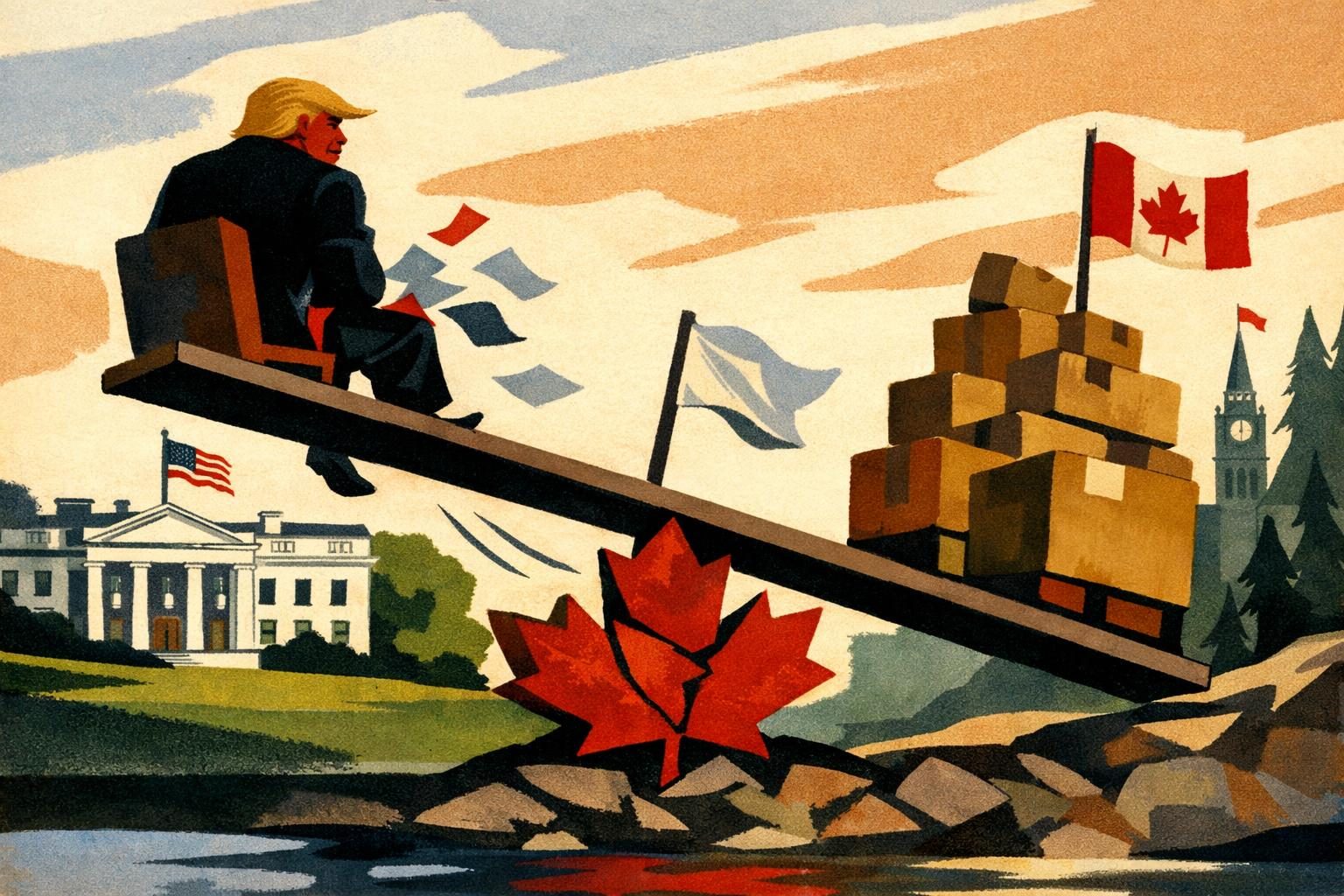
The White House on August 26 temporarily suspended part of its latest round of additional duties on Canadian goods, a move that amounts to more than a procedural tweak and less than a full retreat. The action follows an earlier escalation in the administration’s tariff fight with Canada, and it signals that the White House is already adjusting course after pressing hard on trade pressure. The suspension is tied to duties that had been aimed at categories including alcoholic beverages, dairy, and motor vehicles, all of which sit inside a broader dispute over what the administration has framed as Canadian discrimination against U.S. commerce. Even in a White House that often treats tariff threats as a form of political theater, this is a concrete policy shift that carries real commercial consequences. It suggests the administration is discovering, in real time, that imposing costs is easier than controlling where they land and how long they last.
The move is best understood as a tactical pause rather than a clean reversal, but even that tells you something important about the state of the trade fight. Administrations do not usually suspend their own pressure campaign unless the original plan starts running into friction, whether from business complaints, supply chain complications, diplomatic blowback, or simply the practical difficulty of enforcing a sweeping tariff regime without collateral damage. The White House has continued to present tariffs as a lever that can be pulled to force concessions, but suspending part of the escalation undercuts the image of effortless strength. If the goal was to show that Washington can squeeze Ottawa without paying a price, the new step looks more like a reminder that there is always a price and somebody eventually has to absorb it. That does not mean the administration has abandoned the fight, only that it appears to be recalibrating after discovering that the first round was not quite as neat as advertised.
For the industries caught inside the dispute, the practical meaning of the suspension may matter more than the rhetoric. Alcohol producers, dairy businesses, auto manufacturers, importers, distributors, and the companies that move their goods across the border all have to plan around policy changes that can hit with little warning. A tariff can raise costs quickly, and even a temporary one can disrupt contracts, inventory decisions, pricing plans, and investment timelines. That is why trade disputes tend to create a wider circle of uncertainty than the headlines imply; the pain is not limited to the products named in the order, because suppliers, retailers, and consumers all get dragged into the adjustment. A temporary suspension may reduce immediate pressure for some firms, but it also reinforces the sense that tariff policy under this administration can be improvised, opaque, and subject to abrupt changes. Businesses can adapt to a hard rule. They have a much harder time adapting to a moving target.
Politically, the episode fits a familiar pattern: the administration projects toughness, then quietly steps back when the consequences of toughness become harder to ignore. That makes the Canada fight useful as a case study in the gap between tariff swagger and tariff governance. The White House can announce a hard line and frame it as leverage, but once the bills, complaints, and market effects start piling up, the story becomes more complicated. Trade policy is one of the fastest ways for any administration to create visible pain, which is precisely why it is also one of the easiest places to overplay a hand. This latest suspension does not end the larger dispute, and it does not prove the White House has abandoned its aggressive posture. It does, however, show that the administration is willing to pull back in part when the pressure starts to look less like leverage and more like self-inflicted damage. In other words, the tariff fight is still on, but the brakes are already getting used.
Comments
Threaded replies, voting, and reports are live. New users still go through screening on their first approved comments.
Log in to comment
No comments yet. Be the first reasonably on-topic person here.