
U.S. says it disrupted Chinese hackers who broke into major federal institutions
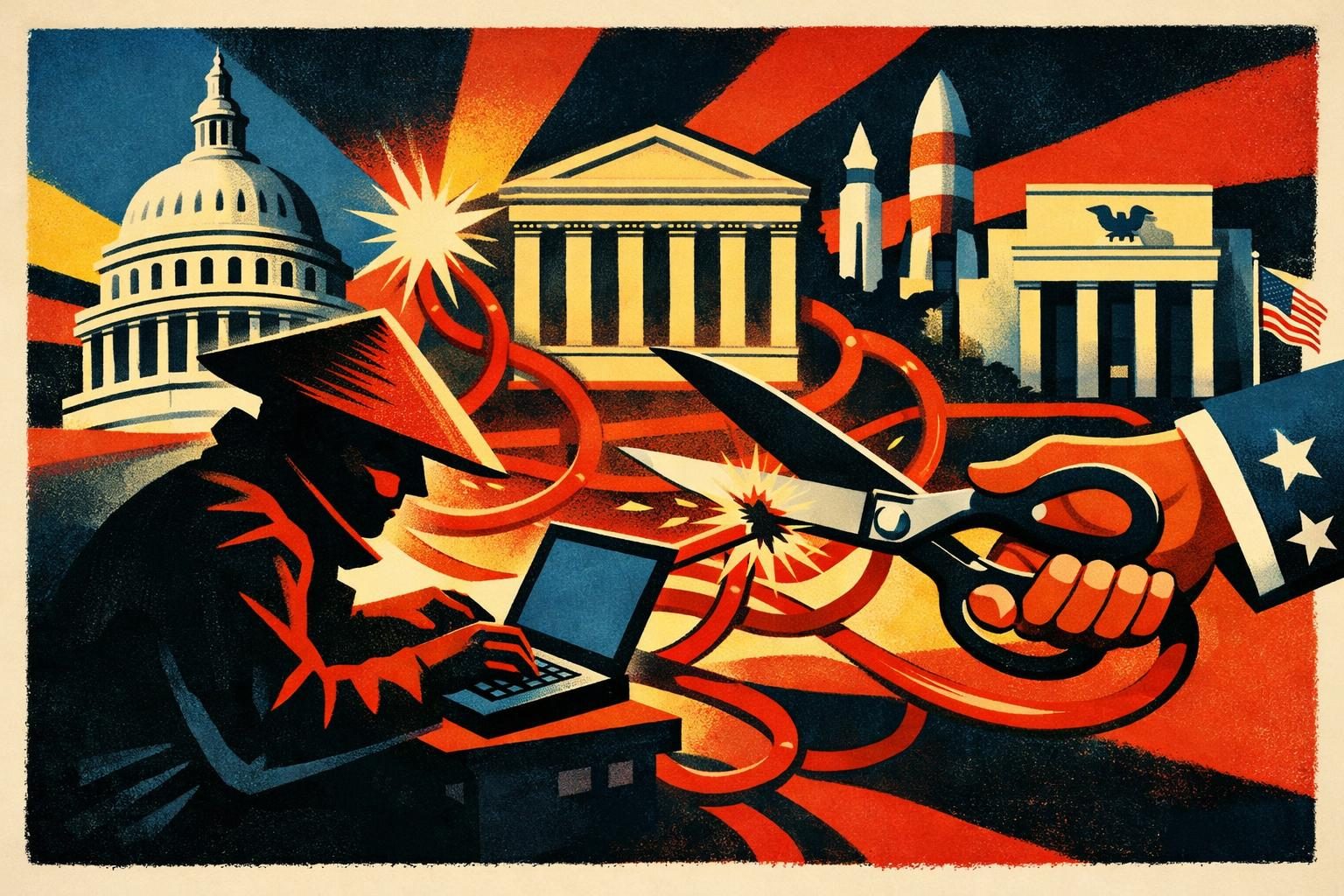
The U.S. government said on Aug. 26 that it had disrupted a Chinese hacking operation tied to intrusions or attempted intrusions at some of the most sensitive corners of the federal government, including the Justice Department, NASA, the Federal Reserve, and the Senate. That is not the kind of disclosure that gets brushed aside as routine cyber hygiene, even in a political environment already crowded with noise. When agencies that oversee law enforcement, space operations, monetary policy, and legislative business are named in the same announcement, the message is unmistakable: the target set is about power, access, and the infrastructure that keeps the state functioning. Officials did not present the matter as a single catastrophic breach that brought systems down in one blow, but the reported activity still points to something more persistent and more troubling. In cyber terms, the distinction matters, because intrusion campaigns are often less about immediate destruction than about gaining footholds, mapping networks, and staying in place long enough to matter later.
The central question is not whether the operation was stopped at a particular moment, but what it reveals about the shape of the threat. High-value federal institutions do not get probed by accident, and the list of targets suggests a campaign aimed at gathering information from agencies that sit close to the machinery of government. The Justice Department holds enormous troves of sensitive law-enforcement and legal material. NASA’s systems touch both scientific and national-security-adjacent infrastructure. The Federal Reserve is a pillar of economic governance, making it an obvious prize for any actor interested in insight into the financial system or disruption of confidence in it. The Senate, meanwhile, is not just a building but a network of communications, workflows, and political decision-making that would be valuable to anyone seeking leverage or intelligence. Even if officials insist the operation has been disrupted, the public should assume that some level of access, reconnaissance, or attempted persistence may already have occurred before the response arrived.
That is why these cases tend to produce more anxiety than certainty. Governments often announce that a hack has been blunted, but those declarations usually come after a long and messy process of detection, containment, attribution, and cleanup. By the time the words “disrupted” appear in public, analysts may still be sorting out what was seen, what was stolen, what was only probed, and what remains unknown. The Chinese government was not described in the available material as commenting on the allegations, and the reported attribution is the sort of claim that can sharpen diplomatic friction even before every technical detail has been publicly aired. At the same time, the broad outlines fit a familiar pattern in which foreign cyber operators test federal defenses, exploit gaps where they can find them, and force the United States into a constant defensive crouch. The public rarely sees the full extent of the damage in real time, which is part of what makes these episodes so unnerving. In a world of compromised credentials, stealthy access, and delayed discovery, the absence of obvious chaos does not mean the absence of risk.
The political impact is likely to outlast the technical incident itself. Security officials and lawmakers from both parties have spent years warning that federal cyber defenses remain uneven, brittle, and too dependent on aging systems that were not designed for the scale or sophistication of modern attacks. This story lands in that context, which is why the government’s reassurance may sound thinner than intended. The announcement signals action, but it also underscores how often federal institutions are being pressed by hostile actors who know exactly where the seams are. For ordinary people, the significance is less abstract than it might sound. If systems that hold sensitive government data can be entered or tested repeatedly, then confidence erodes not just in a single agency but in the broader promise that the machinery of democracy can defend itself. And once that confidence starts to crack, every new incident becomes evidence for the public’s suspicion that the state is always one step behind.
What happens next will depend on how much more the government is willing or able to say, and whether the disruption leads to sanctions, diplomatic fallout, or additional disclosures about the scope of the activity. There may be more technical detail later about the methods used, the duration of the intrusion attempts, or whether any particularly sensitive information was exposed. There may also be little that can be shared without tipping off future attackers to what was detected. That tension is built into nearly every serious cyber case: officials want to show they are on top of the threat without revealing enough to help the next wave of intruders. But the broader lesson is already clear. The federal government is still fighting a constant, low-visibility contest over access to its most important systems, and the list of targets in this case suggests that the contest reaches all the way to the core. In a political moment full of election disputes, court fights, and institutional mistrust, the cyber front is another reminder that the vulnerabilities people worry about are not hypothetical. They are live, persistent, and already inside the story of how American power gets tested.
Comments
Threaded replies, voting, and reports are live. New users still go through screening on their first approved comments.
Log in to comment
No comments yet. Be the first reasonably on-topic person here.