
Judge says the farmworker pay cut was illegal
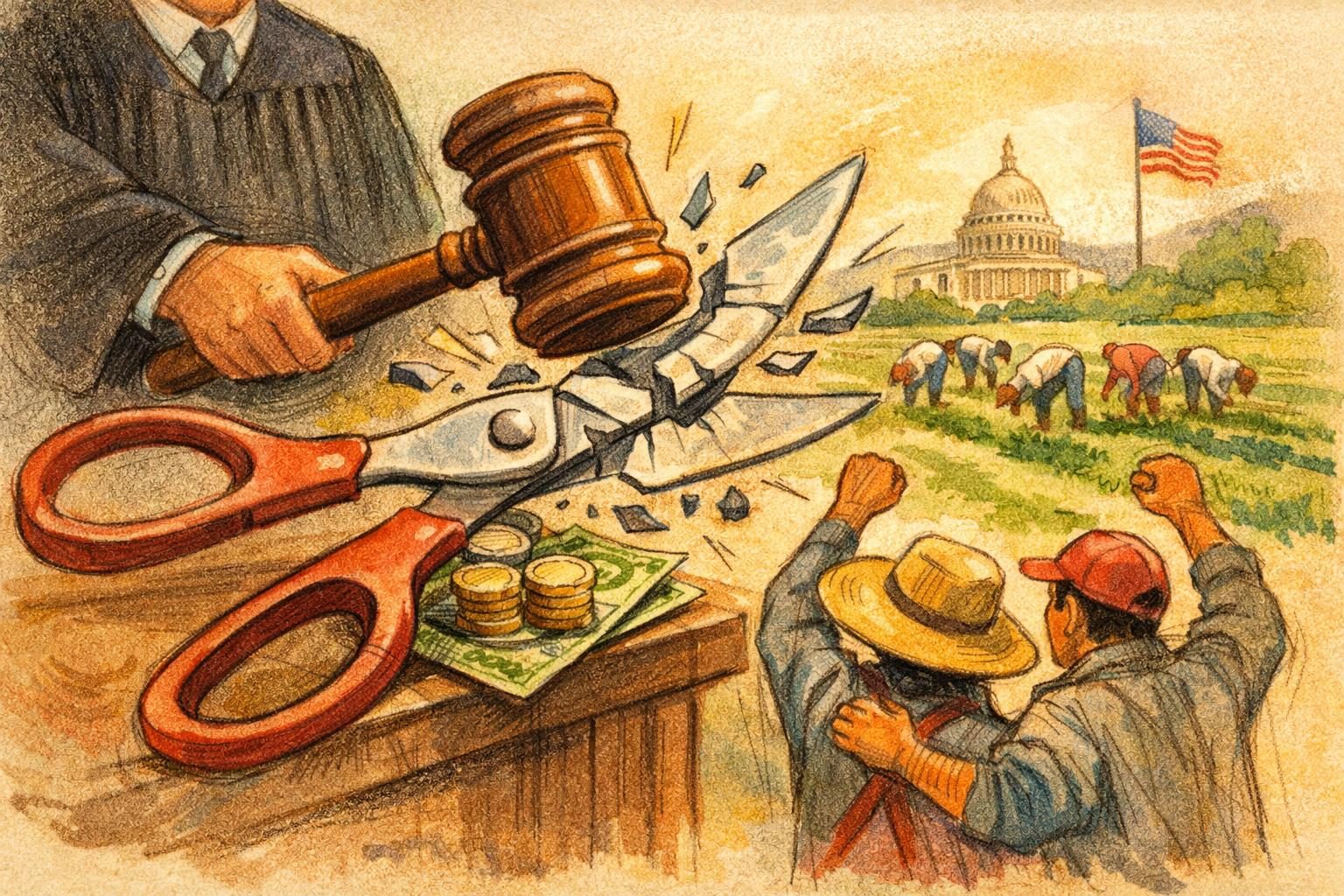
A federal judge in California has blocked the Trump administration’s attempt to cut wages for migrant farmworkers, ruling that the move was illegal and dealing yet another setback to a labor policy presented as an immigration fix. The decision, issued Wednesday, lands squarely at the center of a broader fight over how far the government can go in using immigration enforcement to reshape the labor market. For farmworkers and their advocates, it is more than a technical ruling. It is a rare instance of the courts telling Washington that cheaper labor cannot be created simply by fiat, especially when the people paying the price are already among the country’s most vulnerable workers. The administration had argued that reducing wages was necessary because tighter immigration enforcement had made agricultural labor harder to secure, but the judge was not persuaded that this justified the policy. In practical terms, the ruling stops the government from using a crisis of its own making to push the costs onto workers with the least leverage.
What makes the ruling significant is not only the immediate wage issue, but the logic the court rejected. The administration’s position rested on a familiar political gamble: if immigration enforcement constrains the labor supply, Washington can intervene by making work cheaper for employers and calling it a response to market pressure. That framing may be attractive to growers and officials looking for quick relief, but it effectively turns low-wage labor into the shock absorber for policy choices made elsewhere. The court’s decision suggests that this kind of workaround has legal limits, even when it is packaged as pragmatic governance. It also undercuts the argument that wage suppression is somehow compatible with a pro-worker agenda, especially when the workers affected are migrants doing physically punishing jobs that are essential to the food supply. Labor advocates have long warned that immigration policy is often used to discipline workers rather than to solve labor shortages, and this ruling gives that criticism new force. If the government cannot lawfully depress wages in this way, then it has fewer tools to force agriculture to absorb the consequences of aggressive enforcement without confronting the political costs directly.
The backlash from farmworker advocates was immediate and unsurprising. Their core complaint is simple enough to survive any political branding exercise: workers who harvest the food supply should not be punished because the government failed to design a lawful labor policy. The administration’s move was always likely to be seen as especially cynical because it did not merely leave workers exposed to market forces; it attempted to tilt those forces downward by official action. That distinction matters, because it turns a supposedly neutral adjustment into an active decision to make a low-paid workforce even cheaper. The ruling validates the argument that what was sold as a practical fix was, in effect, a transfer of pain from employers and policymakers to people with little ability to resist. It also gives labor organizers a concrete win at a time when many workers have been told to accept erosion in pay and protections as the cost of a tougher immigration posture. For communities that rely on migrant labor, the court’s decision may not solve chronic underpayment or insecure employment, but it does halt one especially aggressive attempt to normalize wage cuts from the top down.
The broader political stakes are hard to miss. This case fits into a larger pattern in which the administration has tried to use immigration enforcement as a blunt instrument to reorder the labor market without having to make a straightforward argument for lower wages or weaker protections. That strategy can be politically convenient because it lets officials present painful outcomes as unavoidable side effects of border policy rather than as deliberate choices. The judge’s ruling puts pressure on that approach by suggesting the government cannot simply declare that an enforcement squeeze creates a legal emergency that justifies reducing pay. For farmers and employers, the decision means the expected pool of labor cannot be made cheaper through this particular mechanism, even if pressure on agricultural operations remains. For workers, it means a temporary shield against a policy that would have pushed already modest wages lower in the name of efficiency. And for the administration, it is another reminder that the courts may be less willing than political appointees are to treat low-wage workers as an adjustable cost. The ruling may not end the fight over agricultural labor policy, but it sharpens the question of who should bear the burden when immigration enforcement collides with the realities of farm work. In that sense, Wednesday’s decision is both a legal rebuke and a warning that the government cannot keep calling wage suppression a solution and expect everyone to play along.
Comments
Threaded replies, voting, and reports are live. New users still go through screening on their first approved comments.
Log in to comment
No comments yet. Be the first reasonably on-topic person here.