
Court blocks FCC’s election-ad giveaway to party committees
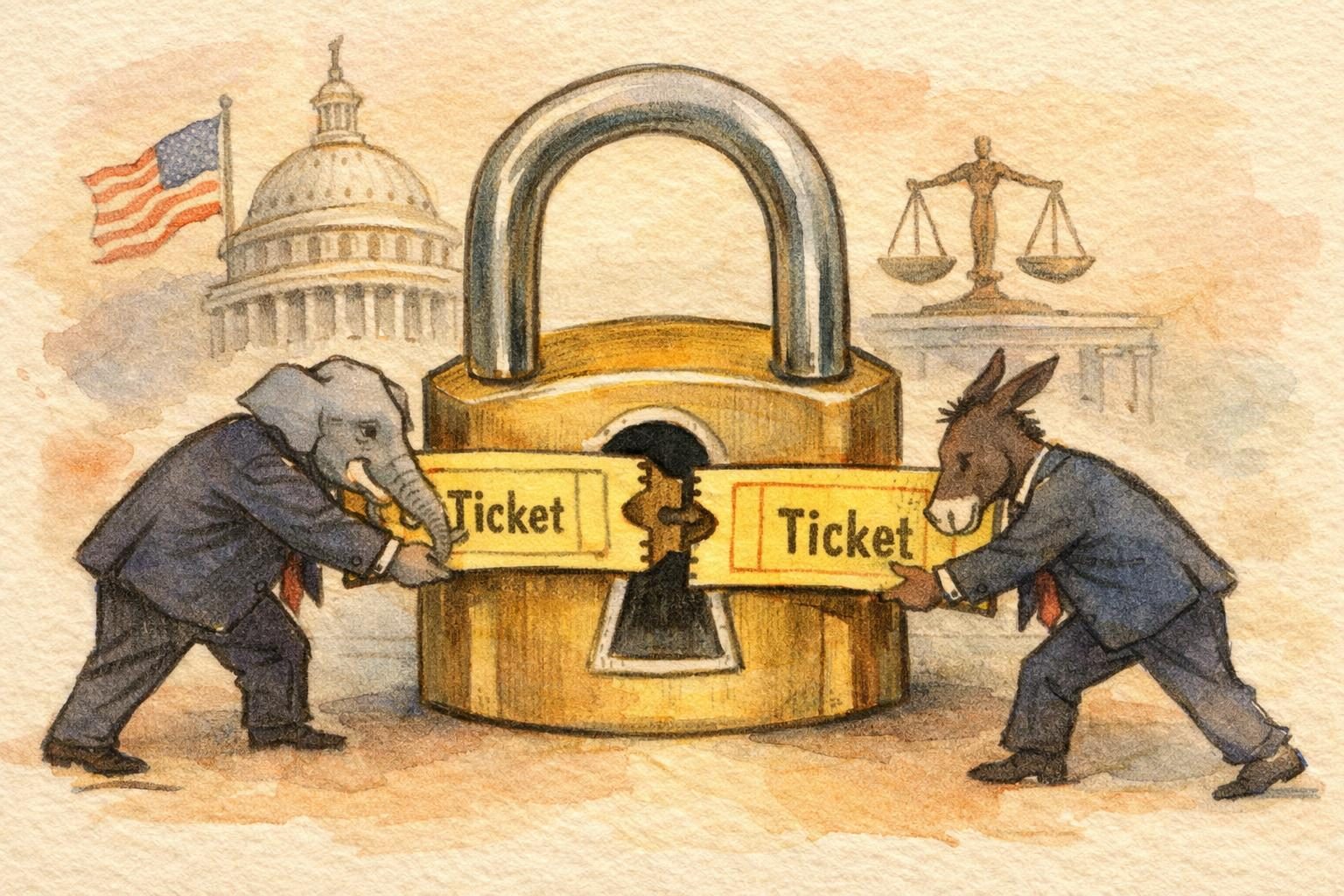
A federal appeals court on August 26 put the brakes on an FCC attempt to widen access to discounted broadcast advertising rates for party committees and allied political groups during the election season, preserving a rule that had kept those lower prices largely tied to candidates themselves. The agency’s move would have allowed party organizations to buy airtime at the same lowest-unit-charge rates that campaigns use, a shift critics said would have opened a fresh side door into a political advertising market already congested with candidate spots, issue ads, and fundraising appeals. The panel’s decision leaves intact the existing framework under which broadcasters must offer candidates the lowest rate they charge any comparable advertiser for the same class of time, a protection that can significantly affect what campaigns pay in the final stretch before an election. In practical terms, the ruling means that the FCC cannot simply expand the discount to cover a broader set of political actors just because those actors are politically connected or operate in the orbit of a campaign. It also signals that, at least for now, the court is not inclined to let the agency redraw election-ad rules by administrative fiat when the underlying statute does not clearly authorize that result.
The dispute sits squarely in the messiest part of campaign finance and communications law, where broadcast economics, election timing, and bureaucratic interpretation all collide. Lowest-unit-charge rules were designed to prevent broadcasters from overcharging candidates at moments when they are least able to shop around and when ad inventory becomes scarce, expensive, and strategically valuable. The FCC’s effort to extend those rates to party committees and related groups would have blurred a line that has long separated candidates from the broader political ecosystem that surrounds them. Supporters of broader access have argued in past fights that party organizations can serve as extensions of a campaign’s message and should not be squeezed into paying more than candidates for similar time slots. But opponents warned that once the discount was no longer limited to actual candidates, the rule would become easier to game, harder to administer, and far more likely to flood broadcasters with a larger wave of election-season ads from entities that already have plenty of incentive to spend aggressively. The court’s ruling does not settle those policy arguments in the abstract, but it does settle, for now, that the agency cannot make that change on its own.
That makes the decision more than a technical win for one side in a regulatory dispute. It is also a reminder that the FCC’s authority over political broadcasting has limits, especially when the agency tries to reinterpret a longstanding election rule in a way that meaningfully alters who gets the benefit of discounted airtime. The practical stakes are not subtle. Broadcast advertising remains one of the most expensive and high-impact tools available in a competitive campaign, particularly in the closing weeks when voters are paying attention and stations are rationing inventory. If party committees had gained access to candidate-level rates, the change could have encouraged more spending through committee structures and more last-minute ad buying, with broadcasters facing more pressure to sort out which political ads qualified for the lower rate and which did not. That is the kind of administrative complexity that often looks abstract on paper and then turns into a litigation magnet as soon as an election cycle heats up. By blocking the order, the court preserved the simpler baseline: candidates get the special protection, and everyone else remains outside it unless the law plainly says otherwise.
The ruling also fits a broader pattern of legal resistance to agencies that try to stretch old statutes to cover newer political or media realities without clear congressional direction. The FCC has long occupied a delicate role in policing broadcast access, sponsorship disclosures, and the rules that govern political speech over the public airwaves. When it moves too far, too fast, or too creatively, it invites accusations that it is picking winners among political actors rather than neutrally enforcing the law. In this case, the critics’ central complaint was that the commission was not merely clarifying a technical ambiguity but effectively creating a subsidy for a wider circle of partisan operators at the very moment campaigns are competing for every available second of attention. The court’s intervention leaves the existing lowest-unit-charge framework in place and avoids an immediate reordering of the election-ad market. It also leaves open the possibility that the underlying policy fight could return in some other form, whether through a narrower agency action, a different legal theory, or a direct legislative fix. For now, though, broadcasters, campaigns, and party committees are stuck with the older rule, and the FCC has been reminded that election-ad shortcuts are a lot harder to sell once a court starts reading the fine print.
Comments
Threaded replies, voting, and reports are live. New users still go through screening on their first approved comments.
Log in to comment
No comments yet. Be the first reasonably on-topic person here.