
The White House pushed another war-themed presidential memo into the Federal Register
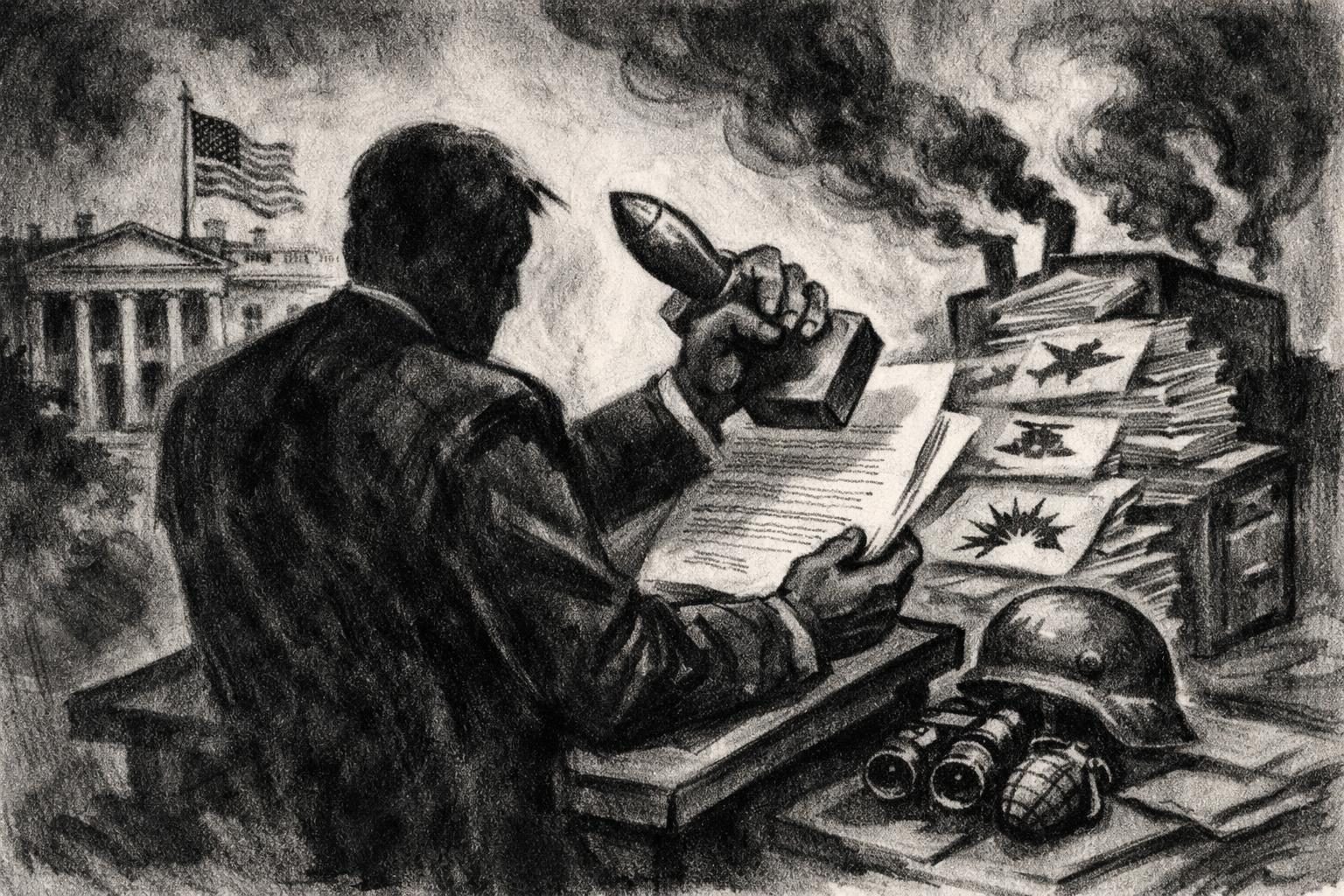
A presidential memorandum dated August 20 was filed for publication in the Federal Register on August 26, adding another official document to the administration’s growing archive of forceful, war-coded governing language. The filing itself is not a policy earthquake, but it is a real and recent development, and it underscores how often this White House prefers to route its priorities through formal presidential paperwork rather than ordinary administrative drift. Once a memorandum lands in the Federal Register, it is no longer just a talking point or a social-media flourish. It becomes part of the official record, which means agencies, lawyers, and political opponents alike have to treat it as something more than decorative rhetoric. That procedural step matters because it turns a broad governing style into a concrete paper trail. The administration has now made a habit of using highly centralized presidential documents to push its directives into the bureaucracy, and that habit is itself a political signal.
The larger issue is not just what this particular memorandum says, but what kind of government habit it represents. When a White House repeatedly uses language that sounds like mobilization, emergency response, or command structure, it changes the tone of executive power even before anyone argues over the fine print. Agencies are told, directly or indirectly, that the president expects compliance, speed, and discipline. The public is told that complex policy is best understood through the frame of command rather than deliberation. That can be useful if the administration wants to project urgency, but it also normalizes a style of governance that treats the executive branch like a deployed operation instead of a civilian institution with checks, balances, and procedural friction. Even if the memo’s subject matter is narrow, the message attached to it is broad and unmistakable. The presidency is still being used as a megaphone for top-down control.
That is why this story sits in the category of political significance rather than immediate crisis. There is no sudden confrontation, no dramatic enforcement action, and no obvious legal break in the update window. Instead, there is a steady accumulation of documents that make a particular governing mood harder to ignore. In isolation, a memorandum can look like ordinary administrative business. In sequence, it starts to read like a pattern. This administration keeps returning to formal presidential directives as a way to shape the bureaucracy and define its priorities, and the repeated use of heavy, militarized framing makes the pattern even harder to dismiss as neutral process. Supporters may see discipline and decisiveness in that approach. Critics are more likely to see a White House that prefers spectacle, centralized authority, and emotionally loaded language to the slower, less theatrical work of governance. Both reactions are understandable, because the paperwork is real and the symbolism is real too.
There is also a practical downstream effect whenever the White House uses this style of document to govern. Federal agencies are not free to treat presidential memoranda as vague suggestions, and they cannot simply shrug off the tone because they dislike the politics. They have to parse the instruction, align their operations, and decide how far the directive reaches. That means the memo can shape behavior even before anyone outside the executive branch fully understands its details. It can affect staffing decisions, internal guidance, interagency coordination, and how lower-level officials describe their own responsibilities. The broader public may never read the memo in full, but they still live with the consequences of a system that keeps normalizing urgent, martial, or emergency-style executive language. That is what makes this worth noting even without a splashy underlying controversy. The administration is not just issuing paper; it is building a governing atmosphere. And the atmosphere it keeps building is one in which the presidency sounds less like a civilian office and more like a headquarters.
That pattern is likely to continue drawing attention because it blurs the line between ordinary administration and permanent mobilization. Every new presidential memorandum is not automatically an abuse, and not every strong directive is proof of authoritarian intent. Still, the cumulative effect of repeated militarized framing is real, especially when it arrives through formal channels that give it institutional weight. The Federal Register filing locks this memorandum into the record and makes the moment traceable, which is important in a political environment where process often matters as much as substance. The administration can argue that it is merely being efficient, decisive, or responsive to national needs. Critics can argue, with some justification, that the government is increasingly speaking in the language of emergency even when the underlying issue may not require it. That tension is the story here. It is not about one dramatic order changing the country overnight. It is about a White House that keeps choosing a style of rule that feels heavily militarized, unusually centralized, and eager to turn paperwork into a show of force.
Comments
Threaded replies, voting, and reports are live. New users still go through screening on their first approved comments.
Log in to comment
No comments yet. Be the first reasonably on-topic person here.